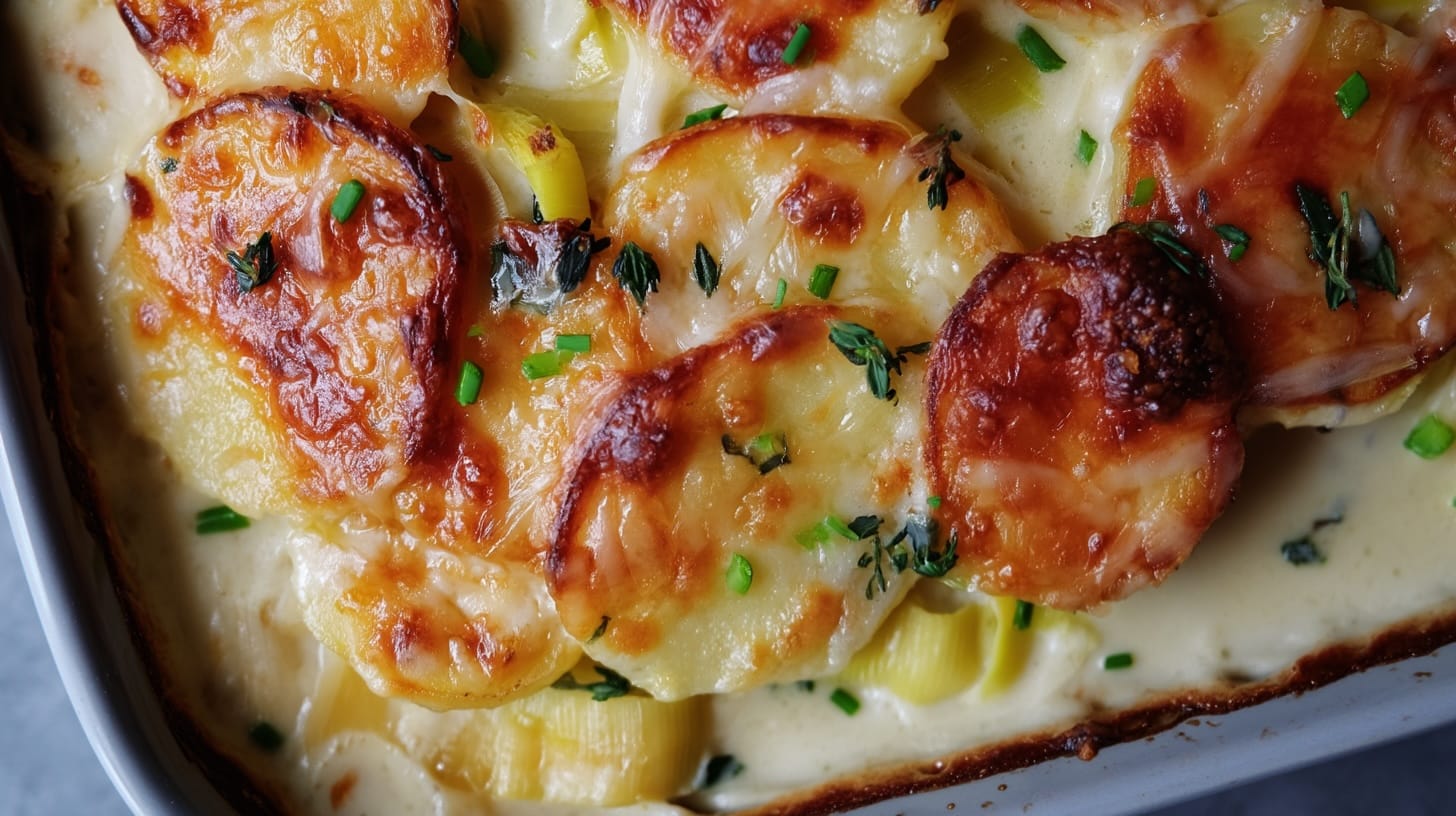
Potato Gratin is Great for a Bigger BBQ Spread
Some potato sides are built for speed. This one is built for comfort, structure and that very specific pleasure of digging a spoon through a bronzed top into soft, creamy layers underneath. I make this potato gratin when the barbecue table needs something richer and more settled, usually when the meat is hot off the grill and a little fiery around the edges. The leeks soften into the cream, the gruyere brings savoury depth and the thyme keeps the whole thing from drifting too far into heaviness.
A Different Kind of Potato Side for Barbecue Plates
I don’t think every barbecue meal needs char marks on every single item. Sometimes the grill does its part, and the side dish needs to answer with softness and warmth. That’s where this recipe earns its place. It gives the plate a creamy counterpoint, which is especially useful with sticky pork, blackened chicken or beef with a sweet glaze. In my wider guide to potato recipes worth serving with barbecue meats, this is the one I lean on when I want richness rather than sharpness or crunch.
What the Leeks and Gruyere Change
Without the leeks, a gratin can feel a bit one-note. Without the gruyere, it can taste creamy but slightly vague. The combination matters. Leeks melt down and add a mellow onion sweetness, while gruyere gives you that nutty, savoury edge that cuts through the cream. That’s why I’ll happily serve this alongside blue cheese potatoes with celery salt finish on a buffet where I want contrasting potato dishes, or beside mustard dressed potato salad with crispy bacon if I’m balancing hot and cold sides.

The One I Make When the Meat Is Sharp, Sticky or Spiced
This is not the side I pick when I want freshness leading the meal. This is the one I choose when the mains are loud and I want something that settles the plate. It’s especially good with ribs, grilled sausages and beef skewers that carry heat or sweetness. I also like it as a companion to crispy garlic parmesan potatoes for BBQ plates for a proper all-in potato spread, though that’s definitely the sort of move I save for people who understand excess as a form of hospitality. For another softer side on the same table, buttery baby potatoes with peas and dill work nicely. If I’m linking outward, bourbon peach beef skewers are a brilliant main with this.
Ingredients for 4 People
- 1 kg floury potatoes, such as Maris Piper
- 2 medium leeks, trimmed and finely sliced
- 250 ml whole milk
- 300 ml double cream
- 150 g gruyere, grated
- 30 g parmesan, finely grated
- 2 garlic cloves, peeled and halved
- 30 g unsalted butter, plus extra for greasing
- 1 tbsp olive oil
- 1 tsp fresh thyme leaves
- 1 tsp fine sea salt
- 1 tsp cracked black pepper
- 1 pinch freshly grated nutmeg
- 1 tbsp chopped chives, for finishing, optional
Ingredient Notes
Floury potatoes work well here because they soften into the cream and help the layers settle into each other. You still get shape, but the texture becomes silky around the edges rather than waxy and separate. I slice them fairly thin, though not paper thin. Too thin and the layers collapse into mush. Too thick and the centre takes too long to tenderise.
Gruyere is the main cheese because it melts beautifully and has a nutty, savoury flavour that stands up to the dairy. Parmesan is there in a supporting role, mostly for extra savoury depth and a better top crust. The leeks need washing carefully because they love trapping grit between their layers, which is one surprise nobody needs at dinner.
Equipment Needed
You’ll need a deep baking dish, roughly 20 x 28 cm, a saucepan for warming the leek and cream mixture and a mandoline or sharp knife for slicing the potatoes. A mandoline makes the most even gratin, but a careful hand and a sharp knife will still get you there perfectly well.
A small frying pan is not necessary because the leeks can soften directly in the saucepan before the liquid goes in. I also like having a jug nearby if I’ve warmed the cream separately, though this recipe is simple enough to manage in one pan and one dish without too much washing up after.
Instructions
Step 1: Heat the Oven and Prep the Dish
Heat the oven to 190°C fan, or 210°C conventional. Grease your baking dish generously with butter. Rub the inside with the cut sides of the garlic cloves, then discard them or save them for another use.
Step 2: Soften the Leeks
Place the butter and olive oil in a saucepan over medium-low heat. Add the sliced leeks with a small pinch of salt and cook gently for 8 to 10 minutes, stirring now and then, until soft and sweet without colouring.
Step 3: Warm the Cream Mixture
Pour the milk and double cream into the pan with the leeks. Add the thyme, nutmeg, fine sea salt and black pepper. Warm for 2 to 3 minutes until steaming but not boiling. Stir in half the gruyere.
Step 4: Slice the Potatoes
Peel the potatoes and slice them into rounds about 3 mm thick. Try to keep them even so the gratin cooks uniformly.
Step 5: Build the Layers
Arrange a layer of potatoes in the base of the dish, slightly overlapping. Spoon over a little of the leek cream mixture. Repeat until everything is used, finishing with a little liquid over the top. Press the layers down gently with the back of a spoon.
Step 6: Add the Cheese Topping
Scatter over the remaining gruyere and the parmesan. Cover loosely with foil and bake for 40 minutes.
Step 7: Finish Until Golden
Remove the foil and bake for another 25 to 30 minutes, until the top is deeply golden and the potatoes are completely tender when pierced with a knife. Leave it to rest for 10 to 15 minutes before serving. Finish with chopped chives if you like.
Cooking Technique Notes for Potato Gratin
Potato gratin asks for a bit of patience, and it rewards it properly. The first key point is not rushing the leeks. If they brown, the flavour changes and pushes the dish in a sweeter, darker direction. I want them soft, mellow and integrated into the cream. The second point is the rest after baking. This is not one of those dishes that wants to be hacked into the second it leaves the oven. Give it a short rest and the layers settle, the cream thickens and the slices serve more neatly.
The other useful detail is coverage. Potatoes need enough liquid to cook through, but you do not want them drowning. I aim for the cream mixture to come just below the top layer before the final cheese goes on. That gives you tender potatoes with a proper gratin texture rather than a soup with a cheese lid. Foil for the first stretch helps the potatoes steam and soften. Uncovering later gives you colour and that bronzed, savoury crust.
What to Serve with This Recipe
This gratin is made for rich barbecue food. I’d put it next to ribs with a sticky glaze, pork chops with a dark crust or beef skewers that carry sweetness and spice. It’s especially useful when the mains are intense because the creamy layers soften all those edges and make the plate feel more rounded. A spoonful of gratin beside smoky meat and something acidic on the side is one of those combinations that always disappears quickly.
For balance, I nearly always add something bright and crisp elsewhere on the table. Red cabbage apple mustard coleslaw is very good here, and cucumber salad rice vinegar sesame works when I want something cooler and cleaner. If the meat is especially sticky, I’d also consider best spicy BBQ dip recipes for a dip idea that can cut through all that richness.
Wine and Beer Pairings
For wine, I’d pour a white Burgundy or another oaked Chardonnay with enough freshness to handle the cream. The texture of the wine suits the gratin beautifully, and the nutty notes often line up well with the gruyere. A dry Pinot Noir also works if you’re serving this alongside pork or beef. You want one with good acidity and gentle tannins, not anything too jammy or heavy.
For beer, a märzen is a lovely match because its toasty malt character suits the cheese and browned top without making the pairing feel sticky. A golden ale also works well if you want something a touch lighter. The gentle bitterness helps freshen the palate between creamy bites, especially when the main meat is rich too.
FAQ
Can I make potato gratin ahead of time?
Yes. You can bake it earlier in the day, cool it slightly and then reheat it before serving. It’s very forgiving. I actually think the flavour settles nicely after a bit of time.
What potatoes are best for potato gratin?
Floury potatoes like Maris Piper are my preference because they soften beautifully in the cream and create a smoother texture through the layers.
Can I use cheddar instead of gruyere?
You can, but the flavour changes quite a lot. Cheddar is sharper and less nutty. It still makes a good bake, though it won’t have quite the same rounded character.
Why is my gratin watery?
That usually comes from underbaking, using too much liquid or not letting it rest before serving. The rest period matters because the cream thickens as it sits.
Do I need to boil the potatoes first?
No, not for this recipe. Thin slices cook in the cream while baking, which helps the whole dish absorb flavour.
Can I freeze potato gratin?
You can, though the texture of the cream can change slightly after thawing. I prefer refrigerating and reheating within a couple of days instead.
Is potato gratin good with barbecue food?
Yes, especially with rich or spicy meats. It gives the plate a creamy, mellow element that makes sticky glazes and strong rubs feel more balanced.
Tips for Success with Potato Gratin
The best potato gratin starts with even slicing. If the potato rounds are all over the place, some layers go soft early while others drag behind. That doesn’t ruin the dish, but it does make the texture less polished. I also make sure the dish is properly seasoned at the cream stage. Potatoes absorb a lot, and underseasoned gratin can taste flat no matter how much cheese you pile on top.
Give the top time to colour properly. A pale gratin is still edible, of course, but it misses one of the nicest parts of the dish. That browned lid brings savoury depth and a little chew around the edges. Keep an eye on it in the final stretch and rotate the dish if your oven colours unevenly. Once out, let it sit before serving so the layers hold and the cream stops rushing about the spoon.
Recipe Variation Suggestions
You can shift this gratin in a few useful directions. Add finely sliced shallots with the leeks if you want a deeper onion note, or tuck in a few thin slices of cooked smoked bacon between layers for a more robust barbecue-friendly version. A little Dijon in the cream is also very good, especially if the main course is pork or sausages.
For a greener, slightly fresher version, add chopped spinach or soft cabbage cooked down with the leeks before layering. If you want more fragrance, rosemary can stand in for the thyme, though I use it lightly because it can take over quite quickly. For extra richness, a little blue cheese crumbled into the top layer works well, though I’d then keep the rest of the meal fairly sharp and fresh.
Storage and Reheating for Potato Gratin
This potato gratin keeps in the fridge for up to 3 days, covered well. The texture stays good, which is one reason it’s handy for make-ahead barbecue menus.
To reheat, cover loosely with foil and warm at 180°C fan for 20 to 25 minutes, or until piping hot through the middle. Remove the foil for the final few minutes if you want to bring the top back to life. The microwave works for individual portions, though the crust softens.
Health Benefits
This is a richer potato side, so I think of its benefits in sensible terms rather than trying to dress it up as light eating. Potatoes provide potassium, carbohydrates and some fibre, while leeks bring a mild allium sweetness and useful plant compounds. Dairy and cheese contribute calcium and protein, which gives the dish a bit more substance than plain roast potatoes.
The real value of this gratin on a barbecue table is practical as much as nutritional. A smaller serving can go a long way because it’s satisfying and full-flavoured. That makes it a good choice when the rest of the meal includes grilled meat, salads and lighter vegetable sides.
Alternatives for Dietary Needs
For a gluten-free version, this gratin is usually fine as written, though it’s always worth checking the cheese. For a vegetarian version, use vegetarian hard cheese if needed. It already sits comfortably there otherwise.
For a lighter version, replace some of the double cream with extra milk, though the texture will be less lush. For a dairy-free adaptation, use plant cream, unsweetened plant milk and a dairy-free cheese that melts well. It won’t be quite the same, but it can still make a very decent layered potato bake with the leeks and thyme carrying a lot of the character.
Rich Creamy Potato Gratin with Leeks Gruyere Thyme

Ingredients
- 1 kg floury potatoes such as Maris Piper
- 2 medium leeks trimmed and finely sliced
- 250 ml whole milk
- 300 ml double cream
- 150 g gruyere grated
- 30 g parmesan finely grated
- 2 garlic cloves peeled and halved
- 30 g unsalted butter plus extra for greasing
- 1 tbsp olive oil
- 1 tsp fresh thyme leaves
- 1 tsp fine sea salt
- 1 tsp cracked black pepper
- 1 pinch freshly grated nutmeg
- 1 tbsp chopped chives for finishing, optional
Instructions
Heat the Oven and Prep the Dish
- Heat the oven to 190°C fan, or 210°C conventional. Grease your baking dish generously with butter. Rub the inside with the cut sides of the garlic cloves, then discard them or save them for another use.
Soften the Leeks
- Place the butter and olive oil in a saucepan over medium-low heat. Add the sliced leeks with a small pinch of salt and cook gently for 8 to 10 minutes, stirring now and then, until soft and sweet without colouring.
Warm the Cream Mixture
- Pour the milk and double cream into the pan with the leeks. Add the thyme, nutmeg, fine sea salt and black pepper. Warm for 2 to 3 minutes until steaming but not boiling. Stir in half the gruyere.
Slice the Potatoes
- Peel the potatoes and slice them into rounds about 3 mm thick. Try to keep them even so the gratin cooks uniformly.
Build the Layers
- Arrange a layer of potatoes in the base of the dish, slightly overlapping. Spoon over a little of the leek cream mixture. Repeat until everything is used, finishing with a little liquid over the top. Press the layers down gently with the back of a spoon.
Add the Cheese Topping
- Scatter over the remaining gruyere and the parmesan. Cover loosely with foil and bake for 40 minutes.
Finish Until Golden
- Remove the foil and bake for another 25 to 30 minutes, until the top is deeply golden and the potatoes are completely tender when pierced with a knife. Leave it to rest for 10 to 15 minutes before serving. Finish with chopped chives if you like.