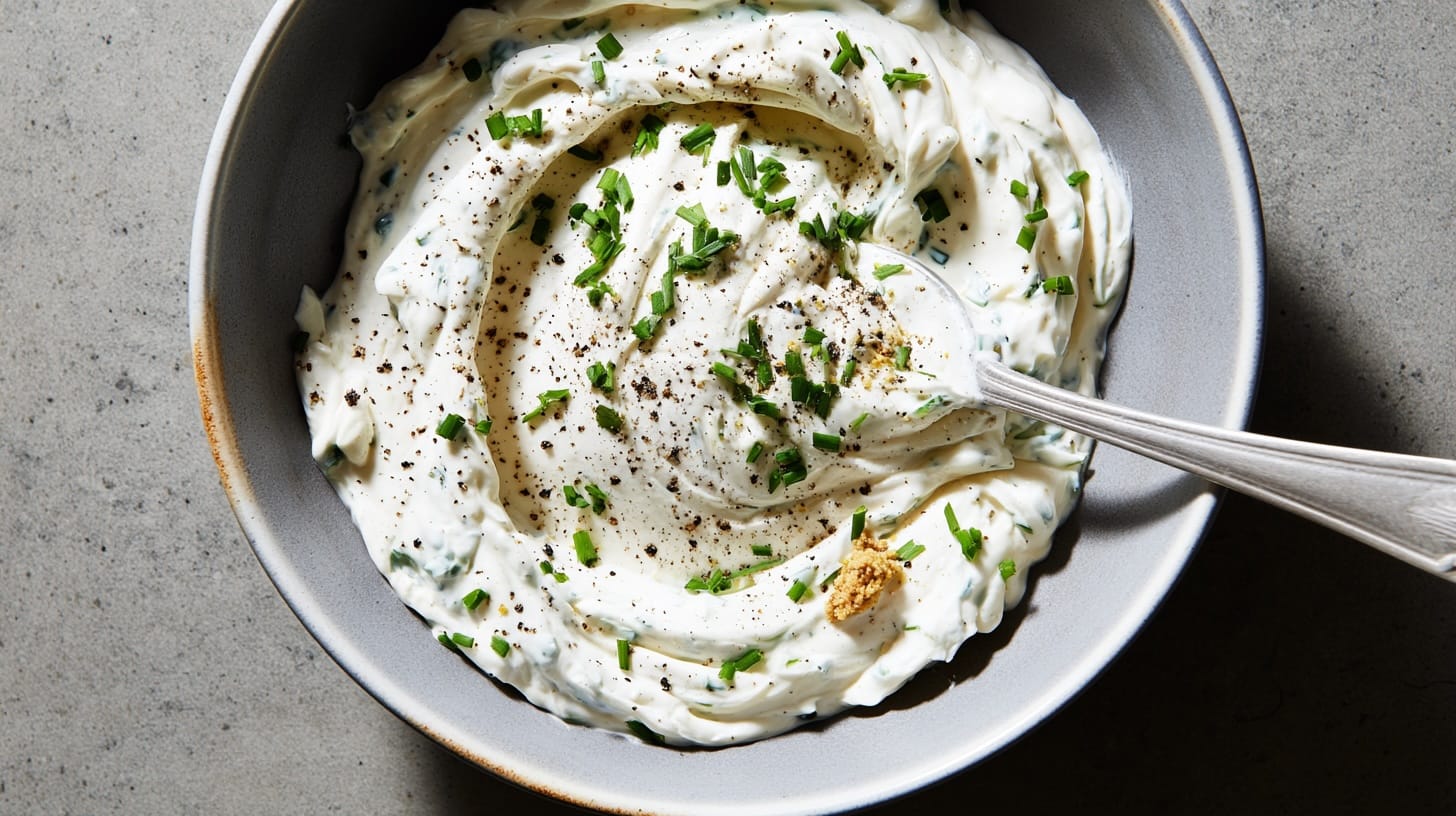
This horseradish cream dip for beef-heavy barbecue nights is just delightfulA colder, sharper answer to rich grilled meat
When beef is the main event, I rarely want a sweet dip beside it. I want something cool, punchy and creamy enough to soften the edges of char without getting lost on the plate. That’s exactly what this horseradish chive cream dip does. It has that familiar roast-beef-and-horseradish logic, though set up for a barbecue table instead of a Sunday lunch, with English mustard giving it extra cut and chives keeping the whole thing fresh.
It tastes brisk without feeling thin
Some sharp dips can come across a bit mean, almost all sting and no comfort. This one stays rounded because I build it with extra thick soured cream and a little mayonnaise for richness, then let the creamed horseradish and mustard do the talking. In my best creamy dip recipes for a barbecue table, this is the bowl I’d point to when the spread needs proper bite rather than sweetness or smoke.
The texture makes it useful across the whole plate
I use this as a dip, but I also spoon it onto slices of steak, swipe it through warm flatbreads and drop a dollop next to roast potatoes. It behaves like a cold side dish as much as a dip. If I’m putting out a few different bowls, I like it with mustardy soured cream dip with chopped chives because they’re related without being identical, and with black garlic truffle mayo dip with cream cheese when I want one sharp dip and one dark, savoury one.
A handy way to freshen sticky barbecue spreads
This is especially useful when the rest of the table is leaning rich. Sticky ribs, glazed beef, buttery potatoes, soft bread, they all benefit from a dip with a bit of nerve. I’ll often set it near gochujang dip with sour cream and jalapeños if I want a hotter option nearby, or smoked paprika sriracha roast garlic dip when the table needs a brighter chilli note alongside the horseradish.
Ingredients for 4 people
Dip ingredients
- 180 g extra thick soured cream
- 60 g Hellmann’s mayonnaise
- 1 1/2 tbsp creamed horseradish
- 2 tsp Colman’s English mustard
- 1 tbsp finely chopped fresh chives
- 1 tsp Worcestershire sauce
- 1 tsp apple cider vinegar
- 1/4 tsp Maldon sea salt, crushed
- 1/4 tsp black pepper
- 1 tsp lemon juice
Optional finish
- extra chopped chives
- extra black pepper
- tiny dab of creamed horseradish
Ingredient notes
Creamed horseradish is the easiest way to get that nasal heat without wrecking the texture. Fresh horseradish can be wonderful, though it’s often too fierce and a bit fibrous for a smooth dip like this. The creamed version blends neatly into the soured cream and gives a more even warmth across each bite.
Colman’s English mustard helps sharpen the dip in a different way. Horseradish gives a cool, rising heat that hits the nose, while mustard has that drier, more direct kick. Using both means the dip tastes awake from the first spoonful. Lemon juice and apple cider vinegar stop the dairy from feeling too lush, which matters when you’re serving it with fatty beef or potatoes.
Equipment needed
This is very much a bowl-and-spoon sort of recipe. I use a medium mixing bowl, a whisk or sturdy spoon, a chopping board and a sharp knife for the chives. Because the ingredients are soft, there is no need to drag out a processor unless you want a very aerated finish.
A small tasting spoon is useful here, more useful than with many dips, because the balance between horseradish and mustard is personal. I taste once after mixing, then again after chilling. That second check matters because cold temperatures dull flavours slightly, and horseradish can settle into the dairy in a way that changes its perceived strength.
Instructions
Step 1, mix the creamy base
Add the extra thick soured cream and Hellmann’s mayonnaise to a bowl. Stir or whisk until completely smooth.
Step 2, add the sharp ingredients
Mix in the creamed horseradish, Colman’s English mustard, Worcestershire sauce, apple cider vinegar and lemon juice until fully combined.
Step 3, season the dip
Add the crushed Maldon sea salt and black pepper. Stir thoroughly, then taste once for balance.
Step 4, fold through the chives
Add the chopped fresh chives and gently fold them through the dip.
Step 5, chill before serving
Cover and refrigerate for 30 minutes. This firms the dip and lets the heat from the horseradish and mustard settle into the dairy base.
Step 6, finish and serve
Spoon into a chilled serving bowl, then top with a few more chives, extra black pepper and a tiny dab of creamed horseradish if you want to signal what’s inside.
Why the balance matters in this dip
Horseradish can be brilliant with beef, though it can also get a bit one-dimensional if it’s allowed to dominate everything. That’s why I lean on the soured cream and mayo for body, then build in mustard, lemon and Worcestershire to make the flavour feel more complete. I don’t want a mouthful of pure horseradish heat. I want something that starts creamy, sharpens in the middle and leaves a clean little burn behind it.
Chilling helps more than people think. Right after mixing, the horseradish can feel disjointed, almost as if it’s hovering above the dairy rather than being part of it. Once it has had half an hour in the fridge, the flavours settle into one another and the dip becomes smoother in both texture and taste. That short rest is well worth it.
What to serve with this horseradish chive cream dip
This dip is excellent with grilled beef, especially date syrup Aleppo beef skewers or tamarind chilli beef skewers, where the sweetness in the glaze benefits from a sharp, creamy contrast. It also works brilliantly with roast potatoes with soured cream and chives and fennel cabbage slaw with lemon if you want a plate that feels fresh as well as rich.
For a fuller barbecue spread, I’d set it beside bourbon peach beef skewers or jerk allspice honey pork ribs when the meat is carrying sweetness and smoke. It’s also handy next to creamy white cabbage carrot coleslaw if you want different creamy elements that still serve different jobs on the plate.
Wine and beer pairings
For wine, I like this with a cool glass of Pinot Noir or a dry rosé with decent acidity. Pinot works especially well if beef is involved, because it’s gentle enough not to bulldoze the horseradish but still earthy enough to make sense alongside grilled meat. Dry rosé is a nice option when the rest of the spread includes potatoes, slaw and lighter sides.
For beer, a clean pilsner is extremely good here. It has the snap to deal with mustard and horseradish, and it refreshes the palate after richer bites of beef or mayo-based salad. An English pale ale also works well, especially if you’re serving this with roast potatoes or flatbreads, because its gentle bitterness and biscuit notes play neatly with mustard and cream.
FAQ
Can I make horseradish chive cream dip ahead of time?
Yes. It’s very good made a few hours ahead or the day before. Keep it covered in the fridge and stir before serving.
Is horseradish cream dip too strong for barbecue food?
Not when it’s balanced properly. The sour cream and mayo soften the horseradish, so the dip stays creamy and usable even with rich grilled dishes.
Can I use fresh horseradish instead of creamed horseradish?
You can, though it will be much sharper and less smooth. If you use fresh, grate it finely and start with a smaller amount.
What meat goes best with horseradish dip?
Beef is the obvious favourite, though it also works very well with pork and even grilled sausages. Anything rich and charred benefits from that cool bite.
Why add mustard to horseradish dip?
English mustard gives a different kind of heat and helps the flavour feel fuller. It also makes the dip taste more suited to rich barbecue food.
Can I serve horseradish dip with potatoes?
Absolutely. It’s excellent with roast potatoes, wedges and even grilled potato slices because the creamy sharpness cuts through their richness.
Tips for success with horseradish chive cream dip
The best horseradish chive cream dip comes from not chasing immediate intensity. Horseradish can seem a little shy when first mixed into cold dairy, so there’s a temptation to keep adding more. I resist that and let the dip chill first. More often than not, the heat rises into place on its own and the balance ends up far cleaner.
I also like to chop the chives quite finely in this one. Bigger pieces can make the dip feel rougher than it needs to be, and this recipe is all about a smooth, cool bite followed by that lift of horseradish. Small flecks of chive keep the texture tidy and the onion note gentle.
Recipe variation suggestions
For a richer version, swap a little of the soured cream for cream cheese. That gives the dip a thicker body and makes it feel more spreadable, which is very good under sliced steak or inside warm flatbread. A spoonful of Kewpie mayo can also be used for a slightly richer, eggier finish.
For a fresher take, add lemon zest and a little chopped dill alongside the chives. Dill works surprisingly well with horseradish and makes the dip especially good with grilled salmon or lighter barbecue plates. You can also add a pinch of smoked paprika if you want a subtle smoky edge without changing the basic style of the dip too much.
Storage tips for horseradish chive cream dip
Store this dip in an airtight container in the fridge for up to 3 days. Stir before serving, as the dairy can loosen very slightly around the edges. If it tastes a little muted after storage, a tiny squeeze of lemon juice or a small extra dab of creamed horseradish can wake it back up. I would not freeze it because the texture of sour cream and mayonnaise tends to split after thawing.
Dietary requirements and swaps
This dip is still a creamy condiment, though it has a nice advantage in that the horseradish and mustard bring plenty of flavour without needing sugar-heavy sauces. Chives add freshness, and the sharpness of the dip can help richer barbecue plates feel less heavy because each bite gets a bit of lift.
For lighter needs, replace part of the sour cream with Greek style yogurt. The result will be tangier and slightly leaner, though still very workable. For dairy-free versions, use a plant-based sour cream and mayonnaise, then adjust the lemon and horseradish carefully because some dairy-free bases are sweeter and need more acidity.

Horseradish Chive Cream Dip with English Mustard

Ingredients
- 180 g extra thick soured cream
- 60 g Hellmann’s mayonnaise
- 1½ tbsp creamed horseradish
- 2 tsp Colman’s English mustard
- 1 tbsp finely chopped fresh chives
- 1 tsp Worcestershire sauce
- 1 tsp apple cider vinegar
- ¼ tsp Maldon sea salt crushed
- ¼ tsp black pepper
- 1 tsp lemon juice
Optional finish
- extra chopped chives
- extra black pepper
- tiny dab of creamed horseradish
Instructions
Mix the creamy base
- Add the extra thick soured cream and Hellmann’s mayonnaise to a bowl. Stir or whisk until completely smooth.
Add the sharp ingredients
- Mix in the creamed horseradish, Colman’s English mustard, Worcestershire sauce, apple cider vinegar and lemon juice until fully combined.
Season the dip
- Add the crushed Maldon sea salt and black pepper. Stir thoroughly, then taste once for balance.
Fold through the chives
- Add the chopped fresh chives and gently fold them through the dip.
Chill before serving
- Cover and refrigerate for 30 minutes. This firms the dip and lets the heat from the horseradish and mustard settle into the dairy base.
Finish and serve
- Spoon into a chilled serving bowl, then top with a few more chives, extra black pepper and a tiny dab of creamed horseradish if you want to signal what’s inside.