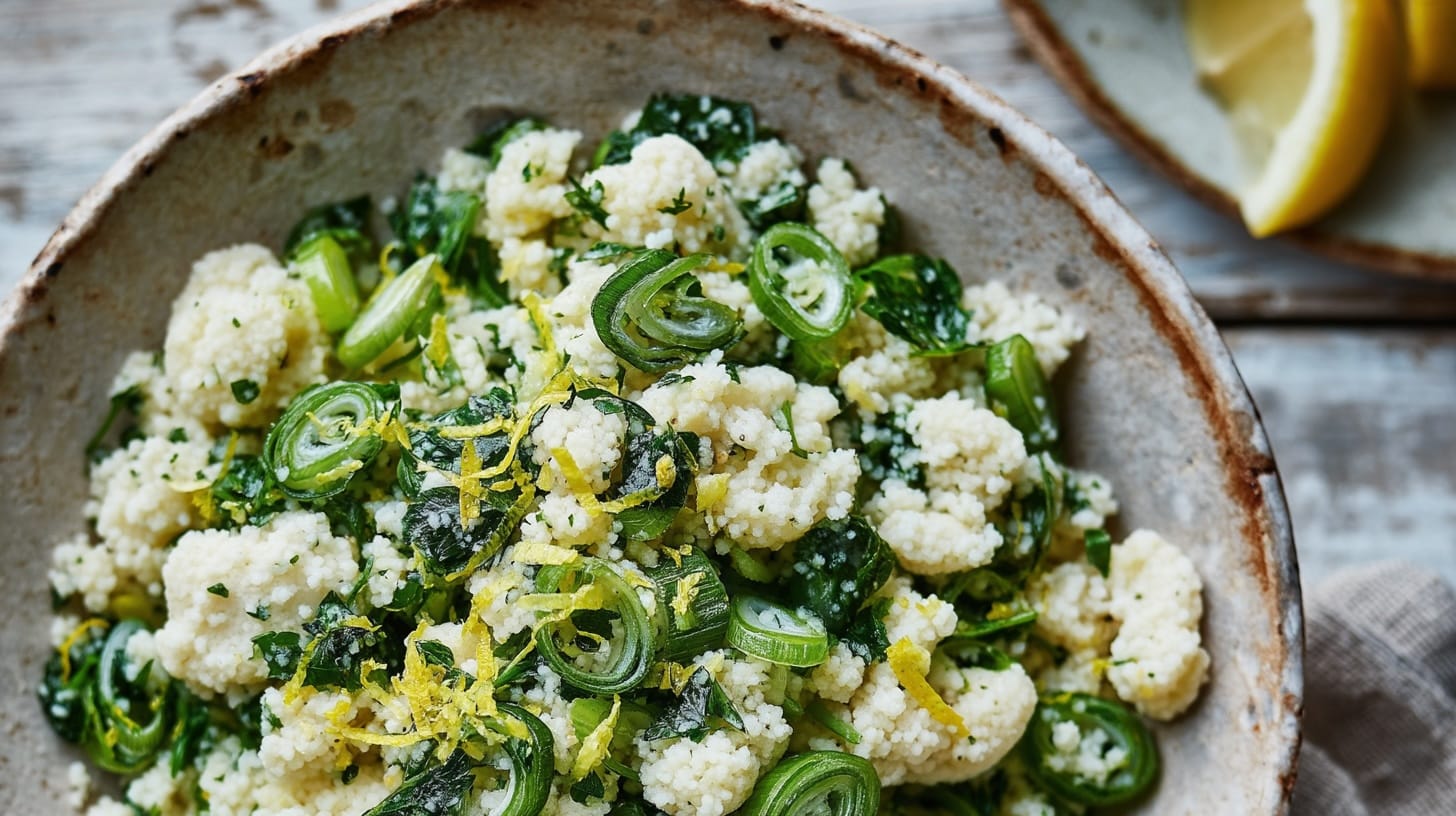
This herby couscous always helps the barbecue tableThe side I make when I want something light but still useful
I make herby couscous with parsley and lemon when I want a side dish that feels fresh, quick and very capable of dealing with rich barbecue food. It’s the sort of thing that quietly makes the whole plate better. Soft grains, bright lemon and plenty of herbs give you a clean contrast to smoky meat without making the meal feel sparse or overly sensible.
Why couscous works so well with spiced pork
Couscous is brilliant at catching juices and dressings, which makes it especially handy beside pork ribs with bold flavours. Parsley keeps it green and lively, lemon gives it lift and olive oil rounds everything out without making it heavy. I mentioned it with Spicy Harissa Yoghurt Pork Ribs with Lemon and Mint because the fresh herbs and citrus sit beautifully beside that tangy spiced coating.
The side dish that fills the gaps without taking over
I don’t always want potatoes or rice, and couscous is often the answer when I want something softer than a salad but lighter than a proper starchy centrepiece. It gives the plate substance, though it still leaves room for ribs, slaw and whatever else is trying to crowd onto the board. It’s a very good team player.
Why I keep this version simple and bright
There are richer couscous dishes with dried fruit, spices and all sorts going on, and some of them are lovely. Still, when I’m serving it with barbecue, I usually want the couscous to stay bright and clean. Lemon, parsley and olive oil are enough to make it taste fresh and useful without pulling the whole meal in a different direction.
Ingredients for 4 people
- 200 g couscous
- 250 ml hot vegetable stock or hot water
- 2 tbsp extra virgin olive oil
- 1 lemon, zest finely grated
- 1 1/2 tbsp lemon juice
- 25 g flat-leaf parsley, finely chopped
- 2 tbsp chopped mint, optional
- 3 spring onions, finely sliced
- 1/2 tsp fine sea salt
- 1/4 tsp cracked black pepper
Ingredient notes
Standard medium couscous is what I use here because it fluffs easily and behaves itself. Giant couscous is a different thing entirely and needs boiling, which is not what I’m after when I want a fast fresh side dish. Proper stock gives the couscous a little more savoury backbone, though hot water works perfectly well if the rest of the plate already has plenty of flavour.
Flat-leaf parsley matters more than it might seem. It tastes greener and fresher than curly parsley, and I want that clean herbal note coming through clearly. Mint is optional, though it makes a lot of sense if you’re serving this with the harissa yoghurt ribs because it picks up that same bright cooling edge.
Equipment needed
You’ll need a heatproof bowl, a fork and something to cover the bowl while the couscous steams. A plate, lid or bit of foil all do the job nicely. That’s about the extent of the technical challenge, which is one reason this side turns up so often when I’m cooking outside and trying not to create unnecessary faff.
A small knife and chopping board are all you need for the herbs and spring onions. If I’m making this while the barbecue’s going, I usually prep the herbs first, then pour over the hot liquid once the ribs are into their last stretch and I can spare a few minutes indoors.
Instructions
Step 1: Steam the couscous
Put the couscous in a heatproof bowl. Pour over the hot stock or hot water, cover the bowl and leave for 10 minutes until the liquid is absorbed.
Step 2: Fluff the grains
Uncover the bowl and fluff the couscous gently with a fork to separate the grains.
Step 3: Add the flavourings
Add the olive oil, lemon zest, lemon juice, chopped parsley, mint if using, spring onions, sea salt and black pepper.
Step 4: Toss and taste
Mix thoroughly with a fork until the herbs and seasoning are evenly distributed. Taste and add a little more lemon juice or salt if needed.
Step 5: Serve warm or at room temperature
Serve straight away, or leave for a short while and serve at room temperature once the flavours have settled.
How I keep couscous fluffy and fresh
The trick with couscous is not drowning it. Too much liquid and it turns claggy, which is not the mood I’m after beside spicy ribs. I use just enough hot stock to hydrate the grains, then fluff them with a fork as soon as they’ve absorbed the liquid. That separates everything neatly and keeps the texture light rather than packed and heavy.
I also add the lemon and herbs after the couscous has steamed. That keeps the flavours fresh and distinct. If everything goes in too early, the lemon loses a bit of its brightness and the herbs can feel slightly dulled. Added at the end, they stay lively and make the couscous feel much more awake on the plate.
FAQ
Can I make herby couscous ahead of time?
Yes. It’s very good made ahead and served at room temperature, which makes it especially useful for barbecue meals.
How do I stop couscous going clumpy?
Use the right amount of hot liquid and fluff it with a fork as soon as it has absorbed the liquid. A little olive oil helps too.
Can I use water instead of stock?
Yes. Stock adds more savoury flavour, though water works well if the main dish is already very flavourful.
Is couscous better warm or cold?
For this recipe, I like it warm or room temperature. Straight from the fridge it can feel a bit tight and less lively.
What herbs work best in couscous?
Parsley is my first choice here, with mint as a very good extra if you want a brighter cooler finish.
Does lemon go well with couscous?
Very much so. Lemon keeps couscous fresh and light, especially when served with rich grilled meats or spiced dishes.
Tips for Success with herby couscous
The best herby couscous with parsley and lemon comes from getting the texture right first, then the seasoning. If the grains are fluffy and separate, the whole dish already feels more promising. If they’re clumped together, no amount of lemon will fully rescue the mood. Fluff early, fluff gently and don’t be shy about using the fork properly.
It also helps to chop the herbs fairly finely so they spread evenly through the couscous instead of sitting in leafy clumps. I want every forkful to catch a bit of parsley and spring onion, not one mouthful with all the herbs and the next with none of them. Small details, though they make the dish feel much more settled.
Recipe variation suggestions
You can push this couscous in a greener direction by adding chopped coriander, dill or extra mint. Dill gives it a slightly softer aromatic edge, while coriander makes it feel brighter and a bit sharper. Finely diced cucumber also works well if you want the side to lean further towards salad territory.
For a richer version, stir through toasted pine nuts or a few crumbled feta-style pieces just before serving. Both are very good, though I usually keep this side simpler when it’s going next to richly spiced ribs. A few chopped olives can work too if you want a more savoury finish.
Storage and reheating for herby couscous
Store leftover couscous in an airtight container in the fridge for up to 3 days. It keeps well, which is one of its best qualities, though it can tighten slightly once chilled.
To serve again, let it come closer to room temperature or warm it very lightly. If it feels a bit dry, loosen it with a drizzle of olive oil and a squeeze of lemon juice, then fluff it with a fork before serving.
Health benefits and easy swaps
This couscous brings useful carbohydrates, a bit of fibre and lots of fresh herbal flavour to a barbecue plate. Lemon and parsley help keep richer dishes feeling lighter, and the olive oil adds just enough richness without making the side feel heavy.
For dietary swaps, use a gluten-free grain alternative if needed, since couscous is made from wheat. Quinoa works especially well in the same flavour profile. You can also skip the stock and use hot water for a lighter version, or add more herbs and spring onion if you want to push the freshness even further.

Herby Couscous with Parsley and Lemon

Ingredients
- 200 g couscous
- 250 ml hot vegetable stock or hot water
- 2 tbsp extra virgin olive oil
- 1 lemon zest finely grated
- 1 1/2 tbsp lemon juice
- 25 g flat-leaf parsley finely chopped
- 2 tbsp chopped mint optional
- 3 spring onions finely sliced
- 1/2 tsp fine sea salt
- 1/4 tsp cracked black pepper
Instructions
Steam the couscous
- Put the couscous in a heatproof bowl. Pour over the hot stock or hot water, cover the bowl and leave for 10 minutes until the liquid is absorbed.
Fluff the grains
- Uncover the bowl and fluff the couscous gently with a fork to separate the grains.
Add the flavourings
- Add the olive oil, lemon zest, lemon juice, chopped parsley, mint if using, spring onions, sea salt and black pepper.
Toss and taste
- Mix thoroughly with a fork until the herbs and seasoning are evenly distributed. Taste and add a little more lemon juice or salt if needed.
Serve warm or at room temperature
- Serve straight away, or leave for a short while and serve at room temperature once the flavours have settled.