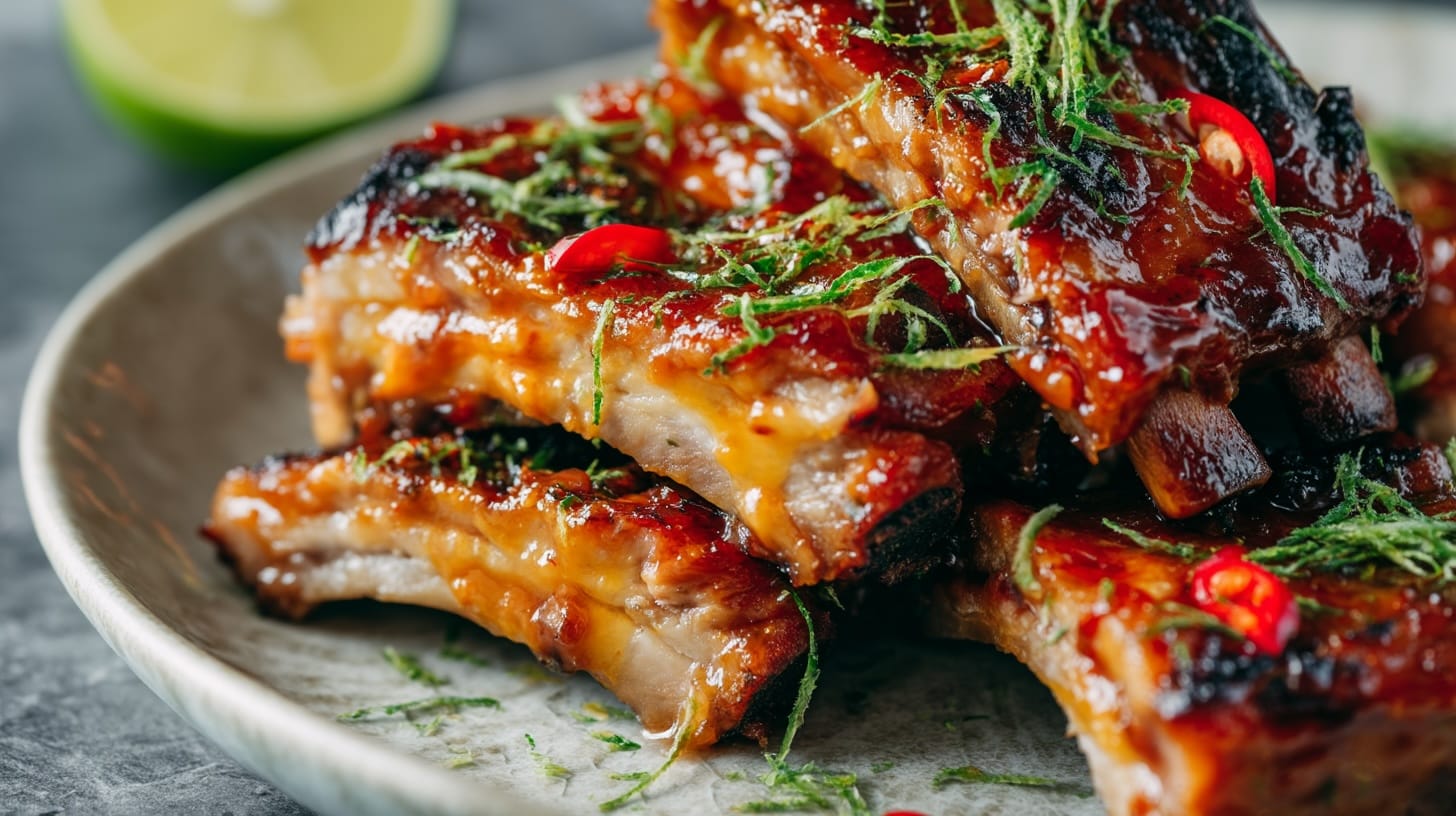
The sweet spicy ribs that always disappear first
These mango habanero pork ribs have a way of vanishing faster than I expect. I’ll put them down on a board, step away to fetch napkins, then come back to a suspicious number of bare bones and one person pretending they’ve only had a sensible portion. That’s what happens when pork ribs meet ripe mango, fresh lime and a chilli that doesn’t mess about.
Why mango works so well on the BBQ
Mango gives the glaze a lush, soft sweetness that feels natural on pork. It isn’t just about sugar. It brings body, fruitiness and a slightly jammy edge once it cooks down, which makes the glaze cling beautifully. Habanero adds a sharper kind of heat than red chilli, brighter and more pointed, while ginger keeps everything lively. When I want a deeper fermented profile instead, I make sticky chilli garlic gochujang ribs. For the full run of my regular rib recipes, I keep them together in my favourite spicy rib recipes in one place.
The balance that stops them tasting too sweet
Fruit glazes can go a bit sticky-sweet if you’re not careful. These don’t, because lime juice and ginger keep the mango in check. The habanero cuts through too, bringing proper heat and a clean finish rather than a dull burn. If I want a similar tropical feel with a darker sweetness, I go for pineapple bonnet ribs with molasses glaze. If I’m in the mood for something cooler and sharper, harissa yoghurt ribs with sharp lemon lift are a very different sort of pleasure.
Where these ribs fit in my usual BBQ rotation
I make these when I want spicy pork ribs with a bright, juicy edge. They’ve got heat, though they also feel fresh, which is not something I say often about a tray of sticky ribs. The glaze has a glossy finish, the pork stays rich and the lime keeps each bite from feeling too heavy. For another sweeter profile with a citrus note, sesame orange ribs with sriracha sweetness are worth a look too.
Ingredients for 4 people
- 2 kg pork ribs, membrane removed
- 2 tsp fine sea salt
- 1 tsp cracked black pepper
- 2 tsp smoked paprika
- 1 tsp garlic powder
- 1 tsp onion powder
For the mango habanero lime ginger glaze
- 250 g ripe mango flesh, diced
- 2 habanero chillies, deseeded and finely chopped
- 25 g fresh ginger, finely grated
- 4 garlic cloves, finely grated
- 60 ml lime juice
- 1 tbsp lime zest
- 2 tbsp honey
- 2 tbsp dark brown sugar
- 2 tbsp apple cider vinegar
- 2 tbsp soy sauce
- 1 tbsp tomato purée
- 60 ml apple juice
- 1 tbsp neutral oil
- 2 tbsp water
Ingredient notes
Ripe mango matters here. You want one that smells fragrant and yields a little when pressed, not a hard one that tastes of nothing much and makes you question your shopping choices. A properly ripe mango cooks down into a silky glaze with very little effort. If your mango is a little under, add a touch more honey and give the sauce a few extra minutes on the heat.
Habanero has a distinct fruity heat, which is why it works so well with mango. It’s fiercer than a standard red chilli, though it also tastes brighter. I usually remove the seeds for balance, not because I’m timid, but because I’d rather the ribs taste of pork, fruit and spice than pure regret. Gloves are a very sensible idea here unless you enjoy learning the hard way.
Equipment needed
You’ll need a BBQ set up for indirect cooking, along with a saucepan for the glaze, a blender or stick blender and a basting brush. I also like having a foil tray during the first stage of cooking because it helps keep the ribs moist and catches a bit of flavourful juice that can be spooned back over if needed.
A decent pair of tongs is useful once the glaze goes on, since sticky ribs have a habit of trying to slide away at the worst moment. I keep a small bowl of warm water and a cloth nearby too, mostly because this recipe gets delightfully messy and I’m not graceful enough to pretend otherwise.
Instructions
Step 1: Prep and season the ribs
Pat the pork ribs dry with kitchen paper and remove the membrane from the back if it’s still there. Mix the salt, black pepper, smoked paprika, garlic powder and onion powder, then season both sides of the ribs evenly.
Step 2: Set up the BBQ
Prepare your BBQ for indirect heat at 150°C to 160°C. On a kettle barbecue, bank the coals to one side. On a gas barbecue, keep one side off or low so the ribs cook gently without scorching.
Step 3: Start cooking the ribs
Place the ribs bone side down on the indirect side of the grill or in a foil tray. Close the lid and cook for 1 hour 30 minutes, checking only occasionally to keep the heat steady.
Step 4: Make the mango habanero glaze
Heat the oil in a saucepan over low heat. Add the habanero, ginger and garlic, then cook for 1 minute until fragrant. Add the diced mango, lime juice, lime zest, honey, brown sugar, cider vinegar, soy sauce, tomato purée, apple juice and water. Simmer gently for 8 to 10 minutes until the mango is very soft. Blend until smooth, then return to the pan for 2 to 3 minutes to thicken slightly.
Step 5: Glaze the ribs
Brush a thin layer of glaze over the ribs and return them to the BBQ over indirect heat. Cook for 15 minutes, then brush with another layer. Repeat once more if needed so the glaze builds without dripping off.
Step 6: Set the glaze
Move the ribs a little closer to the hotter side for 5 to 6 minutes to tighten the glaze and pick up a few darker sticky spots. Watch carefully, because fruit sugars can turn from glossy to bitter in a hurry.
Step 7: Rest and slice
Rest the ribs for 10 minutes, then slice between the bones and serve with any leftover glaze on the side.
How I cook mango habanero pork ribs on the BBQ
The trick with these ribs is giving the pork enough time to cook before the fruit glaze goes anywhere near it. Mango contains natural sugars that colour up quickly, so if you glaze too soon the outside can go dark before the inside is properly tender. I keep the first stage plain, letting the seasoning settle into the meat and the fat render slowly. Then I bring in the glaze once the ribs already have a bit of structure and colour.
I also find it helps to blend the glaze until completely smooth. A chunky fruit sauce sounds good in theory, though on ribs it can sit unevenly and catch in little patches. A smooth glaze brushes on more neatly, sets more evenly and gives you that glossy lacquered finish people expect from sticky BBQ pork ribs. The lime and ginger do a lot of work too. They sharpen the glaze and stop the sweetness from sitting too heavily on the meat.
What to serve with this recipe
These ribs really like crisp, sharp sides. I usually serve them with a crunchy slaw made from white cabbage, carrot, spring onion and lime. It cools the heat without muting it, and the texture is exactly what I want next to soft pork and sticky glaze. Grilled sweetcorn works well too, especially with a little sea salt and extra lime squeezed over at the end.
For something a bit more filling, coconut rice is excellent with mango habanero ribs. It catches the spicy glaze and softens the heat in a very practical, very welcome way. I also like a cucumber salad with mint and rice vinegar, which keeps the plate feeling fresh and bright. If I want a more classic BBQ side, I’ll do charred potatoes with a yoghurt and herb dressing.
Wine and beer pairings
For wine, I’d go with an off dry Riesling first. It handles chilli very well and its acidity helps the mango feel bright rather than syrupy. The slight sweetness takes the edge off the habanero without flattening the lime or ginger. A chilled Gewürztraminer can work nicely too, especially if you like aromatic whites. It has enough perfume and texture to stand up to the fruit glaze and spicy finish.
For beer, a wheat beer is a strong match because the soft citrus notes and gentle body work well with mango and lime. It cools the palate while still feeling lively enough for the habanero. I also like a session IPA here, provided it isn’t too bitter. A lighter one with tropical fruit notes can mirror the mango and keep the whole meal feeling bright rather than weighty.
FAQ
How spicy are mango habanero pork ribs?
They have a definite kick. Habanero is hotter than standard red chilli, though the mango, honey and lime help balance it. For a milder version, use one habanero instead of two.
Can I use frozen mango for rib glaze?
Yes, you can. Let it thaw first and drain any excess liquid. The glaze may need an extra few minutes to thicken, though the flavour still works very well.
What does habanero taste like in BBQ sauce?
Habanero has a fruity, bright heat. It isn’t just hot for the sake of it, which is why it pairs so well with mango, pineapple and citrus.
Can I make mango habanero ribs ahead of time?
Yes. Cook the ribs through the first indirect stage, then chill them. Reheat on the BBQ and glaze them just before serving for the best finish.
How do I stop fruit glaze from burning on pork ribs?
Apply it later in the cook, keep the layers thin and use only a brief finishing stage near the hotter side of the BBQ.
Can I use baby back ribs for this recipe?
Yes. Baby back ribs cook a little faster than meatier spare ribs, so start checking them sooner and be a bit gentler with the glaze.
Is lime necessary in mango rib glaze?
I think so. Lime cuts through the sweetness and keeps the sauce tasting fresh, not heavy. Lemon can work in a pinch, though lime suits mango better.
Tips for Success with mango habanero pork ribs
Getting the best mango habanero pork ribs starts with tasting the glaze before it goes on the meat. Mango sweetness varies a lot, and so does the heat of habanero. Some are bright and manageable. Some seem personally offended by your existence. Adjust the balance while the sauce is still in the pan by adding more lime for freshness, more honey for softness or a spoonful of water if it feels too thick.
It also helps to let the ribs rest after cooking, even though everyone will be hovering. Resting gives the glaze a chance to settle and cling, and it keeps the juices from running straight onto the chopping board. I try not to drown the ribs in sauce at the end either. A good rib glaze should coat and shine, not slide off in a puddle like an overexcited condiment.
Recipe variation suggestions
You can push these ribs in an even more tropical direction by adding 100 g pineapple to the glaze along with the mango. That gives you a brighter, sharper fruit note and a bit more natural tang. I’ve also added a small splash of orange juice now and then, which rounds the lime nicely and makes the sauce taste a little fuller.
For a more savoury angle, stir in 1 teaspoon of fish sauce or a spoonful of miso when simmering the glaze. That gives the fruit a deeper backbone and makes the pork taste even meatier. If you want extra fragrance at the finish, scatter over chopped coriander and a few thin slices of fresh red chilli just before serving.
Storage and reheating for mango habanero pork ribs
Store leftover mango habanero pork ribs in an airtight container in the fridge for up to 3 days. Keep any extra glaze separately if you can, because it reheats better when brushed on fresh rather than clinging to the ribs the whole time.
To reheat, place the ribs in a covered tray on the BBQ over indirect heat at 160°C for 15 to 20 minutes. Brush with a little extra glaze in the final few minutes, then uncover briefly so the surface turns glossy again. An oven works as well, though the BBQ gives the edges a better finish and keeps the sauce tasting fresher.
Health benefits and easy swaps
These ribs provide plenty of protein, iron and B vitamins from the pork, while mango contributes vitamin C and a little fibre. Ginger and chilli bring plant compounds that add flavour and a gentle kick without relying on loads of extra fat. It’s still a rich recipe, so I like serving it with crunchy vegetables, rice or lighter salads to keep the plate balanced.
For dietary changes, use tamari instead of soy sauce for a gluten free version. You can reduce the honey and brown sugar slightly if you prefer a less sweet glaze, though keep enough to help it set properly. For a milder version, swap the habanero for a red chilli or two. If you want a lower sodium option, use reduced salt soy sauce and season the ribs a little more lightly at the start.

Sticky Mango Habanero Pork Ribs with Lime and Ginger

Ingredients
- 2 kg pork ribs membrane removed
- 2 tsp fine sea salt
- 1 tsp cracked black pepper
- 2 tsp smoked paprika
- 1 tsp garlic powder
- 1 tsp onion powder
For the mango habanero lime ginger glaze
- 250 g ripe mango flesh diced
- 2 habanero chillies deseeded and finely chopped
- 25 g fresh ginger finely grated
- 4 garlic cloves finely grated
- 60 ml lime juice
- 1 tbsp lime zest
- 2 tbsp honey
- 2 tbsp dark brown sugar
- 2 tbsp apple cider vinegar
- 2 tbsp soy sauce
- 1 tbsp tomato purée
- 60 ml apple juice
- 1 tbsp neutral oil
- 2 tbsp water
Instructions
Prep and season the ribs
- Pat the pork ribs dry with kitchen paper and remove the membrane from the back if it’s still there. Mix the salt, black pepper, smoked paprika, garlic powder and onion powder, then season both sides of the ribs evenly.
Set up the BBQ
- Prepare your BBQ for indirect heat at 150°C to 160°C. On a kettle barbecue, bank the coals to one side. On a gas barbecue, keep one side off or low so the ribs cook gently without scorching.
Start cooking the ribs
- Place the ribs bone side down on the indirect side of the grill or in a foil tray. Close the lid and cook for 1 hour 30 minutes, checking only occasionally to keep the heat steady.
Make the mango habanero glaze
- Heat the oil in a saucepan over low heat. Add the habanero, ginger and garlic, then cook for 1 minute until fragrant. Add the diced mango, lime juice, lime zest, honey, brown sugar, cider vinegar, soy sauce, tomato purée, apple juice and water. Simmer gently for 8 to 10 minutes until the mango is very soft. Blend until smooth, then return to the pan for 2 to 3 minutes to thicken slightly.
Glaze the ribs
- Brush a thin layer of glaze over the ribs and return them to the BBQ over indirect heat. Cook for 15 minutes, then brush with another layer. Repeat once more if needed so the glaze builds without dripping off.
Set the glaze
- Move the ribs a little closer to the hotter side for 5 to 6 minutes to tighten the glaze and pick up a few darker sticky spots. Watch carefully, because fruit sugars can turn from glossy to bitter in a hurry.
Rest and slice
- Rest the ribs for 10 minutes, then slice between the bones and serve with any leftover glaze on the side.