The side that turns a plate into a proper spread
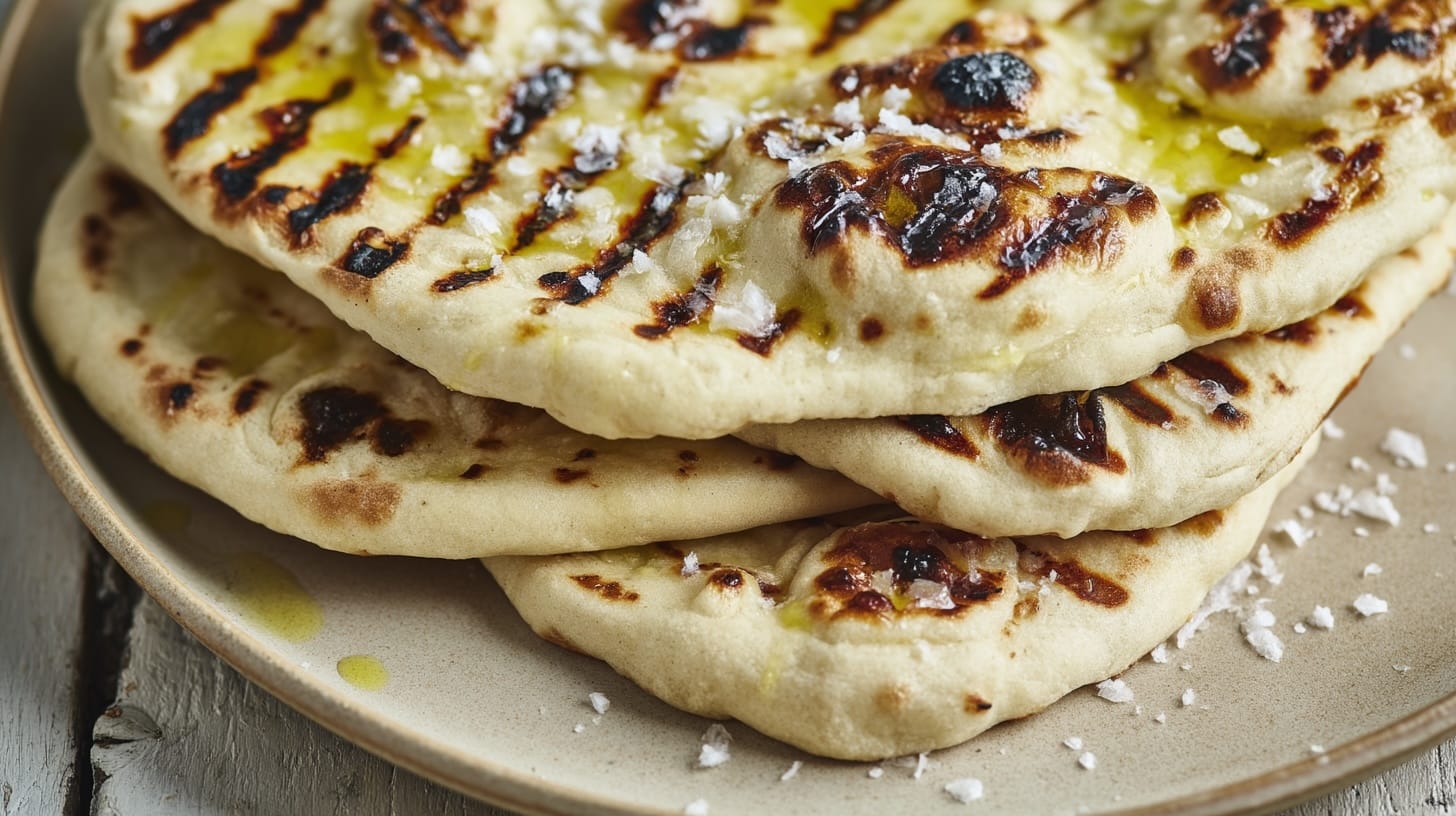
I make grilled flatbreads with olive oil and sea salt when I want the barbecue table to feel a bit more complete, a bit more generous and much easier to eat with my hands. They’re useful in the best way. You can tear them, fold them, swipe them through juices and use them to scoop up anything that would otherwise be wasted on the plate.
Why flatbreads make so much sense with spiced ribs
Soft grilled bread and smoky meat have never needed much explanation. The flatbreads pick up a bit of char, the olive oil keeps them supple and the sea salt gives them just enough flavour to stand on their own. I mentioned them with Spicy Harissa Yoghurt Pork Ribs with Lemon and Mint because they’re ideal for scooping up the yoghurt, juices and any sticky bits left behind after slicing.
A barbecue side that feels useful, not decorative
Some side dishes look nice and then quietly sit there while everyone reaches for the ribs. Flatbreads do not have that problem. They get used. They mop up sauce, make messy plates more manageable and give people something warm and smoky to tear at while hovering near the board pretending to help.
Why I keep them plain
There are lots of ways to flavour flatbreads, and plenty of them are good. Still, when I’m serving them with strongly flavoured barbecue, I usually keep things simple. Olive oil and sea salt are enough. That way the breads taste good on their own, though they still leave room for the main dish to do the louder work.
Ingredients for 4 people
- 300 g plain flour, plus extra for dusting
- 180 g Greek yoghurt
- 1 1/2 tsp baking powder
- 1/2 tsp fine sea salt
- 1 tbsp olive oil, plus extra for brushing
- 1 tsp flaky sea salt, for finishing
Before you mix the dough
This is a yoghurt flatbread dough, which means it’s quick, forgiving and does not require any yeast-related patience. The yoghurt keeps the dough soft and helps the breads stay tender after grilling, which is exactly what I want when they’re heading to the barbecue rather than a bread basket with delusions of grandeur.
Plain flour works perfectly here. If the dough feels a little sticky, I add a touch more flour while shaping, though I try not to overdo it because too much flour can make the flatbreads tougher than I’d like. I want them soft and flexible, not stern and dry.
What you need nearby
You’ll need a mixing bowl, a rolling pin or bottle, a clean work surface and a BBQ with a fairly hot section of grill. A pastry brush is handy for the olive oil, though the back of a spoon or even your fingers will do if you’re already mid-cook and not in the mood for ceremony.
A fish slice or tongs help when flipping the breads, especially once they puff a little and start getting those lovely charred patches. I like having a clean tea towel ready too, so I can stack the cooked flatbreads underneath it and keep them warm and soft until serving.
Instructions
Step 1: Make the dough
In a large bowl, mix the flour, baking powder and fine sea salt. Add the Greek yoghurt and olive oil, then stir until the mixture comes together into a rough dough.
Step 2: Knead briefly
Turn the dough onto a lightly floured surface and knead for 2 to 3 minutes until smooth. If it’s very sticky, add a little more flour, but only enough to make it manageable.
Step 3: Divide and shape
Divide the dough into 8 equal pieces. Roll each one into a ball, then flatten and roll into rough oval or round flatbreads about 3 to 4 mm thick.
Step 4: Heat the BBQ
Set the BBQ for medium-high direct heat. Clean and lightly oil the grill if needed so the breads release easily.
Step 5: Grill the flatbreads
Place the flatbreads on the grill and cook for 1 to 2 minutes per side, until puffed in places with charred patches and cooked through. Work in batches if needed.
Step 6: Brush and finish
As each flatbread comes off the grill, brush lightly with olive oil and sprinkle with flaky sea salt. Stack them under a tea towel to keep warm and soft.
How I keep grilled flatbreads soft and flexible
The big thing with grilled flatbreads is not overcooking them. They only need a minute or two on each side, and once they’re done, they’re done. Leave them on too long and they turn dry and a bit cracker-like, which is not much use when you want something tearable and warm for scooping up rib juices.
I also like stacking them under a towel as they come off the grill. That trapped warmth softens them slightly and keeps the edges from firming up too much. It’s a small thing, though it makes the difference between a flatbread that bends happily and one that snaps at you when folded.
What I serve them with most often
These flatbreads were made with Spicy Harissa Yoghurt Pork Ribs with Lemon and Mint in mind. They’re brilliant for dragging through the cool yoghurt, catching the spiced juices and making the whole plate feel a bit more hands-on and relaxed. It’s one of those combinations that makes people look for an extra piece of bread before they admit they’re still hungry.
They also work beautifully with grilled vegetables, kebabs, salads and smoky chicken. Any barbecue dish with sauces, marinades or juices benefits from having warm bread nearby. Frankly, most meals improve when bread is quietly waiting within reach.
What I’d pour with them
For wine, I’d keep it fresh and fairly uncomplicated. A dry white with decent acidity works well, especially if the flatbreads are being served with spicy ribs or herby sides. A crisp rosé is another good fit if the table’s full of mixed barbecue dishes.
For beer, a lager or pilsner makes a lot of sense because it’s clean and refreshing without distracting from the bread or whatever it’s mopping up. A pale ale can work nicely too, especially if the rest of the meal has a little smoke and spice running through it.
FAQ
Can I make grilled flatbreads without yeast?
Yes, that’s exactly what this recipe does. The yoghurt and baking powder make them quick and easy without any proving time.
Can I cook these flatbreads on a barbecue?
Yes, and they’re especially good that way. The grill gives them light char and a smoky edge that suits barbecue food very well.
Why are my flatbreads tough?
Usually that means they were overworked, overfloured or cooked too long. A softer dough and a short grill time help a lot.
Can I make the dough ahead of time?
Yes. You can make it a few hours ahead and keep it covered in the fridge. Let it sit out briefly before shaping if it’s very cold.
Do I need a rolling pin?
No. You can use your hands or even a bottle. The shapes can be rough. Flatbreads are not precious things.
What do grilled flatbreads go with?
They’re excellent with ribs, grilled meats, kebabs, salads, dips and any barbecue dish with juices worth scooping up.
A few things that make them better
The best grilled flatbreads with olive oil and sea salt come from a dough that’s soft but not sticky enough to become annoying. I’d rather the dough feel slightly tacky and need a little flour on the surface than be too dry from the start. Dry dough gives drier breads, and that’s a disappointing road to go down.
It also helps to resist the urge to roll them too thin. A little thickness gives you softer centres and better puffing on the grill. Too thin, and they char before they’ve had a chance to develop that nice chewy tenderness that makes them useful at the table.
Easy ways to change them up
You can add chopped herbs like parsley or coriander to the dough if you want a greener finish, though I usually keep the dough plain and add flavour elsewhere on the table. A little garlic oil brushed on after grilling is also very good, especially if the breads are going with ribs and yoghurt sauces.
For a richer version, brush them with olive oil and scatter over sesame seeds or nigella seeds just after grilling. If you want something a bit sharper, a light rub with cut lemon while they’re hot works surprisingly well and gives them a fresher edge.
Keeping leftovers
Store leftover flatbreads in an airtight container or wrapped well for up to 2 days. They’re best warm and fresh, though they hold up reasonably well if kept covered so they don’t dry out.
To reheat, put them back on the BBQ or in a hot dry pan for 20 to 30 seconds per side. You just want to warm and soften them, not cook them again. A light brush of olive oil after reheating helps bring them back nicely.
Why they’re handy beyond taste
These flatbreads bring useful carbohydrates and a bit of protein to a barbecue spread, and they make messy meals easier to eat without needing anything complicated. The yoghurt keeps them tender, while the simple ingredient list makes them easy to fit around whatever else is happening on the grill.
For dietary swaps, you can use a dairy-free Greek-style yoghurt if needed, though choose one that’s thick enough to make a workable dough. A gluten-free flour blend may work, though the texture will be different and may need some adjustment.

Grilled Flatbreads with Olive Oil and Sea Salt

Ingredients
- 300 g plain flour plus extra for dusting
- 180 g Greek yoghurt
- 1 1/2 tsp baking powder
- 1/2 tsp fine sea salt
- 1 tbsp olive oil plus extra for brushing
- 1 tsp flaky sea salt for finishing
Instructions
Make the dough
- In a large bowl, mix the flour, baking powder and fine sea salt. Add the Greek yoghurt and olive oil, then stir until the mixture comes together into a rough dough.
Knead briefly
- Turn the dough onto a lightly floured surface and knead for 2 to 3 minutes until smooth. If it’s very sticky, add a little more flour, but only enough to make it manageable.
Divide and shape
- Divide the dough into 8 equal pieces. Roll each one into a ball, then flatten and roll into rough oval or round flatbreads about 3 to 4 mm thick.
Heat the BBQ
- Set the BBQ for medium-high direct heat. Clean and lightly oil the grill if needed so the breads release easily.
Grill the flatbreads
- Place the flatbreads on the grill and cook for 1 to 2 minutes per side, until puffed in places with charred patches and cooked through. Work in batches if needed.
Brush and finish
- As each flatbread comes off the grill, brush lightly with olive oil and sprinkle with flaky sea salt. Stack them under a tea towel to keep warm and soft.