A sticky start
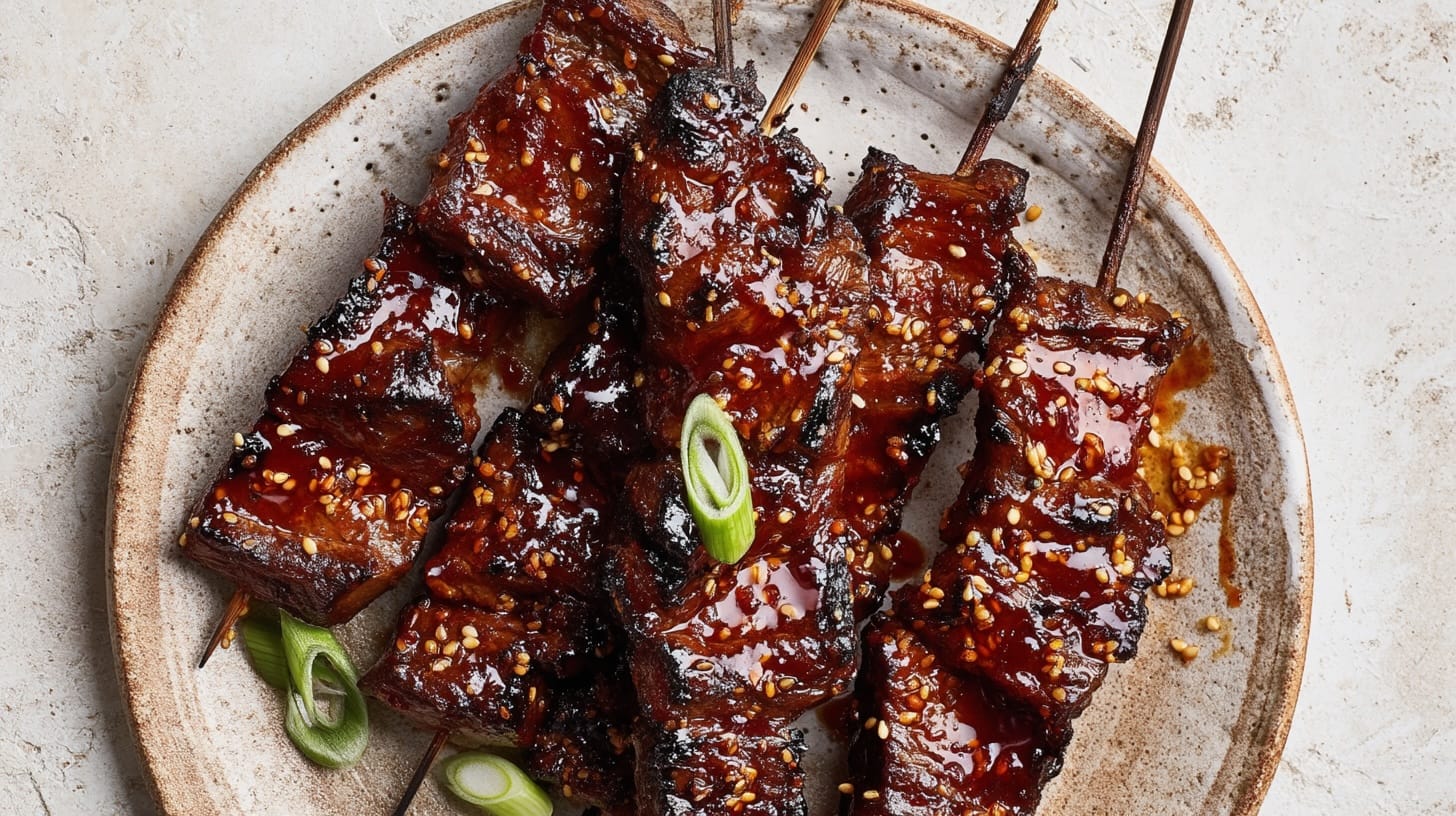
The first time I put gochujang and honey together for beef skewers, I knew I was onto one of those combinations that feels obvious only after you’ve tasted it. The chilli paste brings a deep fermented warmth, the honey rounds it out, and the beef takes on that glossy lacquer that looks almost painted once it hits the grill. This recipe sits happily inside my wider swicy beef skewer collection, especially when I want something that feels punchy but still balanced.
This swicy flavour works so well
Gochujang honey beef skewers have a knack for hitting several notes at once. You get sweetness first, then savoury depth, then that steady chilli warmth that lingers rather than shouts. I like using sesame and lime here because they sharpen the edges and stop the glaze from turning cloying. If you enjoy that sweet heat profile, my maple chipotle beef skewers lean smokier, while sesame rich miso beef skewers take a darker, saltier route.
What I notice on the barbecue
On the BBQ, these skewers behave beautifully if the heat is managed with a bit of care. The sugars caramelise fast, which means the beef gets crisp little edges while staying juicy in the centre. I’ve found that rump or sirloin cut into even chunks gives me the right mix of tenderness and proper beefy chew. When I fancy another East Asian style twist, I often look at pear glazed chilli beef skewers because pear brings a softer sweetness to the same family of flavours.
When I make these most often
This is the sort of skewer I turn to when I want maximum impact without hauling half the pantry onto the worktop. The marinade takes minutes, the finish is glossy and the garnishes do the rest. For a more garlic-forward sweet heat version, garlic hot honey beef skewers are worth a look, though this gochujang version remains the one I make when I want a richer, stickier glaze with a bit more backbone.
Ingredients for 4 people
- 700g beef sirloin or rump steak, cut into 3cm cubes
- 1 tbsp neutral oil
- 8 metal skewers, or 4 large skewers
For the marinade
- 3 tbsp gochujang
- 2 tbsp runny honey
- 2 tbsp light soy sauce
- 1 tbsp toasted sesame oil
- 1 tbsp rice vinegar
- 2 garlic cloves, finely grated
- 1 tsp fresh ginger, finely grated
- 1 tbsp lime juice
- 1 tsp soft light brown sugar
- 1 tsp gochugaru or mild chilli flakes
- 1 tsp freshly ground black pepper
To finish
- 1 tbsp toasted sesame seeds
- 2 spring onions, finely sliced
- 1 lime, cut into wedges
- 1 small handful coriander, roughly chopped, optional
Ingredient notes
Gochujang varies more than people realise. Some tubs are deeply savoury and almost malty, others are sweeter and sharper. I always taste a little before mixing the marinade, then adjust the honey or lime accordingly. If your gochujang is on the sweeter side, pull the honey back by half a tablespoon. If it’s fierce, a touch more honey softens it nicely without flattening the flavour.
For the beef, I reach for sirloin when I want a slightly softer bite and rump when I want more chew and a stronger beef flavour. Both work well as long as the cubes are evenly cut. Try not to go too lean, because a little marbling helps the meat stay succulent over direct heat. Fresh lime matters here too. Bottled juice can taste flat and misses that bright, sharp lift that wakes up the glaze.
Equipment needed
A kettle barbecue or gas barbecue with a clear hot and cooler zone makes life much easier. These skewers colour quickly because of the honey, so having a spot to move them away from the fiercest heat is useful. I use metal skewers because they don’t need soaking and they help the beef cook a bit more evenly from the inside, though bamboo skewers are perfectly fine if soaked well beforehand.
You’ll also want a medium mixing bowl, a small brush for glazing, tongs and a thermometer if you like checking doneness rather than guessing. I don’t always use a thermometer for skewers, though it helps when I’m cooking for friends who all like their beef at slightly different stages. A small tray for resting the cooked skewers is handy, since a short rest keeps the juices where they belong.
Instructions
Step 1, make the gochujang honey marinade
In a mixing bowl, whisk together the gochujang, honey, soy sauce, sesame oil, rice vinegar, garlic, ginger, lime juice, brown sugar, gochugaru and black pepper until smooth and glossy.
Step 2, coat the beef
Add the beef cubes to the bowl and turn them thoroughly so every piece is covered. Cover and chill for 1 to 2 hours. If you’re short on time, 30 minutes still gives a good result, but the flavour won’t sink in quite as fully.
Step 3, prepare the barbecue
Set your BBQ for two-zone cooking, one side hot and direct, the other side a little gentler. Clean the grates and oil them lightly. Take the beef from the fridge 20 minutes before cooking so it loses a bit of that fridge chill.
Step 4, thread the skewers
Thread the beef onto skewers, leaving tiny gaps between pieces rather than packing them tightly. That small space helps the heat move around the meat and gives better caramelisation.
Step 5, grill the skewers
Place the skewers over the hot side of the barbecue and cook for 2 to 3 minutes per side. Turn regularly so the glaze catches and darkens without scorching. Move them to the cooler zone if the edges start colouring too fast.
Step 6, baste for extra shine
During the last couple of minutes, brush over any remaining marinade that has not touched raw beef, or use a small reserved portion made separately. Let it bubble briefly on the meat so it turns sticky and glossy.
Step 7, rest and finish
Transfer the skewers to a tray and rest for 4 to 5 minutes. Scatter over toasted sesame seeds, spring onions and coriander, then squeeze over a little fresh lime just before serving.
Cooking technique notes for gochujang honey beef skewers
The main thing with gochujang honey beef skewers is heat control. Sweet marinades can fool people into thinking the barbecue is running perfectly when it’s actually a touch fierce. The outside starts to colour, everyone gets excited, then two turns later the glaze is blackened and bitter. I aim for a grate temperature that is properly hot but not raging, enough to sear and caramelise, not enough to turn sugars into soot. Two-zone cooking is the fix. It gives you a fast lane and a safe lane, which matters more here than with plain salted beef.
Threading matters too. When pieces are jammed shoulder to shoulder, they steam where they touch and brown only on the exposed corners. Leaving a little space gives you a more even crust and a better tacky finish. Resting the skewers is equally useful. It’s tempting to take them straight from grill to plate, especially when the glaze is gleaming, but four or five minutes makes the beef juicier and lets the surface set so the sesame sticks properly instead of sliding off.
What to serve with this recipe
I like to serve these with steamed rice or warm flatbreads, depending on the mood of the meal. Rice soaks up the glaze and keeps the whole thing grounded, while flatbreads turn it into a slightly messier, more hands-on supper. A crunchy cucumber salad with rice vinegar and a pinch of sugar works especially well because it cools the heat and adds a clean snap against the sticky beef.
For something more substantial, I’ll put these skewers next to charred tenderstem broccoli, blistered peppers or grilled gem lettuce with a citrusy dressing. A potato salad with spring onions and a light sesame dressing also works better than you might expect. The key is contrast. Since the beef is rich, glossy and a little fiery, I want sides that are crisp, bright or gently creamy rather than heavy.
Wine and beer pairings
For wine, I’d pour a juicy Australian Shiraz if I wanted something plush with enough ripe fruit to handle the honey and chilli. The peppery edge in Shiraz also gets on well with the char from the barbecue, which makes the pairing feel settled rather than flashy. A slightly chilled off-dry Riesling is another good call, especially if you prefer to lean into the heat. That faint sweetness cools the chilli and the acidity keeps the sesame and soy flavours from feeling dense.
For beer, a cold pilsner is a reliable choice because it scrubs the palate clean after each sticky, savoury bite. It keeps things bright and doesn’t compete with the glaze. If I want something rounder, I go for a hazy pale ale with citrus notes. That sort of beer plays neatly with the lime and spring onion finish, and it gives the whole plate a fresher feel without stripping away the richness of the beef.
FAQ
What cut of beef is best for gochujang honey beef skewers?
Sirloin and rump are my top choices. Sirloin gives a tender bite, while rump has a slightly beefier character. Both hold up well on the barbecue if cut into even chunks.
Can I make gochujang beef skewers ahead of time?
Yes. You can marinate the beef up to 24 hours ahead. I wouldn’t leave it much longer because the texture can start to soften too much from the salt and acidity.
Are gochujang honey beef skewers very spicy?
Not usually. They’re warm rather than fierce. The honey, sesame oil and beef fat soften the heat. Add extra gochugaru if you want a sharper chilli kick.
Can I cook these beef skewers on a gas barbecue?
Absolutely. A gas BBQ is perfect for this recipe because you can create a direct heat side and a cooler side very easily, which helps with sugar-heavy marinades.
How do I stop sticky beef skewers burning?
Keep part of the grill cooler, turn the skewers often and don’t brush on too much glaze too early. The finish should set in layers rather than flood the meat.
Is gochujang the same as chilli paste?
Not really. Gochujang has chilli heat, but it also brings fermented savoury depth and a touch of sweetness. It tastes fuller and more rounded than many plain chilli pastes.
Tips for success with gochujang honey beef skewers
The easiest way to get brilliant gochujang honey beef skewers is to think in layers. Layer one is the marinade, which should be balanced before the beef even goes in. Layer two is the grill colour, built gradually through turning and careful heat management. Layer three is the finish, where lime, sesame and spring onion brighten everything up. When any one of those is rushed, the skewers still taste decent, but they lose that polished feel that makes you want a second skewer before you’ve finished the first.
I also think this recipe benefits from restraint. Too much honey and the glaze turns sticky in a heavy way. Too much lime and the savoury chilli character gets diluted. Too many garnishes and the beef disappears under them. I keep coming back to the same principle here, which is that each part should sharpen the others. The beef should still taste like beef. The gochujang should still taste fermented and deep. The lime should feel like a final flick of light, not a takeover.
Recipe variation suggestions
For a nuttier, slightly darker version, add 1 tablespoon smooth peanut butter to the marinade and a splash more lime juice to loosen it. That gives the skewers a satay-like richness while keeping the same sweet heat shape. I’ve also made this with a spoonful of black garlic paste, which nudges the flavour towards something earthier and more savoury.
If you want more freshness, add chunks of red onion or small pieces of pepper between the beef on the skewers. They catch the glaze nicely and bring a bit of softness and sweetness. For dietary adjustments, you can use reduced-salt soy sauce to lower sodium, or swap the honey for maple syrup if needed. The profile changes slightly, though it still works well on the barbecue.
Storage and reheating for gochujang honey beef skewers
Leftover gochujang honey beef skewers keep well in an airtight container in the fridge for up to 3 days. I like to remove the beef from the skewers before storing because it cools faster and reheats more evenly. Keep any fresh garnishes separate so they stay crisp.
To reheat, warm the beef gently in a covered frying pan with a tablespoon of water, or place it on a tray in a moderate oven until just hot. You can also reheat it briefly on the barbecue over indirect heat. I wouldn’t blast it over direct heat again because the sugars can catch too quickly and the beef can toughen.
Health benefits and dietary options
These skewers bring a solid amount of protein, iron and vitamin B-rich beef, which makes them satisfying and useful if you want a meal that feels hearty without needing loads of extras. Ginger, garlic and chilli also contribute flavour in a way that lets the recipe stay lively without relying on lots of heavy sauce at the table. Lime and spring onions add freshness, which helps balance the richer elements.
If you need to lighten the recipe, use a leaner steak cut and reduce the sesame oil slightly. For lower sugar, cut back the honey and skip the brown sugar. For gluten-free needs, use a gluten-free soy sauce or tamari and check that your gochujang is suitable, since some brands contain barley. If you avoid sesame, leave out the sesame oil and seeds, then add a small drizzle of neutral oil plus extra lime zest for lift.

Gochujang Honey Beef Skewers with Sesame and Lime

Ingredients
- 700 g beef sirloin or rump steak cut into 3cm cubes
- 1 tbsp neutral oil
- 8 metal skewers or 4 large skewers
For the marinade
- 3 tbsp gochujang
- 2 tbsp runny honey
- 2 tbsp light soy sauce
- 1 tbsp toasted sesame oil
- 1 tbsp rice vinegar
- 2 garlic cloves finely grated
- 1 tsp fresh ginger finely grated
- 1 tbsp lime juice
- 1 tsp soft light brown sugar
- 1 tsp gochugaru or mild chilli flakes
- 1 tsp freshly ground black pepper
To finish
- 1 tbsp toasted sesame seeds
- 2 spring onions finely sliced
- 1 lime cut into wedges
- 1 small handful coriander roughly chopped, optional
Instructions
Make the gochujang honey marinade
- In a mixing bowl, whisk together the gochujang, honey, soy sauce, sesame oil, rice vinegar, garlic, ginger, lime juice, brown sugar, gochugaru and black pepper until smooth and glossy.
Coat the beef
- Add the beef cubes to the bowl and turn them thoroughly so every piece is covered. Cover and chill for 1 to 2 hours. If you’re short on time, 30 minutes still gives a good result, but the flavour won’t sink in quite as fully.
Prepare the barbecue
- Set your BBQ for two-zone cooking, one side hot and direct, the other side a little gentler. Clean the grates and oil them lightly. Take the beef from the fridge 20 minutes before cooking so it loses a bit of that fridge chill.
Thread the skewers
- Thread the beef onto skewers, leaving tiny gaps between pieces rather than packing them tightly. That small space helps the heat move around the meat and gives better caramelisation.
Grill the skewers
- Place the skewers over the hot side of the barbecue and cook for 2 to 3 minutes per side. Turn regularly so the glaze catches and darkens without scorching. Move them to the cooler zone if the edges start colouring too fast.
Baste for extra shine
- During the last couple of minutes, brush over any remaining marinade that has not touched raw beef, or use a small reserved portion made separately. Let it bubble briefly on the meat so it turns sticky and glossy.
Rest and finish
- Transfer the skewers to a tray and rest for 4 to 5 minutes. Scatter over toasted sesame seeds, spring onions and coriander, then squeeze over a little fresh lime just before serving.