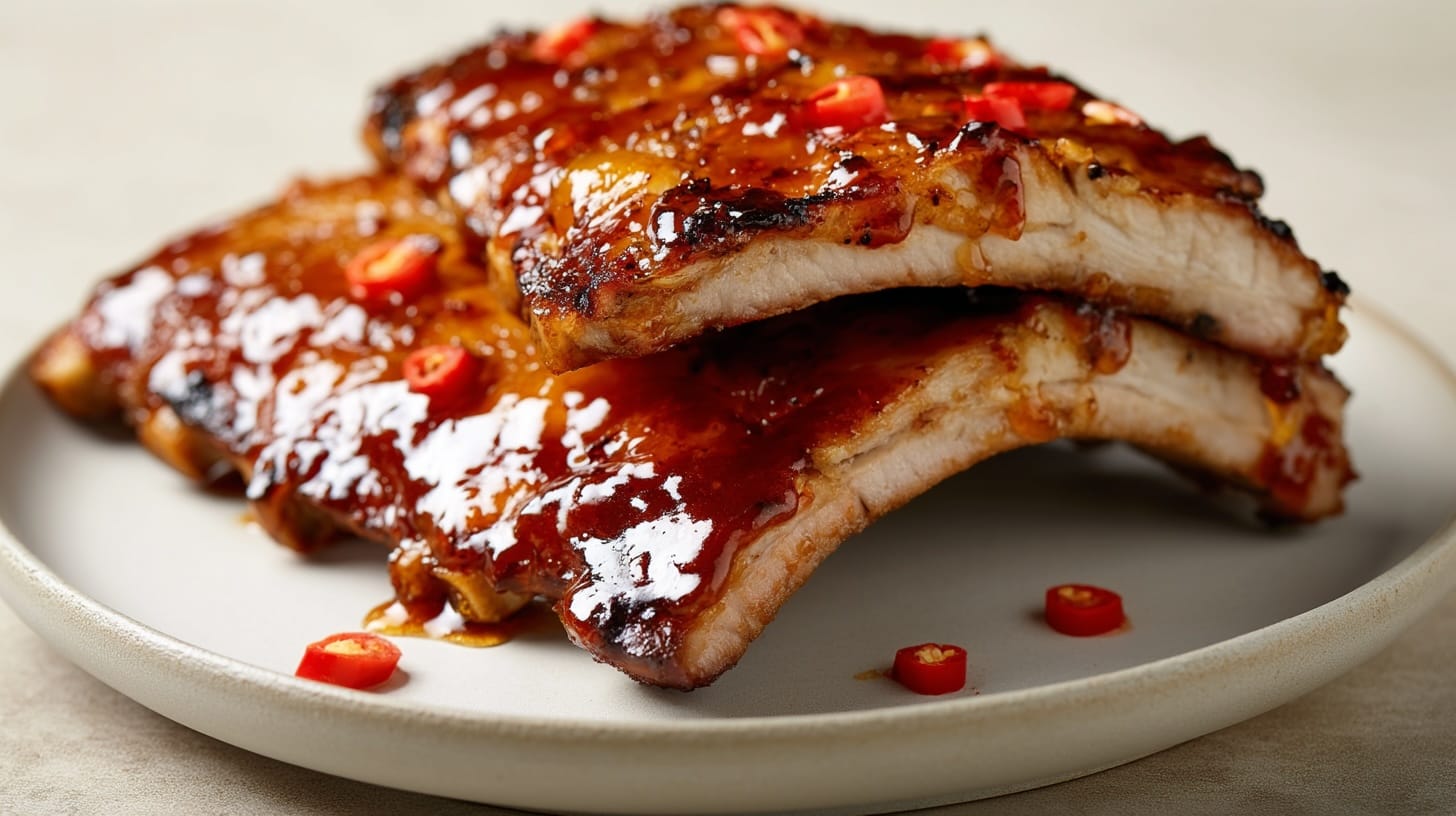
The ribs I make when I want sweet heat with a sharper edge
These pineapple scotch bonnet pork ribs are loud in all the right ways. The pineapple brings juicy sweetness and a little tang, the molasses adds dark sticky depth and the Scotch bonnet arrives with that bright, fruity heat that makes you sit up properly. I make these when I want spicy BBQ pork ribs that feel fresh and rich at the same time, which is a tricky line to walk but a very satisfying one when it works.
Why pineapple and molasses suit pork so well
Pineapple has enough acidity and natural sweetness to wake pork up without making it taste sugary. Molasses does the opposite job, grounding the glaze and giving it that deeper, darker note that clings beautifully to ribs. The contrast is what makes this recipe work. When I want something a little gentler and smokier, I go for maple chilli ribs with paprika warmth. When I’m after a softer tropical sweetness, mango lime ribs with habanero fire are usually the first ones I think of.
The sort of heat you get from Scotch bonnet
Scotch bonnet isn’t subtle, though it isn’t just hot for the sake of it either. It has a fruity, floral quality that works brilliantly with pineapple, especially once the glaze cooks down and turns glossy. The heat lands quickly, then the sweetness pulls it back into shape. For the bigger picture, these ribs sit nicely inside my smoky spicy ribs round up, where I keep all the spicy pork rib recipes I make most often.
Where these ribs fit in my usual rotation
These are my bright dark ribs, if that makes any sense at all. They’ve got sunny fruit flavour, then molasses comes in and gives the whole thing a deeper, stickier finish. I like them when I want a rib glaze that feels full but still lively. If I’m leaning towards a glossy citrus profile instead, sriracha honey ribs with orange glaze are another regular. For warm spice and floral sweetness, jerk honey ribs with allspice depth are a very good shout too.
Ingredients for 4 people
- 2 kg pork ribs, membrane removed
- 2 tsp fine sea salt
- 1 tsp cracked black pepper
- 2 tsp smoked paprika
- 1 tsp garlic powder
- 1 tsp onion powder
For the pineapple Scotch bonnet molasses glaze
- 250 g pineapple, finely chopped
- 1 Scotch bonnet chilli, deseeded and finely chopped
- 4 garlic cloves, finely grated
- 20 g fresh ginger, finely grated
- 2 tbsp black treacle or molasses
- 2 tbsp dark brown sugar
- 2 tbsp honey
- 2 tbsp apple cider vinegar
- 2 tbsp soy sauce
- 2 tbsp tomato purée
- 80 ml pineapple juice
- 1 tbsp lime juice
- 1 tbsp neutral oil
- 2 tbsp water
Ingredient notes
Fresh pineapple gives the glaze the best flavour and a bit more texture before blending, though tinned pineapple in juice can work if that’s what you’ve got. I’d avoid pineapple in syrup because it can make the sauce too sweet too quickly. The juice matters too. A splash of proper pineapple juice helps the glaze taste bright and keeps it from becoming too dense once the molasses goes in.
Scotch bonnet varies quite a lot in heat, so I usually start with one deseeded chilli and then taste the sauce before deciding whether it needs any more. It has a distinct fruity flavour that’s worth keeping in balance. Molasses or black treacle is strong stuff, and a little goes a long way. It’s there to deepen the glaze, not take the whole thing over.
Equipment needed
You’ll need a BBQ set up for indirect heat, plus a small saucepan, blender or stick blender, tongs and a basting brush. I also like a foil tray during the first stage of the cook because it keeps the ribs neat and helps prevent flare-ups later when the sugars in the glaze start doing their thing.
A small sharp knife is useful for trimming the chilli and pineapple properly, and I’d strongly recommend gloves for the Scotch bonnet unless you enjoy accidentally seasoning your eyelids later on. I keep a tray or board ready for resting too, because sticky glazed ribs deserve a little breathing room before slicing.
Instructions
Step 1: Prepare and season the ribs
Pat the ribs dry and remove the membrane from the back if needed. Mix the salt, pepper, smoked paprika, garlic powder and onion powder, then season both sides of the ribs evenly.
Step 2: Set up the BBQ
Prepare your BBQ for indirect cooking at 150°C to 160°C. You want steady, moderate heat for most of the cook, with one slightly hotter area ready for the final glaze setting stage.
Step 3: Start cooking the ribs
Place the ribs bone side down on the indirect side of the grill or in a foil tray. Close the lid and cook for 1 hour 30 minutes, keeping the heat as steady as you can.
Step 4: Make the pineapple Scotch bonnet glaze
Heat the oil in a saucepan over low heat. Add the Scotch bonnet, garlic and ginger, then cook for 1 minute until fragrant. Stir in the pineapple, molasses, dark brown sugar, honey, cider vinegar, soy sauce, tomato purée, pineapple juice, lime juice and water. Simmer gently for 8 to 10 minutes until the pineapple softens. Blend until smooth, then return to the pan for 2 to 3 minutes until glossy and lightly thickened.
Step 5: Glaze the ribs
Brush a thin layer of glaze over the ribs and return them to the BBQ over indirect heat. Cook for 15 minutes, then brush again. Repeat once more if needed so the glaze builds gradually.
Step 6: Finish the glaze
Move the ribs a little closer to the hotter side for 5 to 6 minutes, turning once if needed, until the glaze is sticky and set with a few darker caramelised patches.
Step 7: Rest and slice
Rest the ribs for 10 minutes, then slice between the bones and serve with any remaining glaze on the side.
How I cook pineapple Scotch bonnet pork ribs on the BBQ
The main thing with these ribs is not rushing the fruit glaze. Pineapple sugars caramelise quickly, and once molasses joins in, the glaze can darken much faster than you expect. That’s why I always cook the ribs through most of the tenderising stage first, then start layering the sauce later on. It gives the meat time to soften and lets me build the sticky finish without scorching the sugars.
I also blend the glaze properly rather than leaving it rough. That helps it brush on evenly and cling to the ribs in a thin glossy coat instead of collecting in little fruity pockets that catch too fast. The Scotch bonnet needs a careful hand too. It brings lively heat and a fruity aroma, but if you overdo it the glaze stops tasting balanced and starts tasting like a dare. I’d rather have a rib you want another one of than a rib you spend ten minutes recovering from.
What to serve with this recipe
These ribs do very well with cool crunchy sides. A cabbage and cucumber slaw with lime and a little yoghurt works especially well because it calms the chilli and gives you some needed freshness between bites. I also like grilled corn or charred plantain with these, because the sweetness fits the pineapple and molasses without making the plate feel overloaded.
For something more filling, rice is a smart move. Plain rice, coconut rice or even rice with spring onion and lime all work well for soaking up extra glaze. A black bean salad with tomato, red onion and coriander is another good side if you want more texture and a bit of savoury contrast. On cooler days, roast sweet potatoes are very hard to beat beside these ribs.
Wine and beer pairings
For wine, I’d start with an off dry Riesling because it does a lovely job of cooling the Scotch bonnet while keeping up with the pineapple and molasses. The acidity keeps the glaze feeling lively and stops the sweet notes from sitting too heavily. A chilled rosé with good freshness can work nicely too, especially if it has enough fruit to handle the glaze without turning flabby.
For beer, I like a wheat beer or a pale ale with tropical fruit notes. Both have enough brightness to suit the pineapple and enough refreshment to make the chilli more manageable. A lager also works if it’s clean and crisp, especially when I want the ribs to stay centre stage and the drink to do more quiet support work.
FAQ
How spicy are pineapple Scotch bonnet pork ribs?
They have a proper kick, though the pineapple and molasses help round it out. For a milder version, use half a Scotch bonnet or swap it for a red chilli.
Can I use tinned pineapple for rib glaze?
Yes, tinned pineapple in juice works well. Drain it first and avoid pineapple in syrup, which can make the glaze too sweet.
What does Scotch bonnet taste like in BBQ sauce?
It has a fruity, bright heat that works very well with sweet ingredients like pineapple, mango and honey. It adds flavour as well as heat.
Why add molasses to pineapple rib glaze?
Molasses adds depth and a darker sticky note that balances the bright sweetness of the pineapple. It helps the glaze taste fuller and more rounded.
Can I make these ribs ahead of time?
Yes. Cook the ribs through the first indirect stage, then cool and chill. Reheat and glaze them on the BBQ just before serving.
How do I keep pineapple glaze from burning?
Apply it later in the cook, use thin layers and keep the final hotter stage short while watching the ribs closely.
Can I make this recipe with baby back ribs?
Yes. Baby back ribs cook faster than spare ribs, so start checking them sooner and be a little lighter with the glaze.
Tips for Success with pineapple Scotch bonnet pork ribs
The best pineapple Scotch bonnet pork ribs come from getting the sweet heat balance right before the glaze touches the meat. Pineapple sweetness varies and Scotch bonnet heat can jump about quite a bit, so I always taste the sauce once it’s simmered and again after blending. If it feels too sweet, I add a splash more lime or cider vinegar. If the heat is sharper than I want, a small spoonful of honey usually settles things down.
It also helps to keep the glaze thin enough to brush properly. If it’s too thick, it sits in patches and catches on the grill before the rest has time to set. A splash of water or pineapple juice sorts that out quickly. I want a glaze that coats the ribs in layers, not one that behaves like sticky jam and causes unnecessary stress.
Recipe variation suggestions
You can push these ribs in a more savoury direction by adding 1 teaspoon of allspice and a splash of Worcestershire sauce to the glaze. That brings a warmer, slightly deeper finish and pairs especially well with the molasses. I’ve also added orange zest before, which gives the fruit glaze a brighter aroma and makes the Scotch bonnet feel even livelier.
For an extra fresh finish, scatter chopped coriander and thinly sliced spring onion over the sliced ribs just before serving. If you want to lean further into the tropical side, add a little mango to the glaze with the pineapple. That softens the sharp edges and gives the sauce a thicker, silkier feel.
Storage and reheating for pineapple Scotch bonnet pork ribs
Store leftover pineapple Scotch bonnet pork ribs in an airtight container in the fridge for up to 3 days. I keep any leftover glaze in a separate jar so I can brush it on while reheating rather than letting it sit on the ribs the whole time.
To reheat, place the ribs in a covered tray on the BBQ over indirect heat at 160°C for 15 to 20 minutes. Brush with a little glaze during the final few minutes, then uncover briefly so the surface turns sticky again. They reheat well in the oven too, though the BBQ does a better job of keeping the edges lively.
Health benefits and easy swaps
These ribs provide a good amount of protein, iron and B vitamins from the pork, while pineapple contributes vitamin C and a little fibre. Ginger, garlic and chilli bring plenty of flavour and useful plant compounds, which means the glaze tastes layered without leaning entirely on fat or salt. It’s still a rich plate of food, so I like serving it with slaw, salad or rice rather than very heavy creamy sides.
For dietary swaps, use tamari instead of soy sauce for a gluten free version and check your Worcestershire sauce if you add it in a variation. You can reduce the sugar slightly if you prefer the glaze less sweet, though the molasses and honey help with that sticky finish. For a milder version, reduce the Scotch bonnet or swap it for a standard red chilli. Reduced salt soy sauce works well if you want to lower the sodium a little.

Sticky Pineapple Scotch Bonnet Pork Ribs with Molasses

Ingredients
- 2 kg pork ribs membrane removed
- 2 tsp fine sea salt
- 1 tsp cracked black pepper
- 2 tsp smoked paprika
- 1 tsp garlic powder
- 1 tsp onion powder
For the pineapple Scotch bonnet molasses glaze
- 250 g pineapple finely chopped
- 1 Scotch bonnet chilli deseeded and finely chopped
- 4 garlic cloves finely grated
- 20 g fresh ginger finely grated
- 2 tbsp black treacle or molasses
- 2 tbsp dark brown sugar
- 2 tbsp honey
- 2 tbsp apple cider vinegar
- 2 tbsp soy sauce
- 2 tbsp tomato purée
- 80 ml pineapple juice
- 1 tbsp lime juice
- 1 tbsp neutral oil
- 2 tbsp water
Instructions
Prepare and season the ribs
- Pat the ribs dry and remove the membrane from the back if needed. Mix the salt, pepper, smoked paprika, garlic powder and onion powder, then season both sides of the ribs evenly.
Set up the BBQ
- Prepare your BBQ for indirect cooking at 150°C to 160°C. You want steady, moderate heat for most of the cook, with one slightly hotter area ready for the final glaze setting stage.
Start cooking the ribs
- Place the ribs bone side down on the indirect side of the grill or in a foil tray. Close the lid and cook for 1 hour 30 minutes, keeping the heat as steady as you can.
Make the pineapple Scotch bonnet glaze
- Heat the oil in a saucepan over low heat. Add the Scotch bonnet, garlic and ginger, then cook for 1 minute until fragrant. Stir in the pineapple, molasses, dark brown sugar, honey, cider vinegar, soy sauce, tomato purée, pineapple juice, lime juice and water. Simmer gently for 8 to 10 minutes until the pineapple softens. Blend until smooth, then return to the pan for 2 to 3 minutes until glossy and lightly thickened.
Glaze the ribs
- Brush a thin layer of glaze over the ribs and return them to the BBQ over indirect heat. Cook for 15 minutes, then brush again. Repeat once more if needed so the glaze builds gradually.
Finish the glaze
- Move the ribs a little closer to the hotter side for 5 to 6 minutes, turning once if needed, until the glaze is sticky and set with a few darker caramelised patches.
Rest and slice
- Rest the ribs for 10 minutes, then slice between the bones and serve with any remaining glaze on the side.