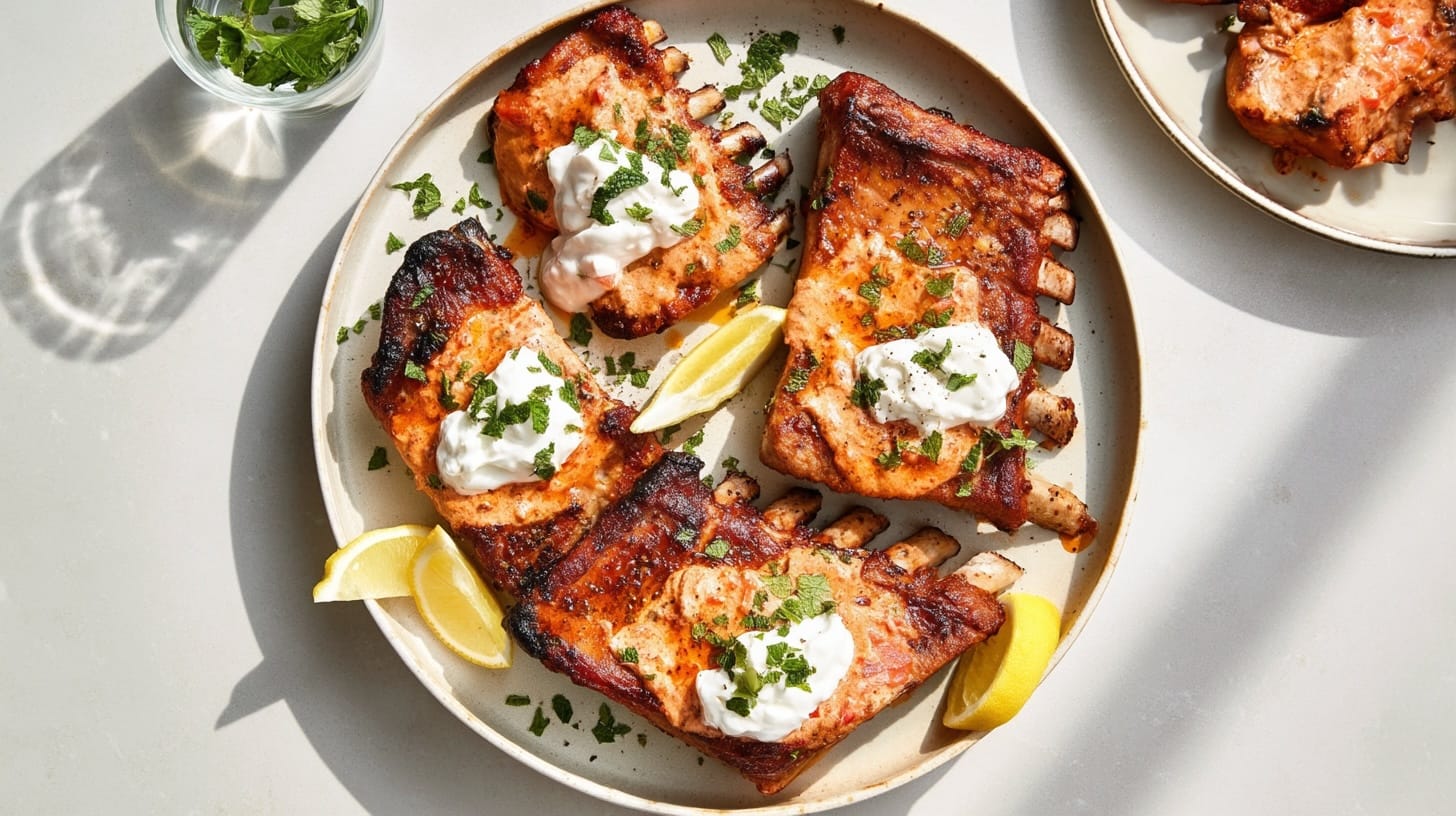
The ribs I make when I want heat with a cooler edge
These harissa yoghurt pork ribs are what I cook when I want spicy BBQ pork ribs that feel a bit fresher and a bit sharper than the darker sticky glazes. Harissa brings warmth, garlic and chilli depth, while yoghurt softens the edges and helps the lemon and mint feel bright rather than fussy. It’s a very good arrangement for pork, especially when the ribs come off the grill with charred edges and just enough glaze clinging to them.
Why harissa and yoghurt make sense together
Harissa has a deep earthy heat that I love with pork ribs, though it can feel quite intense on its own. Yoghurt changes that. It rounds the spice, gives the coating a creamy tang and helps the ribs stay juicy while they cook. Lemon keeps the whole thing awake, and mint stops it from getting too heavy. When I want a fruitier sort of spice, I make mango ginger ribs with sharp lime finish. For the full spread of recipes, I keep them all in my home barbecue ribs guide with plenty of heat.
The flavour profile I reach for when I want something lively
These ribs are spicy, though not in a sticky sugary way. The heat is warmer and more savoury, with lemon adding lift and mint bringing a fresh finish that cuts through the richness of the pork. I like them on days when I want BBQ ribs that feel bright on the plate without losing that smoky grilled character. If I’m after a darker tang, tamarind glazed ribs with savoury chilli tang are a brilliant alternative. When I want warm spice and honeyed sweetness, jerk allspice ribs with honey glaze are usually next.
Where these ribs sit in my regular rotation
I think of these as my sharper, cooler spicy ribs. They’ve still got plenty of character, though the yoghurt and lemon make them feel lighter than some of the lacquered glazes. That makes them especially handy when I want pork ribs with a bit of bite but don’t fancy a sauce that coats my fingers like varnish. For another savoury route with aromatic depth, calabrian tomato ribs with fennel perfume are worth a go too.
Ingredients for 4 people
- 2 kg pork ribs, membrane removed
- 2 tsp fine sea salt
- 1 tsp cracked black pepper
- 1 tsp ground cumin
- 1 tsp smoked paprika
- 1 tsp garlic powder
For the harissa yoghurt lemon mint coating
- 180 g Greek yoghurt
- 3 tbsp harissa paste
- 2 tbsp olive oil
- 2 tbsp lemon juice
- 1 tbsp lemon zest
- 4 garlic cloves, finely grated
- 1 tbsp honey
- 1 tsp ground coriander
- 1 tsp smoked paprika
- 1 tsp fine sea salt
- 2 tbsp fresh mint, finely chopped
- 1 tbsp chopped parsley
- 2 tbsp water, if needed
For finishing
- 2 tbsp extra Greek yoghurt
- 1 tbsp chopped fresh mint
- lemon wedges, for serving
Ingredient notes
Harissa varies quite a lot from jar to jar. Some are smooth and smoky, some are sharper and more aggressive, some are wonderfully garlicky and some seem to be mainly red paste with ambition. I always taste mine before mixing the marinade. If it’s particularly fierce, I’ll add a little more yoghurt or honey. If it tastes flat, an extra squeeze of lemon usually wakes it up.
Greek yoghurt is the best choice here because it’s thick enough to cling to the ribs rather than running straight off into the tray. Full-fat yoghurt gives the nicest finish and helps carry the spice well. Mint should be fresh and fragrant, not tired and blackening in the packet. Lemon zest matters too, because it adds aroma that lemon juice alone can’t quite manage.
Equipment needed
You’ll need a BBQ set up for indirect cooking, a bowl for mixing the harissa yoghurt marinade, a brush or spoon for coating the ribs and a foil tray or roasting dish that can sit on the grill. I like using a tray for these because yoghurt marinades can drip more than sugar-based glazes, and I’d rather not donate all that flavour straight to the coals.
A pair of sturdy tongs helps when moving the ribs for the final stage, and a thermometer is useful for keeping the grill in that calm middle ground where the yoghurt coating can set without scorching. I also keep a small extra bowl for the finishing yoghurt and herbs, because a cool spoonful over hot ribs at the end makes the whole thing feel more complete.
Instructions
Step 1: Prep the ribs
Pat the ribs dry with kitchen paper and remove the membrane from the back if needed. Mix the salt, black pepper, cumin, smoked paprika and garlic powder, then season both sides of the ribs.
Step 2: Mix the harissa yoghurt coating
In a bowl, stir together the Greek yoghurt, harissa paste, olive oil, lemon juice, lemon zest, garlic, honey, ground coriander, smoked paprika, salt, mint and parsley. If the mixture feels too thick to spread, add 1 to 2 tablespoons of water.
Step 3: Coat the ribs
Spread about two thirds of the harissa yoghurt mixture over the ribs, coating both sides well. Reserve the rest for basting later. Leave the ribs to sit for 20 to 30 minutes while you set up the BBQ.
Step 4: Set up the BBQ
Prepare your BBQ for indirect cooking at 150°C to 160°C. Keep one side cooler for the main cook and a slightly hotter area ready for setting the surface later on.
Step 5: Cook the ribs
Place the ribs bone side down in a foil tray or on the indirect side of the grill. Close the lid and cook for 1 hour 30 minutes. After 45 minutes, brush or spoon over a little more of the reserved harissa yoghurt mixture.
Step 6: Finish the coating
After the ribs have softened, move them a little closer to the hotter side for 5 to 7 minutes to set the outside and pick up a few charred patches. Brush lightly with the final bit of reserved coating if needed, but don’t pile it on too heavily at this stage.
Step 7: Rest and serve
Rest the ribs for 10 minutes, then slice between the bones. Finish with a few spoonfuls of extra Greek yoghurt, chopped mint and lemon wedges on the side.
How I cook harissa yoghurt pork ribs on the BBQ
The main difference with these ribs is that I’m not chasing a glossy sugar glaze. I’m after a spiced coating that sets on the meat, catches a bit of char and leaves the ribs tasting savoury, tangy and properly grilled. That means I cook them gently first over indirect heat so the yoghurt can dry and cling rather than split and slide about. Once the ribs are nearly tender, I give them a short blast nearer the hotter zone so the edges catch and the spices wake up.
I also try not to overload the ribs with yoghurt late in the cook. A heavy final coating can sit wet on the surface and stop the char from doing its work. Thin layers make far more sense. The yoghurt tenderises a little, the harissa settles into the meat and the lemon and mint keep everything lively. The finished ribs should taste smoky and spiced, with a cool sharp edge, not like they’ve been smothered in a dip.
What to serve with this recipe
These ribs love sharp, crunchy sides. I usually serve them with a chopped salad of cucumber, red onion and tomatoes dressed with lemon juice and olive oil. It keeps the plate bright and gives you something juicy and crisp next to the rich pork. A cabbage slaw with herbs also works beautifully, especially if you keep it light and not too creamy.
For something more substantial, grilled flatbreads are excellent with these ribs. They scoop up the yoghurt and juices and make the whole meal feel relaxed in the best way. I also like herby couscous or bulgur wheat with spring onions and parsley, because both soak up flavour well without getting in the way. Charred courgettes or aubergines are another good call if you want more veg on the plate.
Wine and beer pairings
For wine, I’d pour a dry rosé first. It has enough freshness for the lemon and yoghurt, and enough fruit to sit comfortably with the harissa without getting pushed around. A Sauvignon Blanc also works nicely, especially one with bright citrus and herbal notes. That sort of wine makes the mint and lemon feel even sharper and keeps the pork from feeling too rich.
For beer, I like a crisp pilsner with these ribs because it clears the richness of the pork and doesn’t argue with the yoghurt. A wheat beer is another very good option. The soft citrus character and gentle body work well with lemon and herbs, and it cools the spice in a very useful way. I’d avoid anything too bitter here, because the harissa and char already bring plenty of edge.
FAQ
Can I cook yoghurt marinated pork ribs on the BBQ?
Yes, absolutely. The key is indirect heat first so the yoghurt coating has time to set without burning. A short finish nearer the hotter side gives the ribs some char.
Does yoghurt make pork ribs tender?
It helps a bit. Yoghurt adds moisture and a gentle tangy marinade effect, which suits pork ribs very well, especially in a spiced coating.
Are harissa yoghurt pork ribs very spicy?
They’re warmly spiced rather than fiercely hot. The yoghurt softens the chilli, though the final heat depends on how fiery your harissa paste is.
Can I make these ribs without mint?
Yes. Parsley works well on its own, though mint adds a fresh cool note that really suits the lemon and harissa.
Should I use Greek yoghurt or natural yoghurt?
Greek yoghurt is better because it’s thicker and clings to the ribs more easily. Thin yoghurt can slip off too quickly during cooking.
Can I prepare harissa ribs ahead of time?
Yes. You can season and coat the ribs a few hours ahead, then keep them chilled until it’s time to cook. Let them lose their fridge chill before they go on the BBQ.
Why is my yoghurt marinade splitting on the grill?
That usually happens when the heat is too fierce or the coating is too thick. Keep the temperature steady and use thinner layers for a better finish.
Tips for Success with harissa yoghurt pork ribs
The best harissa yoghurt pork ribs come from paying attention to texture as much as flavour. You want the coating thick enough to cling, though not so thick that it turns claggy on the grill. I always mix the marinade until completely smooth, then add a splash of water if it feels too dense. Once it’s on the ribs, I leave it alone for a bit rather than fussing with it every few minutes.
It also helps to keep the finishing stage brief. The yoghurt and herbs can catch quickly, especially around the thinner ends of the rack. I’m looking for patches of char and a settled coating, not full dark crust all over. A spoonful of cool yoghurt and herbs at the end isn’t just decorative either. It brings the whole thing back into balance and makes the ribs feel bright right up to the last bite.
Recipe variation suggestions
You can push these ribs in a warmer spice direction by adding 1 teaspoon of ground cinnamon or allspice to the yoghurt mixture. That gives the harissa a slightly deeper profile and works very well with the smoky edges from the grill. A little extra coriander and parsley can also make the herb side feel greener and fresher if that’s what you’re after.
For a richer finish, stir 1 tablespoon of tahini into the yoghurt coating. It adds nuttiness and makes the marinade feel a little fuller without weighing it down too much. If you want a sharper version, add preserved lemon finely chopped into the finishing yoghurt. That brings a salty citrus note that works beautifully with pork and char.
Storage and reheating for harissa yoghurt pork ribs
Store leftover harissa yoghurt pork ribs in an airtight container in the fridge for up to 3 days. I like to keep any extra finishing yoghurt separate, then add it fresh after reheating rather than warming it with the ribs.
To reheat, place the ribs in a covered tray on the BBQ over indirect heat at 160°C for 15 to 20 minutes until hot through. Uncover them for the last few minutes if you want the edges to pick up a bit of char again. Finish with fresh yoghurt, mint and lemon just before serving. The oven works too, though the BBQ gives a far better finish.
Health benefits and easy swaps
These ribs bring plenty of protein, iron and B vitamins from the pork, while Greek yoghurt adds calcium and a bit more protein. Garlic, herbs and chilli contribute useful plant compounds and lots of flavour, which means the recipe feels lively without needing a very sugary glaze. It’s still a rich dish, so I like pairing it with crisp salads, grilled vegetables or grain salads to keep the meal balanced.
For dietary swaps, use a dairy-free Greek-style yoghurt if you need to avoid dairy, though choose one that’s thick and unsweetened so the coating still behaves properly. For a milder version, reduce the harissa and add more yoghurt. If you need a lower sodium version, use less salt in the seasoning and check the harissa label, since some jars are noticeably saltier than others. Gluten free sides are easy here, with rice, potatoes or salad all working very well.

Spicy Harissa Yoghurt Pork Ribs with Lemon and Mint

Ingredients
- 2 kg pork ribs membrane removed
- 2 tsp fine sea salt
- 1 tsp cracked black pepper
- 1 tsp ground cumin
- 1 tsp smoked paprika
- 1 tsp garlic powder
For the harissa yoghurt lemon mint coating
- 180 g Greek yoghurt
- 3 tbsp harissa paste
- 2 tbsp olive oil
- 2 tbsp lemon juice
- 1 tbsp lemon zest
- 4 garlic cloves finely grated
- 1 tbsp honey
- 1 tsp ground coriander
- 1 tsp smoked paprika
- 1 tsp fine sea salt
- 2 tbsp fresh mint finely chopped
- 1 tbsp chopped parsley
- 2 tbsp water if needed
For finishing
- 2 tbsp extra Greek yoghurt
- 1 tbsp chopped fresh mint
- lemon wedges for serving
Instructions
Prep the ribs
- Pat the ribs dry with kitchen paper and remove the membrane from the back if needed. Mix the salt, black pepper, cumin, smoked paprika and garlic powder, then season both sides of the ribs.
Mix the harissa yoghurt coating
- In a bowl, stir together the Greek yoghurt, harissa paste, olive oil, lemon juice, lemon zest, garlic, honey, ground coriander, smoked paprika, salt, mint and parsley. If the mixture feels too thick to spread, add 1 to 2 tablespoons of water.
Coat the ribs
- Spread about two thirds of the harissa yoghurt mixture over the ribs, coating both sides well. Reserve the rest for basting later. Leave the ribs to sit for 20 to 30 minutes while you set up the BBQ.
Set up the BBQ
- Prepare your BBQ for indirect cooking at 150°C to 160°C. Keep one side cooler for the main cook and a slightly hotter area ready for setting the surface later on.
Cook the ribs
- Place the ribs bone side down in a foil tray or on the indirect side of the grill. Close the lid and cook for 1 hour 30 minutes. After 45 minutes, brush or spoon over a little more of the reserved harissa yoghurt mixture.
Finish the coating
- After the ribs have softened, move them a little closer to the hotter side for 5 to 7 minutes to set the outside and pick up a few charred patches. Brush lightly with the final bit of reserved coating if needed, but don’t pile it on too heavily at this stage.
Rest and serve
- Rest the ribs for 10 minutes, then slice between the bones. Finish with a few spoonfuls of extra Greek yoghurt, chopped mint and lemon wedges on the side.