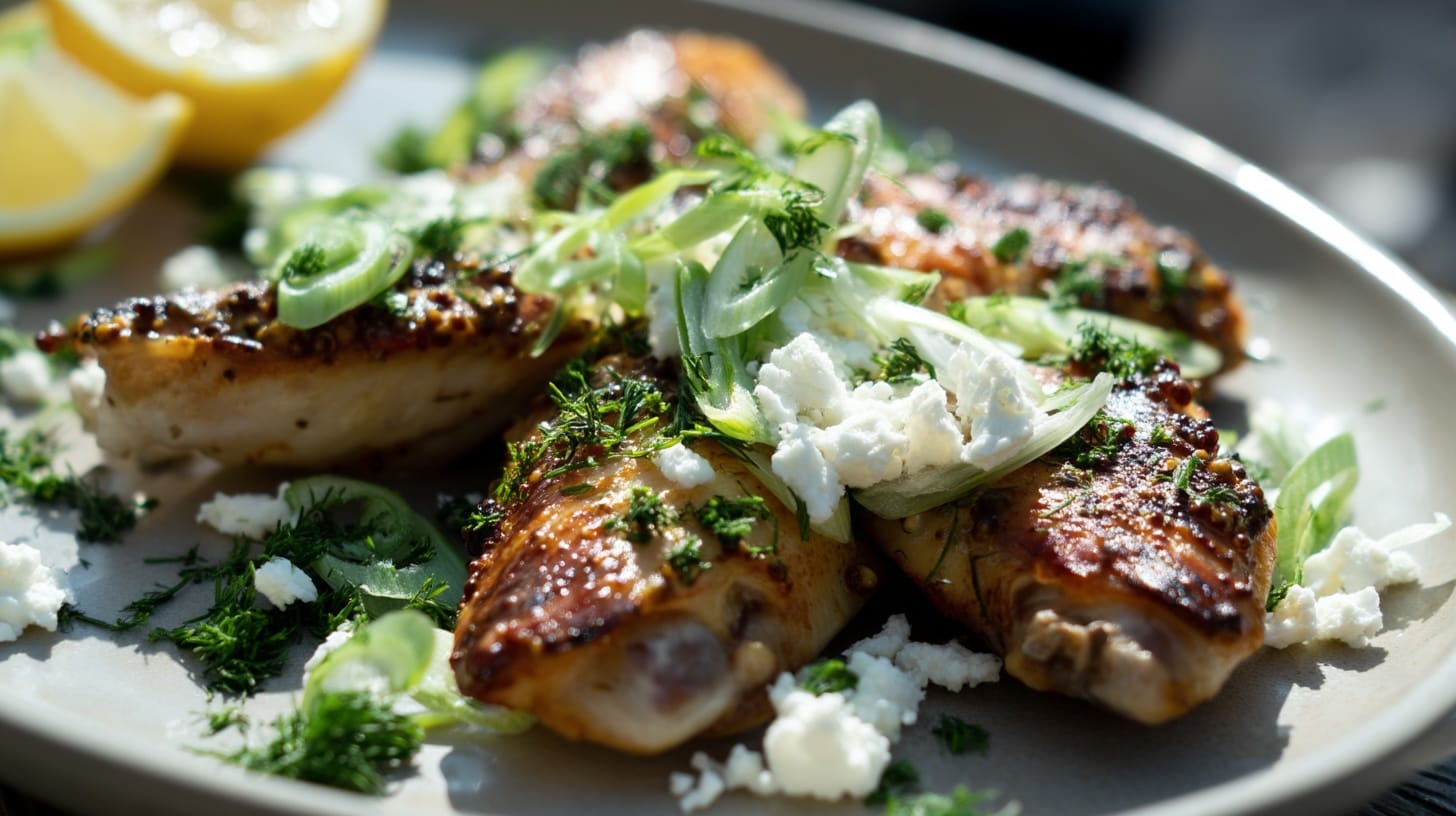
Mustard, dill and why these wings wake a plate up
When a BBQ spread starts leaning rich, smoky and a bit heavy, this is the wing tray I reach for. Mustard and dill have a way of sharpening everything around them. The wings come off the grill with a savoury crust, then I throw over spring onion, feta and a last bit of lemon so the whole lot tastes brisk, punchy and properly awake. In the wider Greek BBQ chicken wings guide, these sit in a very different lane from the glossy honey feta chilli thyme wings and the steadier, darker red wine bay garlic wings.
I like them because they don’t behave like the usual sweet-hot BBQ wing. There’s no sticky lacquer and no big sugary finish. The payoff is a wing that feels crisp, savoury and fresh at the same time. Mustard gives body and edge, dill keeps it green and lifted, and spring onion brings a raw little snap that lands right at the end. If the lemon oregano garlic yoghurt wings are clean and classic, these are tangier and more assertive, with more bite built straight into the surface of the wing.
What makes this batch worth cooking
These wings are all about contrast. The coating is warm, savoury and a touch sharp from Dijon and wholegrain mustard, while the finish is cold, grassy and salty from dill, spring onion and feta. That combination makes them useful on a BBQ table. They cut through fatty meats, richer dips and soft breads without disappearing into the background.
That’s also why I keep the lemon in check. I want enough to brighten the mustard, though not so much that the wings slide into the citrus-herb territory covered elsewhere in this series. Compared with the cucumber yoghurt mint lemon wings, these are much firmer and more savoury. Compared with the olive caper parsley wings, they’re less briny and more tang-led. That gives them a clear job of their own.
Ingredients for 4 people
For the wings
- 1.5 kg chicken wings, split into flats and drumettes
- 2 tbsp Dijon mustard
- 1 tbsp wholegrain mustard
- 2 tbsp extra virgin olive oil
- 1 tbsp lemon juice
- 4 garlic cloves, finely grated
- 1 tsp sea salt
- 1 tsp black pepper
- 1 tsp onion granules
- 1 tsp dried dill
- 1 tsp dried oregano
- 0.5 tsp sweet paprika
For the dill, spring onion and feta finish
- 3 spring onions, finely sliced
- 20 g fresh dill, chopped
- 60 g feta, crumbled
- 1 tbsp extra virgin olive oil
- 1 tsp lemon zest
- 1 tsp lemon juice
- 1 pinch sea salt
Optional mustard yoghurt drizzle
- 2 tbsp Greek yoghurt
- 1 tsp Dijon mustard
- 1 tsp lemon juice
Ingredient notes
I use both Dijon and wholegrain mustard because one on its own never quite gives me the finish I want. Dijon spreads easily and gives the wings a proper savoury tang, while wholegrain mustard adds texture and little sharp pops here and there. That matters because this recipe isn’t built around sweetness or chilli. It needs flavour that feels direct and lively from the first bite.
Fresh dill makes the recipe. Dried dill helps in the coating, though the chopped fresh dill at the end is what keeps the wings from tasting flat. The spring onions should be sliced thin enough to settle into the hot wings instead of sitting on top in chunky strips. Feta wants a light hand. Too much and the whole tray starts feeling chalky and salty. Just enough gives the wings creamy little contrasts without taking over.
Equipment needed
A covered BBQ with a two-zone setup suits these wings best. Mustard colours faster than a plain dry rub, so I want room to cook the wings through gently before I chase the final browning. A decent pair of tongs helps because I turn these more often in the last stage than I would a simpler lemon-herb wing.
I also like having a small bowl ready for the dill topping and another one for the optional drizzle. The finishing stage happens fast. Once the wings are hot and crisp, I want the feta, herbs and spring onion ready to go on straight away. That keeps the whole thing feeling fresh rather than staged.
Instructions
Step 1, coat the wings
Pat the wings dry and place them in a large bowl. Mix together the Dijon mustard, wholegrain mustard, olive oil, lemon juice, garlic, salt, pepper, onion granules, dried dill, oregano and paprika.
Add the wings and toss well until every piece is coated. Refrigerate for 1 to 2 hours. That gives the seasoning time to settle without making the wings too wet.
Step 2, prepare the fresh finish
In a small bowl, combine the spring onions, chopped dill, crumbled feta, olive oil, lemon zest, lemon juice and a small pinch of salt.
If you’re making the optional drizzle, stir the yoghurt, Dijon mustard and lemon juice together in a separate bowl and keep it chilled until serving.
Step 3, set up the BBQ
Prepare the BBQ for two-zone cooking at roughly 200 to 220°C. Clean and lightly oil the grate if needed.
Take the wings out of the fridge 15 to 20 minutes before cooking. That helps them cook more evenly and stops the surface from feeling fridge-cold on the grill.
Step 4, cook over indirect heat first
Place the wings on the cooler side of the grill. Close the lid and cook for 20 to 25 minutes, turning every so often, until the skin has tightened and the mustard coating looks set.
They should be lightly coloured at this stage, with rendered fat starting to show under the skin.
Step 5, finish over the hotter side
Move the wings to the hotter side of the BBQ and cook for 8 to 10 minutes, turning often, until browned, crisp at the edges and cooked through to at least 74°C.
Watch them closely in this stage. Mustard can go from beautifully bronzed to a bit too dark if left sitting over a fierce patch of heat.
Step 6, dress and serve
Transfer the wings to a platter while they’re still hot. Scatter over the dill, spring onion and feta mixture straight away so the warmth just softens everything.
Add a little mustard yoghurt drizzle if you like, then serve with lemon wedges on the side.
Cooking notes for mustard dill chicken wings
Mustard gives wings a very different sort of finish from honey or yoghurt. It clings to the skin, browns in an uneven, savoury way and forms a light crust rather than a glaze. That’s exactly why I like it on the BBQ. You still get colour and depth, though the wings stay drier to the touch and easier to pair with sides, dips and salads that already bring enough richness of their own.
The fresh topping is what really pushes these wings into their own corner. I’m not using the dill and spring onion as garnish in the lazy sense. They’re part of the point. The hot mustardy skin underneath and the cool, sharp finish above give you two textures and two temperatures in the same bite. That makes the recipe feel very different from the softer yoghurt-led pages in this set.
What to serve with these wings
These wings go well with sharp, crunchy sides that keep the meal moving. I especially like them with radish cabbage yoghurt deli coleslaw, because the peppery crunch works beautifully with mustard and dill. Garlic parmesan potatoes with lemon chives are another good shout if you want something warmer and more filling without drifting into sweet flavours.
For dipping, Greek yoghurt harissa roasted garlic is a good match. It adds creaminess and gentle heat, though it doesn’t muddy the mustard profile. If I were building a bigger mixed grill, I’d also pair these with something richer and stickier from outside the wing category, maybe one of the ideas in swicy BBQ beef skewer recipes, so the wings can do the job of brightening the table.
Wine and beer pairings
For wine, I’d pour a crisp Sauvignon Blanc or Assyrtiko. Both have enough acidity to keep pace with mustard and lemon, and both handle dill surprisingly well. A dry rosé also works, especially if the weather is warm and you want something refreshing without losing structure.
For beer, pilsner is my first choice. It’s clean, bitter enough to freshen the palate and light enough to let the dill and spring onion stay clear. A dry saison can work nicely too, especially one with a peppery finish. I’d avoid heavier malt-forward beers here, because they can make the mustard feel duller than it should.
FAQ
Do mustard dill chicken wings taste very mustardy?
They’re definitely tangy, though not harsh. The dill, lemon and feta round the flavour out, so the wings taste savoury and fresh rather than aggressively hot.
Can I use yellow mustard instead of Dijon?
You can, but the result is flatter and more vinegary. Dijon gives a cleaner, fuller flavour, while wholegrain adds the texture that helps this recipe feel distinct.
Why add the spring onion after cooking?
It keeps its bite and freshness that way. Cooked too long, it loses the sharpness that makes these wings feel so lively.
Are these wings spicy?
Not in a chilli sense. They’ve got mustard warmth and a bit of garlic edge, though no real heat unless you add it yourself.
Can I make them without feta?
Yes. They still work well. Add a small spoon of thick yoghurt or just more fresh dill and lemon if you want to keep the finish lighter.
What’s the best way to stop mustard wings burning?
Cook them through over gentler heat first, then finish over the hotter side while turning often. That gives you colour without letting the coating catch too hard.
Do dill and mustard go well with chicken wings?
Very well. Mustard gives depth and tang, while dill brings a fresh herbal note that stops the wings from feeling too heavy.
Tips for success with mustard dill chicken wings
The most useful thing I’ve learned with mustard dill chicken wings is to keep the coating tidy. Too much mustard mixture and the wings stay damp, which makes browning harder and the texture a bit muddled. I want every wing coated, though I don’t want thick blobs of mustard sitting in the bowl. A leaner coating gives a better crust and a more even finish on the BBQ.
I also think these wings benefit from finishing in two quick stages. First, the feta and some of the dill go on while the wings are still piping hot, so they settle slightly into the skin. Then the spring onion and remaining dill go on right before serving, keeping everything fresh and sharp. It sounds like a small detail, though it really changes the plate.
Variation ideas for mustard dill chicken wings
If I want a slightly fuller version, I stir a spoonful of Greek yoghurt into the mustard coating and reduce the oil just a touch. That softens the edges and helps the seasoning cling, though I keep it restrained so the wings don’t slide too close to the yoghurt-driven styles elsewhere in this series. A pinch of crushed fennel seed can also work if I want a warmer background note.
For more bite, I sometimes add finely sliced shallot to the spring onion topping. That gives the wings a little extra sharpness and a more salad-like finish. A spoonful of chopped capers can work too, though that starts nudging the wings towards the briny olive-caper page, so I use them lightly.
Storage and reheating for mustard dill chicken wings
Store leftover wings in the fridge for up to 3 days in an airtight container. Keep the fresh dill, spring onion and feta topping separate if possible so it stays crisp.
Reheat the wings in a hot oven or on the BBQ over indirect heat until piping hot, then add a fresh topping before serving. That brings back the contrast that makes these wings work in the first place. A little extra lemon at the end is useful too.
Dietary swaps
These wings are high in protein and fairly restrained on sugar, which makes them handy in a BBQ spread that already includes richer sauces or sweeter meats. Mustard, dill, garlic and lemon bring plenty of character without relying on syrupy glazes. Feta adds calcium and savoury depth, while olive oil rounds the recipe out without making it feel heavy.
For dairy-free eating, leave out the feta and skip the optional yoghurt drizzle. A little more olive oil, dill and lemon at the end will still give the wings a lively finish. For lower sodium, reduce the feta and salt, then lean more on herbs and lemon zest. The recipe is naturally gluten-free so long as your mustard and spices are suitable.

Mustard Dill Chicken Wings with Spring Onion and Feta

Ingredients
For the wings
- 1.5 kg chicken wings split into flats and drumettes
- 2 tbsp Dijon mustard
- 1 tbsp wholegrain mustard
- 2 tbsp extra virgin olive oil
- 1 tbsp lemon juice
- 4 garlic cloves finely grated
- 1 tsp sea salt
- 1 tsp black pepper
- 1 tsp onion granules
- 1 tsp dried dill
- 1 tsp dried oregano
- 0.5 tsp sweet paprika
For the dill and spring onion finish
- 3 spring onions finely sliced
- 20 g fresh dill chopped
- 60 g feta crumbled
- 1 tbsp extra virgin olive oil
- 1 tsp lemon zest
- 1 tsp lemon juice
- 1 pinch sea salt
Optional mustard drizzle
- 2 tbsp Greek yoghurt
- 1 tsp Dijon mustard
- 1 tsp lemon juice
Instructions
Coat the wings
- Pat the wings dry and place them in a large bowl. Mix the Dijon mustard, wholegrain mustard, olive oil, lemon juice, garlic, salt, pepper, onion granules, dried dill, oregano and paprika.
- Add the wings and toss thoroughly until every piece is coated. Leave them in the fridge for 1 to 2 hours. That’s long enough for the mustard and garlic to settle in without making the surface too wet.
Prepare the fresh topping
- In a small bowl, combine the spring onions, chopped dill, crumbled feta, olive oil, lemon zest, lemon juice and a small pinch of salt.
- If you want the optional drizzle, stir the yoghurt, Dijon mustard and lemon juice together in a separate bowl and chill until needed.
Fire the BBQ
- Set the BBQ for two-zone cooking at around 200 to 220°C. Lightly oil the grate if needed.
- Take the wings out of the fridge 15 to 20 minutes before they go on so they cook more evenly.
Cook the wings gently first
- Place the wings on the cooler side of the grill and close the lid. Cook for 20 to 25 minutes, turning every so often, until the skin has tightened and the coating has started to set.
- At this point the wings should look matte and lightly coloured, not fully browned.
Finish for colour
- Move the wings over the hotter side and grill for 8 to 10 minutes, turning often, until the skin is deeply golden in places and the internal temperature reaches at least 74°C.
- Mustard can catch on very hot spots, so stay with them and keep shifting pieces around if one area of the grill is fiercer than the rest.
Dress and serve
- Transfer the hot wings to a platter. Scatter over the dill, spring onion and feta mixture while the wings are still steaming. Add a little mustard drizzle if you’re using it.
- Serve straight away with lemon wedges on the side. These wings are at their best when the topping still feels fresh and the skin is hot underneath.