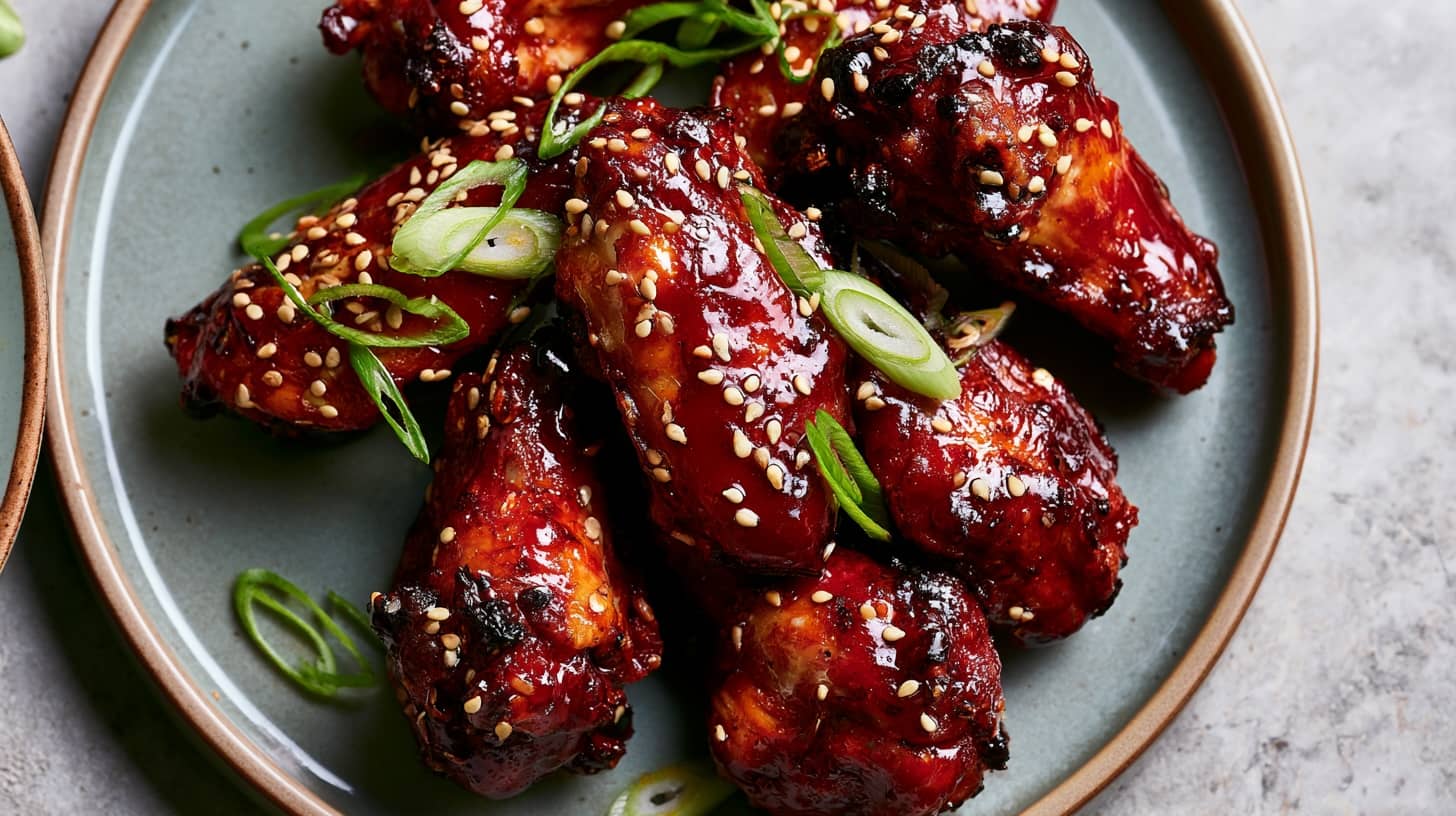
Gochujang Chicken Wings with a Deep Red Sesame Glaze
These sticky gochujang sesame chicken wings are for the days when I want heat with a bit of depth rather than a quick chilli slap. Gochujang brings fermented chilli warmth, the sesame oil gives a nutty roundness and fresh ginger cuts through the glaze so it doesn’t sit heavily on the skin. I like these when I’m cooking wings for people who enjoy proper chilli flavour but don’t want a sauce that just shouts.
This page sits inside my sweet and sticky chicken wing glaze collection, but it earns its place by being savoury, glossy and slower-burning. It’s not the bright, quick finish of hot honey garlic lime chicken wings, and it’s not the dark treacle depth of black garlic soy treacle chicken wings. This one is about red chilli paste, toasted sesame and ginger warmth clinging to crisp BBQ chicken skin.
Why Gochujang Works So Well on BBQ Wings
Gochujang is thick, salty, sweet and chilli-rich, which makes it brilliant for a sticky wing glaze, but it needs loosening before it hits the grill. I whisk it with honey, rice vinegar, soy sauce and sesame oil so it brushes on smoothly instead of clumping in angry red streaks.
The clever bit is timing. I don’t glaze these wings too early. The sugar in gochujang and honey can darken quickly over live heat, so I cook the wings until the fat has rendered and the skin has tightened first. Then the glaze goes on near the end, building a lacquer rather than a burnt crust.
Ingredients for 4 People
Chicken Wings
- 1.2kg chicken wings, split into flats and drumettes
- 1 tbsp neutral oil
- 1½ tsp fine sea salt
- 1 tsp white pepper
- 1 tsp baking powder
- ½ tsp garlic granules
- ½ tsp ground ginger
Sticky Gochujang Sesame Glaze
- 70g gochujang
- 45g runny honey
- 1 tbsp light soy sauce
- 1 tbsp rice vinegar
- 2 tsp toasted sesame oil
- 2 garlic cloves, finely grated
- 18g fresh ginger, finely grated
- 1 tsp brown sugar
- 1 tbsp water, plus extra if needed
- 1 tsp sesame seeds
- 2 spring onions, finely sliced
Ingredient Notes
Gochujang varies quite a bit between brands. Some jars are sweeter and softer, while others are saltier and much thicker. I start with 70g, then loosen the glaze with a spoonful of water so it brushes like warm ketchup. If it drags across the wings, it’s too thick. If it runs straight off, give it a minute over gentle heat.
Fresh ginger is not a garnish here. It’s the thing that keeps the glaze lively. Ground ginger in the wing seasoning adds background warmth, but grated fresh ginger in the glaze brings the sharper, lemony heat I want with sesame. Toasted sesame oil is powerful, so measure it. Too much and the wings start tasting oily rather than nutty.
Equipment Needed
A lidded BBQ with a two-zone set-up makes these wings much easier to control. I set the cooler side around 180°C to 200°C and keep the hotter side ready for the final sticky finish. A ceramic BBQ holds a steady temperature nicely, but a kettle BBQ does the job perfectly if the vents are behaving.
You’ll need tongs, a mixing bowl, a small saucepan, a whisk and a silicone brush. I also keep a clean tray next to the BBQ for glazed wings, because once the gochujang goes on, everything becomes gloriously red and slightly chaotic. An instant-read thermometer helps too. Guessing with wings is possible, but I’d rather know the meat is ready before the glaze stage begins.
Instructions
Step 1: Season and Rest the Wings
Pat the chicken wings dry with kitchen paper. Put them in a bowl with the oil, salt, white pepper, baking powder, garlic granules and ground ginger.
Toss well, making sure the seasoning gets into the bends and joints. Set the wings on a rack and chill uncovered for 45 minutes, or up to overnight if you’re planning ahead.
Step 2: Prepare the BBQ for Indirect Heat
Light the BBQ for two-zone cooking. Aim for medium heat on the indirect side, around 180°C to 200°C.
Clean and oil the cooking grate. Gochujang glaze is sticky, so you want the wings moving freely before the sauce gets involved.
Step 3: Cook the Wings Until the Skin Tightens
Place the wings on the indirect side. Close the lid and cook for 25 to 30 minutes, turning once or twice.
The skin should look dry, lightly bronzed and slightly blistered in places. Check the thickest drumette reaches at least 74°C, though I prefer wings closer to 80°C for better texture.
Step 4: Make the Gochujang Sesame Glaze
In a small pan, whisk together the gochujang, honey, soy sauce, rice vinegar, sesame oil, garlic, ginger, brown sugar and water.
Warm gently for 2 to 3 minutes until smooth. Don’t boil it hard. You just want the sugar dissolved and the ginger softened.
Step 5: Glaze in Layers
Brush the cooked wings lightly with the gochujang glaze. Move them nearer the direct heat, but not right over fierce flames.
Turn every minute and brush again. Repeat for 4 to 6 minutes until the glaze looks glossy, red and tacky. If it darkens too quickly, slide the wings back to the cooler side.
Step 6: Finish with Sesame and Spring Onion
Transfer the wings to a warm tray. Sprinkle with sesame seeds and sliced spring onions while the glaze is still sticky.
Rest for 5 minutes before serving. The glaze thickens slightly as it cools, which gives that proper finger-coating finish.
BBQ Technique Notes for Gochujang Sesame Wings
The most important decision is not what goes into the glaze, it’s when the glaze goes on. Gochujang is already concentrated, so long exposure to direct heat can make it taste harsh. I treat it like a finishing lacquer. The chicken cooks first, then the glaze gets a short, controlled blast of heat so the sugars tighten and the chilli paste clings to the skin.
I also avoid drowning the wings. A heavy coating looks tempting, but it steams the surface and turns the skin soft. Thin layers are better. Brush, turn, wait and brush again. By the end, the wings should look shiny rather than saucy. That’s the difference between BBQ wings with grip and a tray of chicken wearing a red blanket.
What to Serve with Sticky Gochujang Sesame Chicken Wings
These wings like fresh, crunchy sides. I’d serve them with cucumber salad, cabbage slaw, coconut rice with lime and spring onion, or grilled flatbreads if I want something soft to mop up the last streaks of glaze. A spoonful of gochujang sour cream jalapeno dip works well if you want a creamy chilli dip that stays in the same flavour lane.
For a wing board, I’d place these next to pineapple Scotch bonnet molasses wings for fruitier heat, or mango habanero coriander chicken wings for a fresher, brighter contrast. The gochujang wings bring the savoury centre of the plate, so build the rest around crunch, acid and coolness.
Wine and Beer Pairings
Off-dry Riesling is my first pick here. It handles chilli without going flabby, and the acidity cuts through the sesame oil. Gewürztraminer can also work if you like floral wine with spicy food, especially when the glaze is on the hotter side. For a red, try chilled Gamay. It’s light enough not to fight the fermented chilli paste.
For beer, a crisp lager is the easy route. It refreshes the palate and keeps the sticky glaze from feeling heavy. A session IPA can work if it’s not too bitter, as citrusy hops suit the ginger and spring onion. Brown ale is a quieter option, but the nutty malt can be lovely with toasted sesame.
FAQ
What does gochujang taste like on chicken wings?
Gochujang tastes sweet, savoury, salty and warmly spicy. On BBQ chicken wings it gives a deep red glaze with fermented chilli flavour rather than a sharp hot sauce burn.
Can I make these gochujang chicken wings less spicy?
Yes. Use 50g gochujang instead of 70g and add an extra tablespoon of honey. You can also finish the wings with more spring onion and sesame seeds to soften the chilli hit.
Can I use sriracha instead of gochujang?
Not for the same result. Sriracha is thinner, sharper and more vinegary. Gochujang is thicker and fermented, which gives these sticky sesame chicken wings their deeper flavour.
Why is my gochujang glaze too thick?
Gochujang varies by brand. Add water 1 teaspoon at a time until the glaze brushes easily. It should coat the back of a spoon but still move when you tilt the pan.
Can I cook these wings in an air fryer?
Yes. Cook the seasoned wings at 190°C for 22 to 25 minutes, turning halfway. Brush with glaze and cook for another 3 to 5 minutes, checking often so the sugars don’t scorch.
Do gochujang wings need marinating?
No. I prefer seasoning the wings dry and using the gochujang as a glaze at the end. A wet marinade can stop the skin crisping properly.
Tips for Success with Sticky Gochujang Sesame Chicken Wings
Don’t let the glaze boil aggressively. Gentle heat wakes up the garlic and ginger, but hard boiling can make the gochujang taste too intense and salty. When the glaze looks smooth and glossy, it’s ready. I keep it warm near the BBQ so it stays brushable while the wings finish.
Use sesame oil like seasoning, not cooking fat. Toasted sesame oil is strong, and the wings already have plenty going on with honey, soy, garlic and ginger. Two teaspoons gives a rounded nutty finish without making the chicken greasy. Add the sesame seeds at the end too, not during cooking, so they keep their little toasted crunch.
Sticky Gochujang Chicken Wing Variations
For extra crunch, scatter over crushed roasted peanuts with the spring onions. It pushes the wings towards a satay-like finish without changing the core gochujang sesame glaze. You can also add finely chopped red chilli at the end if you want a fresher bite alongside the slower chilli paste heat.
For a darker, more savoury version, add 1 tsp black vinegar and reduce the honey by 10g. That brings the glaze closer to a tangy soy-chilli lacquer. If you want sweetness with fruit instead, don’t bend this one too far. Make the mango habanero wings instead, since they’re built around fruit and fresh chilli from the start.
Storage and Reheating Gochujang Sesame Chicken Wings
Store leftover wings in a sealed container in the fridge for up to 3 days. The glaze will firm up, especially because gochujang is naturally thick, but it loosens once reheated.
Reheat on a rack in a 180°C oven for 12 to 15 minutes. An air fryer at 175°C for 6 to 8 minutes also works well. Brush with a teaspoon of water mixed with a little honey if the wings look dry. Avoid reheating them too fiercely, as the chilli paste can darken quickly.
Health Notes and Dietary Alternatives
Chicken wings provide a good hit of protein, while ginger, garlic and chilli bring flavour without needing a huge amount of added fat. Sesame seeds add minerals and texture, and the glaze is brushed on in layers rather than poured over heavily. The main thing to watch is sodium, since gochujang and soy sauce are both salty.
For gluten-free wings, use a certified gluten-free gochujang and tamari instead of soy sauce. For dairy-free cooking, no changes are needed. For a lower-sugar version, reduce the honey to 25g and add an extra tablespoon of rice vinegar, though the glaze will be less sticky. For a sesame-free version, leave out the sesame oil and seeds, then finish with sliced spring onions and crushed roasted peanuts if tolerated.

Sticky Gochujang Sesame Chicken Wings with Fresh Ginger

Ingredients
Chicken Wings
- 1.2 kg chicken wings split into flats and drumettes
- 1 tbsp neutral oil
- 1½ tsp fine sea salt
- 1 tsp white pepper
- 1 tsp baking powder
- ½ tsp garlic granules
- ½ tsp ground ginger
Sticky Gochujang Sesame Glaze
- 70 g gochujang
- 45 g runny honey
- 1 tbsp light soy sauce
- 1 tbsp rice vinegar
- 2 tsp toasted sesame oil
- 2 garlic cloves finely grated
- 18 g fresh ginger finely grated
- 1 tsp brown sugar
- 1 tbsp water plus extra if needed
- 1 tsp sesame seeds
- 2 spring onions finely sliced
Instructions
Season and Rest the Wings
- Pat the chicken wings dry with kitchen paper. Put them in a bowl with the oil, salt, white pepper, baking powder, garlic granules and ground ginger.
- Toss well, making sure the seasoning gets into the bends and joints. Set the wings on a rack and chill uncovered for 45 minutes, or up to overnight if you’re planning ahead.
Prepare the BBQ for Indirect Heat
- Light the BBQ for two-zone cooking. Aim for medium heat on the indirect side, around 180°C to 200°C.
- Clean and oil the cooking grate. Gochujang glaze is sticky, so you want the wings moving freely before the sauce gets involved.
Cook the Wings Until the Skin Tightens
- Place the wings on the indirect side. Close the lid and cook for 25 to 30 minutes, turning once or twice.
- The skin should look dry, lightly bronzed and slightly blistered in places. Check the thickest drumette reaches at least 74°C, though I prefer wings closer to 80°C for better texture.
Make the Gochujang Sesame Glaze
- In a small pan, whisk together the gochujang, honey, soy sauce, rice vinegar, sesame oil, garlic, ginger, brown sugar and water.
- Warm gently for 2 to 3 minutes until smooth. Don’t boil it hard. You just want the sugar dissolved and the ginger softened.
Glaze in Layers
- Brush the cooked wings lightly with the gochujang glaze. Move them nearer the direct heat, but not right over fierce flames.
- Turn every minute and brush again. Repeat for 4 to 6 minutes until the glaze looks glossy, red and tacky. If it darkens too quickly, slide the wings back to the cooler side.
Finish with Sesame and Spring Onion
- Transfer the wings to a warm tray. Sprinkle with sesame seeds and sliced spring onions while the glaze is still sticky.
- Rest for 5 minutes before serving. The glaze thickens slightly as it cools, which gives that proper finger-coating finish.