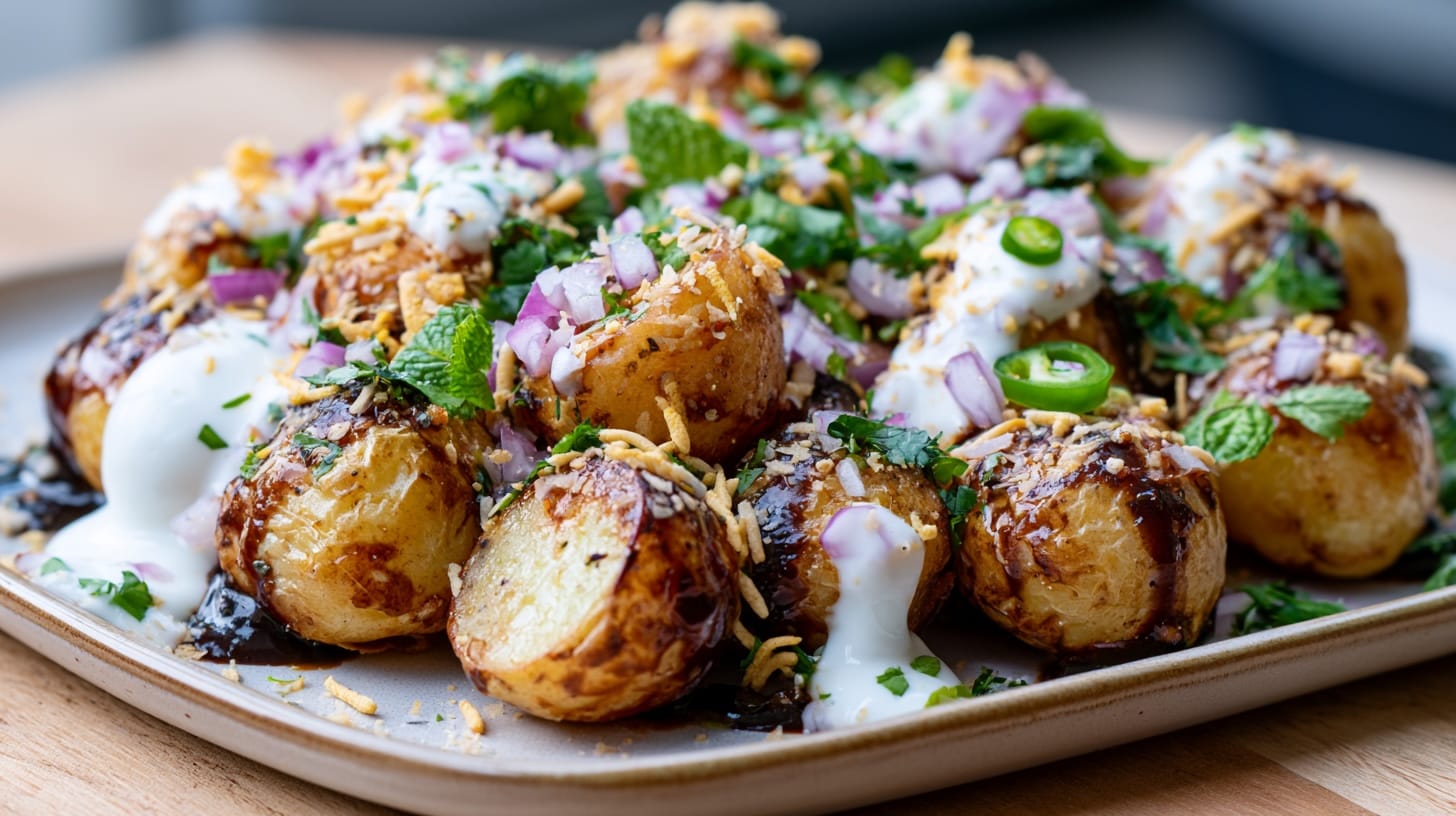
These tamarind Bombay potatoes go so well with with ribs
Make these when you want a potato side that brings spice, tang and crunch without turning the rib plate heavy. The potatoes are roasted until golden, then tossed with tamarind, cumin, coriander, chilli and a little brown sugar. After that, I finish them like a chaat-inspired barbecue side, with yoghurt, red onion, herbs and crisp bits over the top.
This is not trying to be a traditional Bombay potato served from a takeaway foil tray. It’s built around ribs, smoke and sticky sauce. The tamarind gives sour fruitiness, the yoghurt cools the chilli and the crunchy topping keeps every forkful lively. It belongs in the wider rib-night potato side collection I build from because it gives the table spice and acidity in one go.
The flavour direction
These potatoes are warm, tangy and layered. They’re very different from vinegar-crisp smashed potatoes with quick-pickled shallots, which are sharper, simpler and built around malt vinegar. They also do a different job from sesame-dressed potatoes with kimchi, cucumber and nori, where the main point is cold fermented heat.
The practical payoff here is flexibility. You can serve these warm, room temperature or just off the tray. That makes them useful when ribs are taking their time. I like the way the yoghurt melts slightly into the spiced edges, while the tamarind glaze clings to the rough potato skins. It’s messy in the right way.
Ingredients for 4 people
- 1kg baby potatoes, halved
- 2 tbsp vegetable oil
- 1 tsp cumin seeds
- 1 tsp ground coriander
- 1 tsp garam masala
- ½ tsp turmeric
- ½ tsp Kashmiri chilli powder or mild chilli powder
- 1 tsp fine sea salt, plus extra for boiling
- 2 tbsp tamarind paste
- 1 tbsp light brown sugar
- 1 tbsp lime juice
- 120g Greek yoghurt
- 1 small red onion, finely diced
- 15g fresh coriander, roughly chopped
- 10g mint leaves, roughly chopped
- 30g sev, crushed poppadoms or crispy chickpea noodles
- 1 green chilli, finely sliced
- 1 tsp chaat masala, optional
Ingredient notes
Baby potatoes work well because their skins hold the spice and their centres stay creamy. I halve them so the cut sides brown and take on the tamarind glaze. If you use larger potatoes, cut them into 3cm chunks and keep the pieces even. Uneven potatoes give you a tray of hard corners and tired fluffy bits, and nobody needs that beside ribs.
Tamarind paste varies wildly. Some jars are sharp and thin, others are thick, dark and almost date-like. Taste yours before mixing. If it’s very sour, keep the brown sugar as written. If it’s sweet already, reduce the sugar by half. Chaat masala is optional, but I like its salty, tangy finish. Use it lightly, especially if the ribs are already well salted.
Equipment needed
You’ll need a saucepan, colander, roasting tray, small frying pan and mixing bowl. A large metal roasting tray is best because it gives the potatoes enough contact with heat to brown before the tamarind glaze goes on. If your tray is small, use two. Potatoes need space, or they steam and sulk.
A small pan is useful for blooming the spices in oil. This step makes a real difference. Raw ground spices sprinkled onto potatoes can taste dusty, but warm oil wakes them up. If you’re cooking outside, you can do this in a small cast iron pan on the barbecue, then toss everything in a bowl before finishing the potatoes over indirect heat.
Instructions
Step 1: Boil the potatoes until just tender
Put the halved baby potatoes in a pan of cold salted water. Bring to the boil, then simmer for 10 to 12 minutes. They should be tender at the edges but not breaking apart.
Step 2: Steam dry the potatoes
Drain the potatoes and leave them in the colander for 5 minutes. Give them a gentle shake so the cut sides roughen slightly. That texture helps the spices cling.
Step 3: Bloom the spices
Warm the vegetable oil in a small pan over a medium heat. Add the cumin seeds and cook for 30 seconds until fragrant. Stir in the ground coriander, garam masala, turmeric, chilli powder and salt, then take the pan off the heat.
Step 4: Coat and roast
Heat the oven to 220°C. Toss the potatoes with the spiced oil, then spread them on a large tray. Roast for 25 to 30 minutes, turning once, until the cut sides are browned and the skins are wrinkled.
Step 5: Add the tamarind glaze
Mix the tamarind paste, brown sugar and lime juice in a small bowl. Spoon this over the hot potatoes, toss carefully, then return the tray to the oven for 5 to 7 minutes. The glaze should cling and darken, not burn.
Step 6: Add yoghurt and fresh toppings
Spoon the potatoes onto a serving plate. Drizzle over the Greek yoghurt, then scatter with red onion, coriander, mint and green chilli.
Step 7: Finish with crunch
Add the sev, crushed poppadoms or crispy chickpea noodles just before serving. Dust lightly with chaat masala if using. Serve warm, while the potato edges are still sticky and the topping is crisp.
Cooking techniques that make the flavour land
Blooming the spices matters because potatoes are gentle by nature. They need help. Hot oil pulls flavour from cumin, coriander and chilli, then carries it across the potato surface. I keep the tamarind glaze separate until the potatoes have browned because tamarind and sugar can catch if they roast too long. Let the potatoes crisp first, then glaze late for shine and tang.
The topping is all about timing. Yoghurt can go on while the potatoes are warm, but the crunch must wait until the last minute. Sev, crushed poppadoms and chickpea noodles soften quickly once they meet steam or yoghurt. I put the bowl on the table, then scatter the crisp bits just before serving. You get warm potato, cool yoghurt, raw onion snap and brittle crunch in one forkful.
What to serve with tamarind Bombay potatoes
These potatoes are a natural match for tamarind chilli pork ribs with palm sugar glaze because the side picks up the fruity sourness in the ribs without copying the glaze exactly. The yoghurt and herbs keep the plate from becoming too sticky, while the crunchy topping gives the ribs a sharper edge.
They’re also good beside sticky gochujang ribs with chilli garlic glaze, where the tamarind cuts through fermented chilli sweetness. If you’re building a fuller spread, add a smoky Cajun potato pan with sweetcorn and peppers only if you want another hearty side, or go lighter with slaw and a bowl of mango chutney yoghurt for cooling spiced potatoes.
Best rib matches for this potato side
I like these most with pork ribs that have a sweet-sour glaze or a chilli-led finish. They also work with ribs that use orange, sesame or honey because tamarind brings a sour bass note without feeling harsh. Next to sriracha orange ribs with sesame honey shine, the potatoes make the citrus taste deeper and the yoghurt keeps the chilli manageable.
If the ribs are dry-rubbed rather than glazed, these potatoes still earn their keep. The tamarind gives the plate some sauce without needing a separate barbecue dip. I’d add a chopped cucumber salad, grilled corn or a crisp cabbage slaw to keep the meal bright. With beef ribs, keep the portion smaller because the spice and tamarind are lively, and beef brings plenty of weight already.
Wine and beer pairings
For wine, off-dry Riesling is my first pick. It handles chilli, tamarind and yoghurt without clashing with sweet rib glaze. Gewürztraminer can work too, especially if the ribs are spicy, though I’d choose a drier bottle so the plate doesn’t become too perfumed. For red wine, a soft Grenache gives enough fruit for barbecue sauce and enough warmth for the spice.
For beer, a cold lager keeps the spices clean and lets the tamarind stay sharp. Pale ale works if the ribs are smoky, but avoid anything too bitter with the yoghurt. A wheat beer is lovely when the potatoes carry more chilli because it softens the heat and gives the herbs a fresher feel.
FAQ
Can I make tamarind Bombay potatoes ahead of time?
Yes. Roast the spiced potatoes ahead, then reheat and add the tamarind glaze near serving. Add yoghurt, herbs and crunchy toppings only at the end so they stay fresh.
What does tamarind do in potato recipes?
Tamarind adds fruity sourness and a dark tang that works well with spices. In this recipe, it cuts through sticky ribs and gives the potatoes a glossy, sharp finish.
Are Bombay potatoes spicy?
These are mildly to medium spicy, depending on your chilli powder and green chilli. For a gentler version, use mild chilli powder and skip the fresh green chilli.
Can I cook these potatoes on the barbecue?
Yes. Roast them on a barbecue-safe tray over indirect heat with the lid down. Add the tamarind glaze near the end so it doesn’t scorch.
What can I use instead of sev?
Crushed poppadoms, crispy chickpea noodles, Bombay mix or toasted chickpeas all work. Add them just before serving so they stay crunchy.
Is yoghurt necessary for tamarind potatoes?
I think it makes the dish better, especially with ribs. Yoghurt cools the chilli and softens the tamarind. For dairy-free cooking, use thick unsweetened coconut yoghurt.
What ribs go best with tamarind Bombay potatoes?
They suit tamarind ribs, chilli garlic ribs, orange sesame ribs and pork ribs with sweet-sour glazes. The tangy potatoes balance sticky sauce and fatty rib meat.
Can I make this potato side without onion?
Yes. Leave out the red onion and add diced cucumber or chopped radish instead. You’ll still get freshness and crunch without the raw onion bite.
Tips for Success with Tamarind Bombay Potatoes
Don’t add the tamarind too early. It contains acidity and often some sugar, so it can darken fast in a hot oven. Let the potatoes get browned first, then toss them with the tamarind mixture for the final few minutes. That gives you sticky edges rather than scorched patches.
Keep the topping generous but controlled. Too much yoghurt turns the potatoes into salad, while too much sev makes them feel dry. I like a loose drizzle of yoghurt, a modest handful of crunch and plenty of herbs. The potatoes should still be the main thing. The toppings are there to add contrast, not bury the tray.
Recipe variations for tamarind Bombay potatoes
For a hotter version, add ½ tsp crushed chilli flakes to the spiced oil and use two green chillies at the finish. That version is excellent with sweet pork ribs because the heat slices through the glaze. You can also add a spoonful of mango chutney to the tamarind mixture if you want a fruitier finish, but keep the lime juice so it doesn’t drift too sweet.
For a more substantial side, add 200g drained chickpeas to the tray when the potatoes go in. They’ll crisp slightly and make the dish more filling. For a fresher version, add diced cucumber, pomegranate seeds and extra mint just before serving. That works beautifully when the ribs are sticky, smoky and heavily glazed.
Storage and Reheating Tamarind Bombay Potatoes
Store leftover tamarind Bombay potatoes in an airtight container in the fridge for up to 3 days. Keep yoghurt, herbs and crunchy toppings separate if you can. Once dressed, the topping will soften and the yoghurt will loosen into the potatoes.
Reheat the potatoes on a tray at 190°C for 10 to 12 minutes, or in an air fryer at 180°C for 5 to 7 minutes. Add a squeeze of lime after reheating to wake the tamarind back up. Finish with fresh yoghurt and crisp topping only when ready to serve.
Health benefits and dietary swaps
For a vegan version, use thick unsweetened coconut yoghurt or oat-based Greek-style yoghurt. For gluten-free guests, check the sev, poppadoms or crunchy topping, as some mixes contain wheat. For a lighter version, reduce the oil to 1 tbsp and use 0% Greek yoghurt. The texture will be a little less glossy, but the spice and tamarind will still carry the dish.

Tamarind Bombay Potatoes with Yoghurt Chaat Crunch

Ingredients
- 1 kg baby potatoes halved
- 2 tbsp vegetable oil
- 1 tsp cumin seeds
- 1 tsp ground coriander
- 1 tsp garam masala
- ½ tsp turmeric
- ½ tsp Kashmiri chilli powder or mild chilli powder
- 1 tsp fine sea salt plus extra for boiling
- 2 tbsp tamarind paste
- 1 tbsp light brown sugar
- 1 tbsp lime juice
- 120 g Greek yoghurt
- 1 small red onion finely diced
- 15 g fresh coriander roughly chopped
- 10 g mint leaves roughly chopped
- 30 g sev crushed poppadoms or crispy chickpea noodles
- 1 green chilli finely sliced
- 1 tsp chaat masala optional
Instructions
Boil the potatoes until just tender
- Put the halved baby potatoes in a pan of cold salted water. Bring to the boil, then simmer for 10 to 12 minutes. They should be tender at the edges but not breaking apart.
Steam dry the potatoes
- Drain the potatoes and leave them in the colander for 5 minutes. Give them a gentle shake so the cut sides roughen slightly. That texture helps the spices cling.
Bloom the spices
- Warm the vegetable oil in a small pan over a medium heat. Add the cumin seeds and cook for 30 seconds until fragrant. Stir in the ground coriander, garam masala, turmeric, chilli powder and salt, then take the pan off the heat.
Coat and roast
- Heat the oven to 220°C. Toss the potatoes with the spiced oil, then spread them on a large tray. Roast for 25 to 30 minutes, turning once, until the cut sides are browned and the skins are wrinkled.
Add the tamarind glaze
- Mix the tamarind paste, brown sugar and lime juice in a small bowl. Spoon this over the hot potatoes, toss carefully, then return the tray to the oven for 5 to 7 minutes. The glaze should cling and darken, not burn.
Add yoghurt and fresh toppings
- Spoon the potatoes onto a serving plate. Drizzle over the Greek yoghurt, then scatter with red onion, coriander, mint and green chilli.
Finish with crunch
- Add the sev, crushed poppadoms or crispy chickpea noodles just before serving. Dust lightly with chaat masala if using. Serve warm, while the potato edges are still sticky and the topping is crisp.