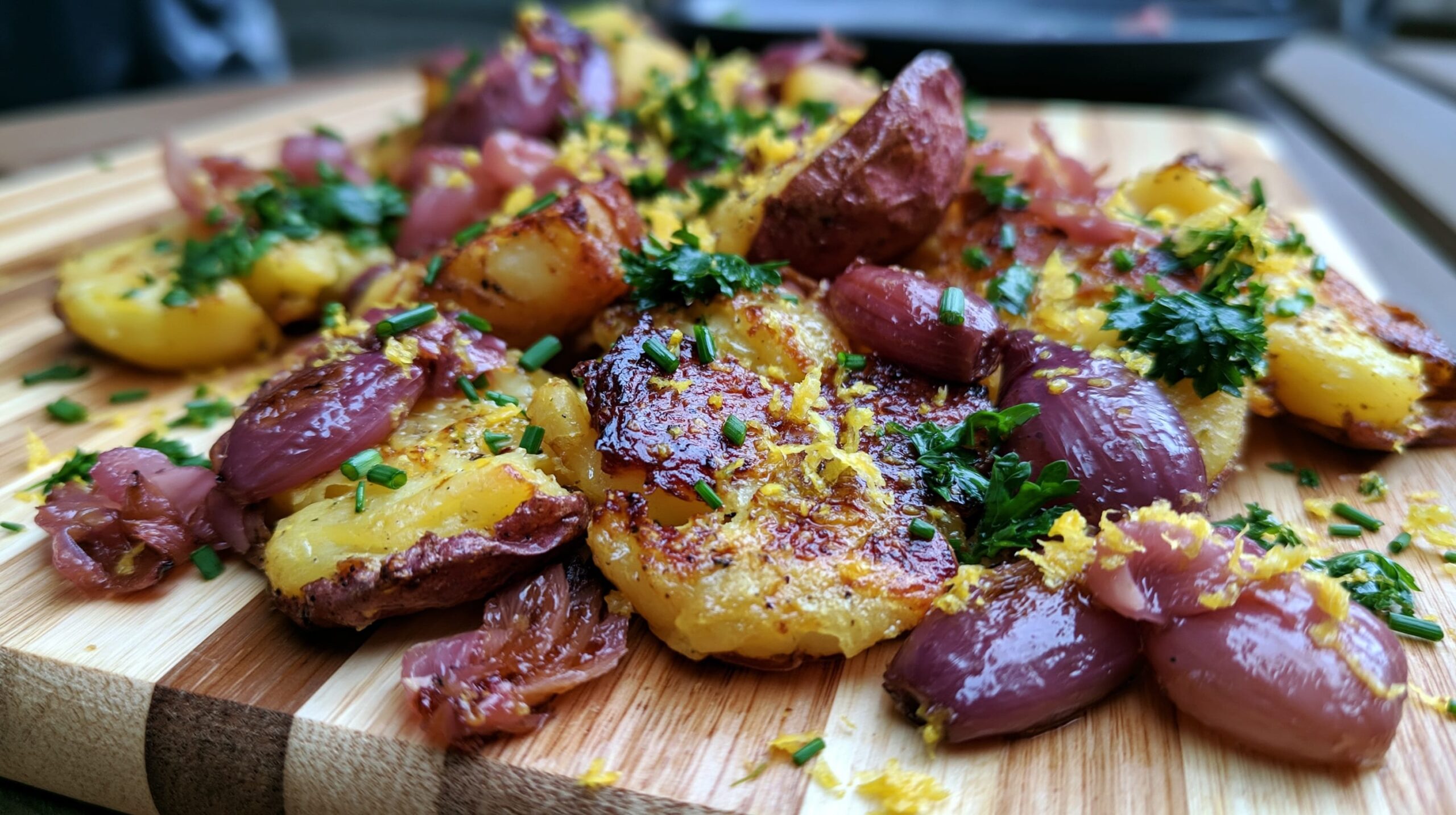
I just love making salt vinegar smashed potatoes with ribs
Sticky ribs need a side that bites back a little. When the glaze is sweet, smoky and clinging to your fingers, I don’t always want creamy potatoes or another sauce-heavy side. I want crunch, vinegar and salt, the kind of potato that makes the next bite of rib taste fresh again.
These salt vinegar smashed potatoes are my barbecue take on chip-shop energy, but built for ribs rather than newspaper and wooden forks. The potatoes are boiled until tender, squashed until craggy, roasted hard, then hit with malt vinegar and quick-pickled shallots. They sit neatly inside my full guide to potato sides that work with BBQ ribs because they do one job very well, they cut through sticky barbecue richness.
The rib-side logic
The flavour here is sharp, salty and slightly sweet from the shallots. That makes this recipe very different from a tamarind-spiced potato bowl with chaat-style crunch, which leans warm, spiced and layered. It also avoids the fermented chilli route of cold kimchi potatoes for cutting through sticky pork ribs.
The practical payoff is simple. You can boil the potatoes ahead, smash them when you’re ready, then roast them while the ribs rest. No bowl of mayonnaise sitting in the sun. No cheese setting hard. Just crisp potatoes, pickled shallots and a final vinegar flick that makes sweet rib glaze behave itself.
Ingredients for 4 people
- 1kg small potatoes, such as Charlotte or baby potatoes
- 2 tbsp olive oil
- 1 tbsp beef dripping or vegetable oil
- 1½ tsp fine sea salt, plus extra for boiling
- ½ tsp cracked black pepper
- 1 tsp garlic granules
- ½ tsp English mustard powder
- 3 tbsp malt vinegar, divided
- 2 banana shallots, thinly sliced
- 1 tsp caster sugar
- ½ tsp celery salt
- 10g fresh chives, finely chopped
- 10g flat-leaf parsley, chopped
- 1 tsp lemon zest
Ingredient notes
Small waxy potatoes are the right choice here because they hold together after boiling and smashing. Floury potatoes can work, but they collapse more easily and give a rougher, softer result. I like Charlotte potatoes because the skins crisp well and the centres stay creamy without turning into mash.
Malt vinegar gives the most familiar salt-and-vinegar flavour. Cider vinegar will taste fruitier and softer, white wine vinegar is sharper, but malt vinegar has that proper British tang that makes sense beside ribs. The mustard powder doesn’t make the potatoes taste mustardy. It gives the crust a dry heat, which is useful when the ribs bring sweetness.
Equipment needed
You’ll need a saucepan, colander, large roasting tray, small bowl and a flat-bottomed glass or potato masher. A metal roasting tray is best because it gives direct heat and proper underside crisping. Ceramic dishes hold heat gently, which is lovely for gratin, less useful for smashed potatoes that need hard edges.
A mandoline helps with the shallots if you’re confident using one, but a sharp knife is fine. I slice them thin so they pickle quickly and drape over the potatoes rather than sitting in chunky raw rings. Tongs or a thin spatula will help lift the smashed potatoes without leaving the crust behind.
Instructions
Step 1: Quick-pickle the shallots
Put the sliced shallots in a small bowl with 2 tbsp malt vinegar, caster sugar and a pinch of salt. Scrunch gently with your fingers, then set aside for at least 20 minutes. They’ll soften, sharpen and turn a little glossy.
Step 2: Boil the potatoes
Place the potatoes in a saucepan of cold salted water. Bring to the boil, then simmer for 16 to 20 minutes until tender. A knife should slide in easily, but the potatoes shouldn’t split apart.
Step 3: Steam dry before smashing
Drain the potatoes and leave them in the colander for 5 minutes. This pause matters. Wet potatoes steam on the tray, while dry potatoes crisp.
Step 4: Smash into rough discs
Heat the oven to 220°C. Brush a large roasting tray with beef dripping or vegetable oil and place it in the oven for 5 minutes. Tip the potatoes onto the hot tray, then press each one with a glass or masher until flattened but still intact.
Step 5: Season for a crisp crust
Mix olive oil with garlic granules, mustard powder, sea salt, black pepper and celery salt. Spoon or brush the mixture over the smashed potatoes, making sure the broken edges get coated.
Step 6: Roast until deeply crisp
Roast for 30 to 35 minutes, turning once only if they release cleanly. The edges should look blistered, browned and slightly rugged. If they resist the spatula, give them another 5 minutes before moving them.
Step 7: Finish with vinegar and shallots
As soon as the potatoes come out, splash over the remaining 1 tbsp malt vinegar. Top with the pickled shallots, chives, parsley and lemon zest. Serve hot, while the edges still crackle.
Cooking techniques that make them crisp
The biggest trick is steam control. Boiling gets the potatoes tender, but steam drying prepares them for roasting. If you smash them while they’re still wet, the broken surfaces hold moisture and the tray turns steamy. I wait until the skins look dry and the potatoes stop puffing out clouds of steam. Then they’re ready for pressure, oil and heat.
The hot tray gives the underside a head start. I use beef dripping when I want a deeper roast flavour with pork ribs, though vegetable oil works well and keeps things lighter. Don’t keep flipping the potatoes. They need time to form a crust. Once that crust sets, the potatoes lift cleanly and stay crisp enough to handle a splash of vinegar at the end.
What to serve with salt vinegar smashed potatoes
These potatoes are brilliant with ribs that lean sweet, sticky or smoky. I especially like them beside maple smoked paprika ribs that love vinegar-cut potatoes because the malt vinegar trims the sweetness and lets the paprika taste rounder. They’re also excellent with chipotle coffee ribs with a dark sticky bark, where the sharp shallots lift the darker coffee notes instead of adding more richness.
If you’re putting out several sides, pair these with smoky Spanish-style potatoes with charred tomato aioli only if you want a potato-heavy table with different sauce logic. For more texture contrast, crisp rosti cakes topped with chipotle apple slaw bring crunch in a completely different shape. A spoonful of horseradish mustard cream for sharp rib-side dipping also works when you want a cold, punchy dip nearby.
Best rib matches for this potato side
The most natural match is a sticky pork rib with sweetness in the glaze. Maple, brown sugar, molasses and fruit-based rib sauces all benefit from a vinegar-led potato side because the plate needs acidity. Without it, every bite can start to feel sticky in the same direction. These potatoes bring the clean snap that keeps you going back for another rib.
For a sharper rib pairing, I’d serve them with tamarind chilli ribs for a brighter barbecue plate. That sounds like a lot of tang, but it works because the tamarind is fruity and deep, while the malt vinegar is cleaner and more direct. Add a crunchy slaw or grilled corn and you’ve got a rib plate that feels lively rather than heavy.
Wine and beer pairings
For wine, I’d go with a dry Riesling first. It has the acidity to handle malt vinegar and the freshness to sit with sticky pork ribs. A Loire Chenin Blanc also works well, especially if the ribs have apple, mustard or brown sugar in the glaze. For red wine, keep it light and juicy. A chilled Gamay is a good match because it won’t fight the vinegar.
Beer is very welcome here. A crisp pilsner suits the salt, vinegar and potato crunch without adding heaviness. Pale ale works if your ribs are smoky, especially one with citrusy hops. With richer beef ribs, I’d choose a bitter or amber ale, something malty enough for the meat but dry enough to keep the potatoes lively.
FAQ
Can I make salt vinegar smashed potatoes ahead of time?
Yes. Boil and steam dry the potatoes earlier in the day, then chill them uncovered. Smash and roast them just before serving so the edges stay crisp. Add vinegar and shallots at the end.
What vinegar is best for salt and vinegar potatoes?
Malt vinegar gives the most classic flavour. Cider vinegar is milder and fruitier, while white wine vinegar tastes cleaner and sharper. For BBQ ribs, I like malt vinegar because it stands up to sweet glaze.
Why are my smashed potatoes not crispy?
They were probably too wet, too crowded or moved too early. Steam dry them properly, give them space on the tray and let the crust form before turning.
Can I cook smashed potatoes on the BBQ?
Yes. Use a cast iron plancha or barbecue-safe tray over indirect heat with the lid down. Finish them nearer the heat for extra crisp edges, but watch the broken bits so they don’t scorch.
Are these potatoes good with pork ribs?
They’re especially good with pork ribs because the vinegar cuts through fat and sweet sauce. The salt also works well against smoky bark and sticky glaze.
Can I use new potatoes for smashed potatoes?
Yes. New potatoes work well because they hold their shape. Choose small ones of similar size so they cook evenly and smash neatly.
Do pickled shallots need to be made the day before?
No. Thinly sliced shallots soften quickly in vinegar, sugar and salt. Twenty minutes is enough for this recipe, though they’ll keep in the fridge for a couple of days.
Which rib flavours suit salt and vinegar potatoes best?
Sweet, smoky and dark glazed ribs are the best fit. Maple, chipotle coffee, brown sugar and molasses-style ribs all work because the potatoes bring salt and acidity rather than more sweetness.
Tips for Success with Salt Vinegar Smashed Potatoes
Don’t smash the potatoes too thin. I know it’s tempting to press until they look like little potato pancakes, but very thin potatoes can dry out before they crisp properly. Aim for rough discs about 1.5cm thick, with split skins and uneven edges. Those craggy bits are where the salt, mustard powder and vinegar settle.
Add the final vinegar while the potatoes are hot. That first hiss of vinegar on a hot crust is exactly what you want. Add it too early and the potatoes soften in the oven. Add it too late and it just sits on top. I splash, toss very gently, then pile on the shallots and herbs. It should taste lively, not wet.
Recipe variations for salt vinegar smashed potatoes
For a smokier version, add ½ tsp smoked paprika to the oil mixture and finish with finely chopped gherkins as well as pickled shallots. That version is excellent with tomato-based ribs because it gives a burger-pickle sort of snap without turning the potatoes into a salad.
For a hotter rib-night version, add a pinch of cayenne to the seasoning and stir sliced red chilli into the shallots. You can also swap chives for dill if the ribs have mustard or honey in the glaze. Dill makes the potatoes taste sharper and greener, while parsley keeps them cleaner and more neutral.
Storage and Reheating Salt Vinegar Smashed Potatoes
Store leftover salt vinegar smashed potatoes in an airtight container in the fridge for up to 3 days. Keep any extra pickled shallots separate if possible, as they’ll soften the potato crust over time.
Reheat the potatoes on a tray at 200°C for 12 to 15 minutes, or in an air fryer at 190°C for 6 to 8 minutes. Add a tiny splash of fresh malt vinegar after reheating, not before. The shallots can go back on once the potatoes are hot and crisp again.
Dietary swaps
For a vegan version, use vegetable oil instead of beef dripping. For gluten-free guests, check the malt vinegar, as some people avoid barley-derived vinegar. Cider vinegar is the safest swap. For lower salt, reduce the sea salt to ¾ tsp and lean harder on vinegar, lemon zest and herbs for flavour.

Salt Vinegar Smashed Potatoes with Pickled Shallots

Ingredients
- 1 kg small potatoes such as Charlotte or baby potatoes
- 2 tbsp olive oil
- 1 tbsp beef dripping or vegetable oil
- 1½ tsp fine sea salt plus extra for boiling
- ½ tsp cracked black pepper
- 1 tsp garlic granules
- ½ tsp English mustard powder
- 3 tbsp malt vinegar divided
- 2 banana shallots thinly sliced
- 1 tsp caster sugar
- ½ tsp celery salt
- 10 g fresh chives finely chopped
- 10 g flat-leaf parsley chopped
- 1 tsp lemon zest
Instructions
Quick-pickle the shallots
- Put the sliced shallots in a small bowl with 2 tbsp malt vinegar, caster sugar and a pinch of salt. Scrunch gently with your fingers, then set aside for at least 20 minutes. They’ll soften, sharpen and turn a little glossy.
Boil the potatoes
- Place the potatoes in a saucepan of cold salted water. Bring to the boil, then simmer for 16 to 20 minutes until tender. A knife should slide in easily, but the potatoes shouldn’t split apart.
Steam dry before smashing
- Drain the potatoes and leave them in the colander for 5 minutes. This pause matters. Wet potatoes steam on the tray, while dry potatoes crisp.
Smash into rough discs
- Heat the oven to 220°C. Brush a large roasting tray with beef dripping or vegetable oil and place it in the oven for 5 minutes. Tip the potatoes onto the hot tray, then press each one with a glass or masher until flattened but still intact.
Season for a crisp crust
- Mix olive oil with garlic granules, mustard powder, sea salt, black pepper and celery salt. Spoon or brush the mixture over the smashed potatoes, making sure the broken edges get coated.
Roast until deeply crisp
- Roast for 30 to 35 minutes, turning once only if they release cleanly. The edges should look blistered, browned and slightly rugged. If they resist the spatula, give them another 5 minutes before moving them.
Finish with vinegar and shallots
- As soon as the potatoes come out, splash over the remaining 1 tbsp malt vinegar. Top with the pickled shallots, chives, parsley and lemon zest. Serve hot, while the edges still crackle.