Why I Keep Sharp Dips Beside the BBQ
When I’m cooking over coals, I want fat, smoke, char and crunch. That’s the good stuff. But too much of it can flatten a plate, especially when ribs, wings, skewers and potatoes are all fighting for attention. A zesty BBQ dip fixes that. Not by shouting. By cutting through.
I use acidic dips as the final bit of control at the table. A squeeze of lemon can wake up chicken. Vinegar can slice through pork fat. Tamarind can make beef taste darker and meatier. Lime can freshen chilli heat without making the whole plate feel thin or sour.
That’s why I’ve built this set around dips that actually earn their place next to the grill. Each one has a clear job, whether it is cooling wings, sharpening ribs, lifting skewers or giving grilled vegetables a bright, punchy finish.
The Six Sharp BBQ Dips I’d Actually Put on the Table
For lemony grilled chicken, I’d start with my charred lemon, caper and parsley BBQ dip for smoky chicken. It’s salty, green, citrus-heavy and made for food that has picked up a little char.
When the plate needs crunch and snap, the pickled red onion, lime and coriander dip for grilled meats brings a fresh salsa-like feel rather than a creamy one. I like it with tacos, skewers and anything that needs lift without extra richness.
For pork, I’d go in another direction. The green apple, mustard and dill BBQ dip for pork ribs is sharp, pale, crisp and faintly creamy, with that apple-and-mustard thing that just understands pork fat.
Beef needs more bass. The tamarind, date and chilli dip for beef skewers is sticky-sour, dark and slightly fruity, built for deep browning and savoury grilled meat. It sits nicely beside tamarind chilli beef skewers when I want the whole plate to feel properly smoky.
For tomato fans, the burnt tomato, sherry vinegar and garlic dip for BBQ plates gives a rough, smoky, almost romesco-style finish without copying romesco. I’d put it with grilled flatbreads, potatoes or calabrian chilli tomato fennel ribs.
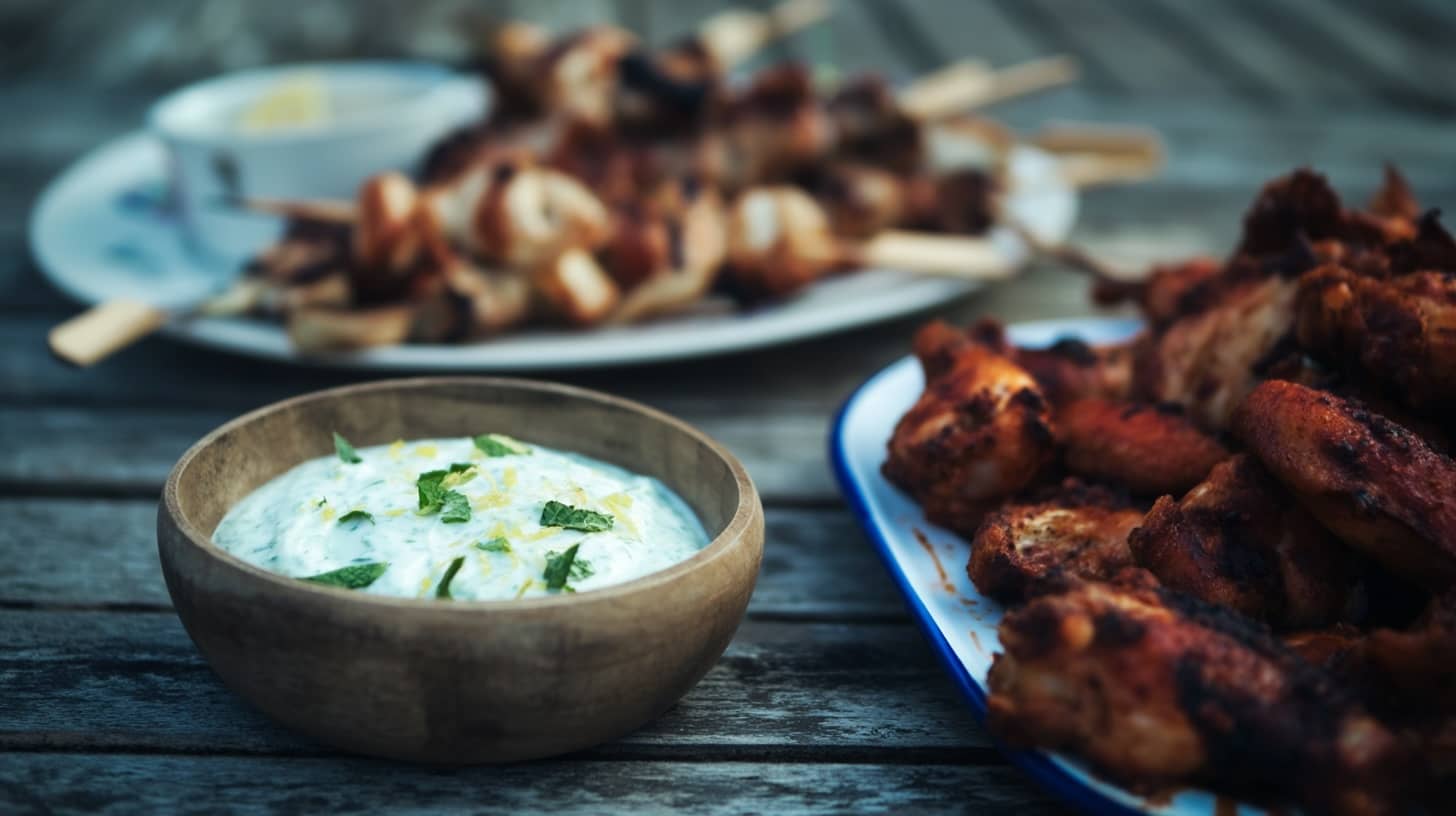
Then there’s the cooling one, because not every acidic dip needs to prickle. The cucumber, mint and lemon yoghurt dip for BBQ wings is crisp, creamy and clean. I like it with spicy chicken, especially hot honey garlic lime chicken wings or peri peri chicken with pepper and lime.
How I Choose the Right Acid for BBQ Food
Lemon is bright and immediate, so I use it when the meat is lighter. Chicken, fish, halloumi and grilled veg all take lemon well, especially if the dip also has herbs or briny bits like capers.
Lime is sharper and slightly more tropical. It suits coriander, chilli, onion and hot grilled meats. A lime dip can stop spicy skewers from tasting heavy, which is why I like it near mango jalapeno beef skewers or grilled corn.
Vinegar is more direct. Sherry vinegar, cider vinegar and rice vinegar all behave differently, but they share that clean edge. I use vinegar when the dip needs backbone, not just brightness.
Tamarind is the deep one. It gives sourness, fruitiness and savoury pull all at once. It is brilliant with beef, ribs and chilli because it does not taste thin next to smoke.
What Makes a Good BBQ Dip Sharp Rather Than Sour
A sharp BBQ dip still needs balance. Salt matters more than people think. A lemon dip without enough salt can taste like a cleaning product. A vinegar dip without fat can feel pointy. A tamarind dip without sweetness can turn harsh.
Texture is the other trick. Some dips should be spoonable and rough. Some should be smooth enough to drag a wing through. A few should sit like a relish. I’ve kept the recipes deliberately different, so you’re not just making six versions of the same creamy bowl with a different citrus fruit stirred through.
Best BBQ Foods for Zesty and Acidic Dips
For chicken wings, I usually want either yoghurt-cool or lemon-herby. Acid helps loosen sticky glazes and keeps the skin from feeling greasy. That is why these dips work so well beside wings with honey, chilli or garlic.
For beef skewers, I’d go bolder. Tamarind, lime, onion and chilli can stand up to charred edges, especially if the beef has a sweet or smoky glaze. If you’re serving gochujang honey beef skewers, a sharp dip can stop the glaze from taking over the plate.
For ribs, apple, mustard, tomato and vinegar are my usual instincts. Pork fat likes acidity. It also likes fruit, but I keep it crisp rather than jammy when the ribs already have a glaze.
For sides, sharp dips are handy with potatoes, slaws and flatbreads. I’d happily spoon the burnt tomato dip next to salt vinegar smashed potatoes with pickled shallots or use the cucumber yoghurt dip with cabbage slaw with spring onion and lime.
A Quick Table for Choosing Your Dip
| If you’re grilling | Pick this dip | Why it works |
|---|---|---|
| Lemon chicken, fish or halloumi | Charred lemon, caper and parsley | Salty, citrusy, green and bright |
| Spicy skewers or tacos | Pickled red onion, lime and coriander | Crunchy, fresh and quick-pickled |
| Pork ribs or sausages | Green apple, mustard and dill | Crisp, tangy and pork-friendly |
| Beef skewers or dark glazes | Tamarind, date and chilli | Sour-sweet, smoky and savoury |
| Flatbreads, potatoes or tomato-led ribs | Burnt tomato, sherry vinegar and garlic | Smoky, rough-textured and garlicky |
| Hot wings or peri peri chicken | Cucumber, mint and lemon yoghurt | Cooling, creamy and fresh |
My BBQ Dip Rule
I don’t want a dip to taste like it wandered in from the fridge with no plan. It needs a reason to be beside the barbecue. One should cool chilli. One should cut fat. One should sharpen smoke. One should add crunch.
That’s the whole point of this collection. These dips aren’t background bowls. They’re small, sharp tools for making grilled food taste more complete.