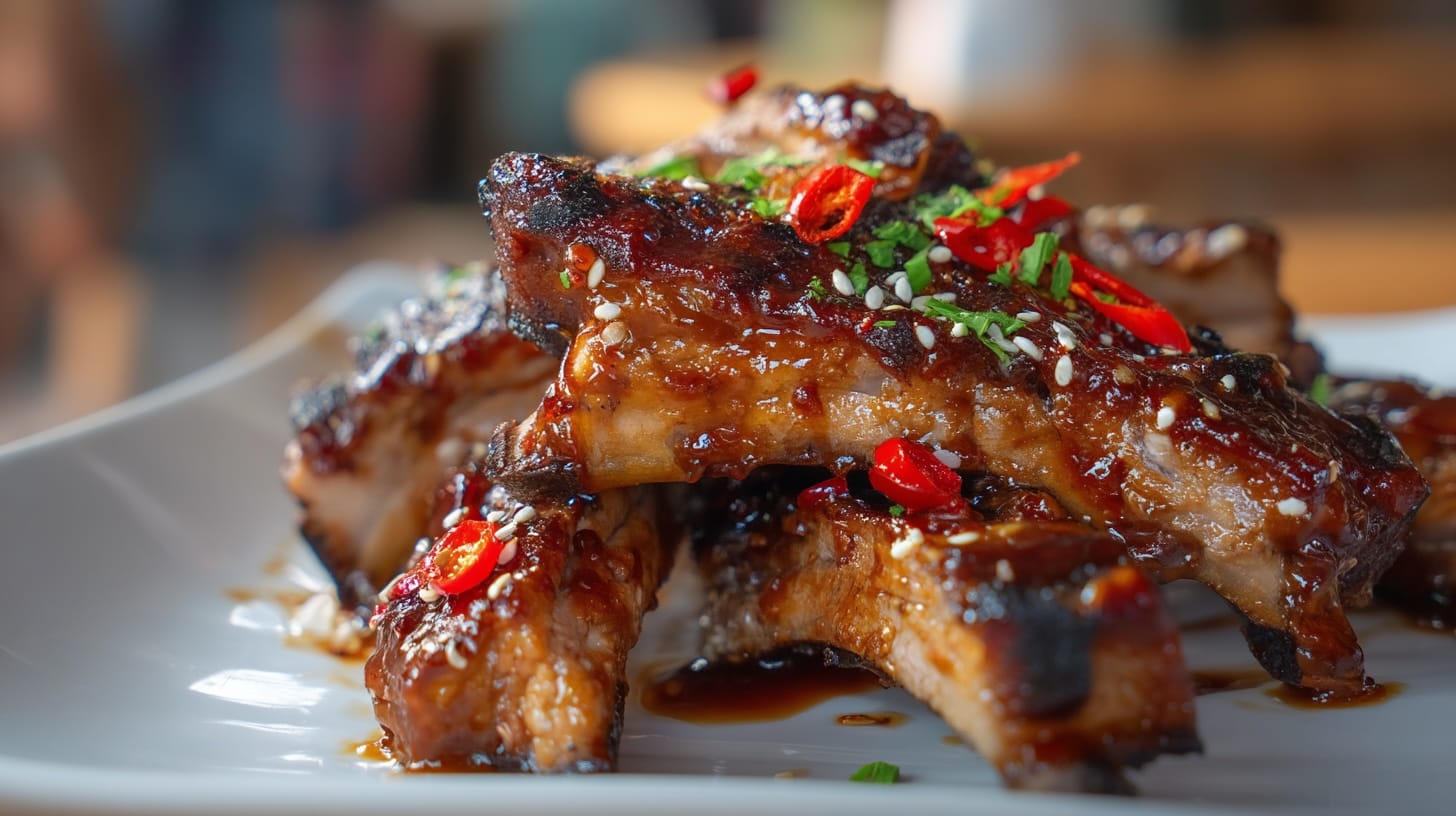
Why these maple paprika pork ribs earn their placeThe ribs I make when I want warmth with a bit of swagger
Some rib recipes hit you straight away with sharp heat. These don’t. These maple smoked paprika pork ribs creep in a little more slowly, starting with a mellow sweetness, then a warm red chilli finish that builds as you eat. I make them when I want spicy BBQ pork ribs that feel rich and smoky, but still balanced enough to go back for seconds without needing to sit in silence for ten minutes afterwards.
Why maple and paprika work so well with pork
Pork loves sweetness, though it needs a bit of restraint. Maple syrup gives these ribs a rounded sweetness that tastes deeper than plain sugar, while smoked paprika adds that earthy, woodsy note that makes the glaze feel settled and full. When I want a fermented chilli edge instead, I go straight to gochujang glazed ribs with garlic warmth. For the bigger picture, I keep all my favourites in my guide to fiery pork rib dinners.
The flavour profile I reach for on slower afternoons
These ribs have a softer sort of heat than some of the bolder ones in my regular line-up. The smoked paprika gives a gentle campfire note, the maple syrup smooths the edges and the red chilli comes in late enough to keep the whole thing from getting sleepy. If I’m after darker, roastier flavours, coffee chipotle ribs with dark sweet notes are usually what I make. If I want a brighter, fruit-led glaze, I go for pineapple scotch bonnet ribs with sticky fruit glaze.
Where these sit in my usual rib rotation
I think of these as my cosy spicy ribs. They’ve got enough chilli to stay interesting, though they don’t stomp all over the pork. The finish is sticky, glossy and gently smoky, which makes them ideal for anyone who likes heat but still wants to taste the meat. When I want a sweeter citrus edge and a glossier finish, orange sriracha ribs with sesame crunch scratch that itch beautifully.
Ingredients for 4 people
- 2 kg pork ribs, membrane removed
- 2 tsp fine sea salt
- 1 tsp cracked black pepper
- 2 tsp smoked paprika
- 1 tsp garlic powder
- 1 tsp onion powder
- 1 tsp ground cumin
For the maple smoked paprika glaze
- 100 ml maple syrup
- 2 tbsp tomato purée
- 2 tbsp apple cider vinegar
- 2 tbsp soy sauce
- 1 tbsp Dijon mustard
- 2 tbsp smoked paprika
- 1 tsp hot paprika
- 2 red chillies, finely chopped
- 4 garlic cloves, finely grated
- 1 shallot, finely minced
- 20 ml olive oil
- 60 ml apple juice
- 1 tbsp dark brown sugar
Ingredient notes
Maple syrup is doing more than sweetening here. It gives the glaze a sort of rounded, almost buttery edge that suits pork ribs brilliantly. I use proper maple syrup rather than pancake syrup because the flavour is cleaner and less cloying. Grade amber or dark works especially well, since it brings a bit more depth to the sauce.
Paprika deserves a bit of attention too. A good smoked paprika gives warmth and body, while hot paprika sharpens the finish without turning the glaze aggressive. I still use fresh red chilli because it adds a brighter, greener heat. The mix of dried and fresh chilli flavours keeps the sauce from tasting flat or dusty.
Equipment needed
A BBQ set up for indirect heat is the starting point, whether that’s a kettle barbecue, gas grill or kamado. I also use a small saucepan for the glaze, a basting brush, foil tray and a pair of tongs with decent grip. Pork ribs are awkward enough without wrestling them with flimsy tools.
A digital probe helps keep the grill steady, especially if the weather’s being difficult. I like a tray for the first stage of the cook because it catches a bit of rendered fat and juices, which keeps the ribs tidy and stops flare-ups before the glaze goes on. Once the sauce starts building, I move the racks back onto the grate so the surface can tighten properly.
Instructions
Step 1: Trim and season the ribs
Pat the ribs dry and remove the membrane from the back if needed. Mix the salt, pepper, smoked paprika, garlic powder, onion powder and cumin in a small bowl. Rub the seasoning evenly over both sides of the ribs.
Step 2: Set up the BBQ
Prepare your BBQ for indirect cooking at 150°C to 160°C. Keep one side hotter and one side cooler. You want steady, gentle heat for most of the cook, not a raging fire that turns the sugar bitter before the ribs are tender.
Step 3: Begin the first stage of cooking
Place the ribs bone side down in a foil tray or directly on the indirect side of the grill. Close the lid and cook for 1 hour 30 minutes, checking only occasionally to keep the temperature stable.
Step 4: Make the maple paprika glaze
Heat the olive oil in a saucepan over low heat. Add the shallot and cook for 2 to 3 minutes until softened. Stir in the garlic, red chilli, smoked paprika and hot paprika for 30 seconds. Add the maple syrup, tomato purée, cider vinegar, soy sauce, Dijon mustard, apple juice and dark brown sugar. Simmer gently for 6 to 8 minutes until glossy and lightly thickened.
Step 5: Glaze the ribs
Brush a thin layer of glaze over the ribs and return them to the indirect side of the BBQ. Cook for 15 minutes, then brush again. Repeat once more if the ribs still look thirsty or patchy.
Step 6: Finish over higher heat
Move the ribs closer to the hotter side of the BBQ for 5 to 7 minutes to set the glaze. Turn carefully once if needed. Watch them closely so the maple glaze catches in spots without turning acrid.
Step 7: Rest and serve
Remove the ribs from the heat and rest for 10 minutes. Slice between the bones and serve with extra glaze on the side if you have any left.
How I cook maple smoked paprika pork ribs on the BBQ
The key with these ribs is restraint. Maple syrup can go from glossy to scorched rather quickly, especially when paired with paprika and tomato purée. I always give the ribs plenty of time over indirect heat before the glaze joins the party. That lets the fat render, the meat relax and the bark develop just enough texture to hold the sauce instead of shrugging it off.
I also think smoked paprika works best when it’s warmed gently rather than blasted. Blooming it briefly in oil with the shallot and garlic helps it open up and taste fuller, almost like the sauce has been thinking about itself for a while. Once the glaze is on the ribs, thin coats matter. Too much at once and you get sugary patches. Layer it instead and the finish stays glossy, smoky and neatly sticky.
What to serve with this recipe
These ribs like sides with crunch and bite. A slaw with white cabbage, spring onion and cider vinegar works nicely because it cuts through the glaze without feeling harsh. I’m also partial to charred sweetcorn with a squeeze of lime and a bit of flaky salt. It mirrors the smoky notes in the ribs and adds that soft pop you want next to sticky meat.
For something a bit more solid, I like BBQ roast potatoes, then finished with soured cream and chopped chives. They soak up the maple paprika glaze beautifully. A sharp tomato salad with red onion is another good call if the day feels warm and you want the plate to stay bright rather than too rich.
Wine and beer pairings
For wine, I like a fruity Zinfandel with these ribs, especially one that leans into bramble fruit and spice without getting jammy. It stands up well to the sweetness in the glaze and has enough body to handle the smoky paprika. A dry rosé also works better than some people expect. It keeps the plate feeling fresh and picks up the red chilli without making the meal feel heavy or overworked.
For beer, an amber ale is a cracking match because the malt plays neatly with the maple syrup and the caramelised edges of the ribs. You get enough bitterness to tidy up the richness, though not so much that it clashes with the chilli. A clean pale ale is another strong option. It lifts the fat, keeps the palate awake and lets the paprika stay centre stage.
FAQ
Can I use honey instead of maple syrup for pork ribs?
Yes, though the flavour will shift. Honey gives a more floral sweetness, while maple syrup tastes rounder and a little darker. If swapping, use the same amount and watch the glaze closely near the end.
Are smoked paprika pork ribs very spicy?
Not especially. These have a warm finish rather than a fierce burn. The fresh red chilli brings a moderate heat, and you can reduce it if you prefer a milder rib glaze.
What is the best paprika for pork ribs?
I use smoked paprika for depth and a small amount of hot paprika for extra warmth. Sweet paprika alone can work, though the ribs will lose some of that woodsy, smoky character.
How long do pork ribs take on the BBQ?
At 150°C to 160°C, these ribs usually take about 2 hours 5 minutes to 2 hours 15 minutes, including glazing and resting time.
Can I make maple paprika ribs ahead of time?
Yes. Cook the ribs through the indirect stage first, then cool and chill them. Reheat on the BBQ and apply the glaze during the final stage before serving.
Why are my rib glaze and spices turning bitter?
That usually means the glaze hit high heat too early or stayed over direct heat too long. Paprika and maple syrup both need a bit of care at the finish.
Can I use spare ribs or baby back ribs?
Yes to both. Spare ribs are meatier and richer. Baby back ribs cook faster, so start checking them earlier and glaze them a touch more lightly.
Tips for Success with maple smoked paprika pork ribs
Getting the best maple smoked paprika pork ribs comes down to temperature control and not rushing the glaze. I keep the BBQ in that calm 150°C to 160°C range as steadily as I can, because jumping heat makes sugars misbehave. It also helps to let the ribs sit out for a short while before cooking, just enough to lose the fridge chill so they cook more evenly.
The glaze benefits from tasting before it goes anywhere near the meat. Some maple syrups are sweeter than others, and paprika brands vary quite a bit too. If the glaze tastes too sweet, add another splash of cider vinegar. If it feels too sharp, stir in a touch more maple. Tiny adjustments at that stage make the finished ribs taste far more settled and intentional.
Recipe variation suggestions
You can take these ribs in a slightly earthier direction by adding 1 teaspoon of ground coriander and a pinch of cinnamon to the glaze. It gives the paprika a warmer backdrop and makes the whole thing feel a bit richer without turning fussy. I also like adding orange zest if I want a brighter finish that cuts through the sweetness more clearly.
For a punchier savoury edge, add 1 tablespoon of Worcestershire sauce or a spoonful of miso to the glaze. A chopped chipotle in adobo can bring a smokier, deeper heat too, though then the profile starts edging towards one of my darker rib sauces. If you want extra freshness at the end, scatter over finely sliced spring onions and a little chopped parsley just before serving.
Storage and reheating for maple smoked paprika pork ribs
Store leftover maple smoked paprika pork ribs in an airtight container in the fridge for up to 3 days. I prefer to keep any extra glaze in a separate container rather than pouring it over the leftovers. That way, the ribs reheat better and the sauce still tastes fresh when brushed on later.
To reheat, place the ribs in a covered tray on the BBQ over indirect heat at 160°C for 15 to 20 minutes. Brush with a little extra glaze for the last few minutes, then uncover briefly so the surface can tighten and turn glossy again. They can be reheated in the oven, though the BBQ keeps the edges much nicer.
Health benefits and easy swaps
These ribs bring plenty of protein, iron and B vitamins from the pork, while paprika and chilli add plant compounds that contribute flavour without needing loads of extra fat. Garlic and shallot also bring useful antioxidants. It’s still a rich dish, so I usually balance it with sharp slaws, grilled vegetables or a tomato salad rather than heavy creamy sides.
For dietary swaps, use tamari instead of soy sauce for a gluten free version, and check your mustard label while you’re at it. You can lower the sweetness by trimming the maple syrup slightly, though I’d keep enough for the glaze to still set properly. For milder ribs, reduce the red chilli and swap the hot paprika for sweet paprika. If you need a lower sodium version, use reduced salt soy sauce and season the ribs more lightly at the start.

Sticky Maple Smoked Paprika Pork Ribs with Red Chilli

Ingredients
- 2 kg pork ribs membrane removed
- 2 tsp fine sea salt
- 1 tsp black pepper cracked
- 2 tsp smoked paprika
- 1 tsp garlic powder
- 1 tsp onion powder
- 1 tsp ground cumin
For the maple smoked paprika glaze
- 100 ml maple syrup
- 2 tbsp tomato purée
- 2 tbsp apple cider vinegar
- 2 tbsp soy sauce
- 1 tbsp Dijon mustard
- 2 tbsp smoked paprika
- 1 tsp hot paprika
- 2 red chillies finely chopped
- 4 garlic cloves finely grated
- 1 shallot finely minced
- 20 ml olive oil
- 60 ml apple juice
- 1 tbsp dark brown sugar
Instructions
Trim and season the ribs
- Pat the ribs dry and remove the membrane from the back if needed. Mix the salt, pepper, smoked paprika, garlic powder, onion powder and cumin in a small bowl. Rub the seasoning evenly over both sides of the ribs.
Set up the BBQ
- Prepare your BBQ for indirect cooking at 150°C to 160°C. Keep one side hotter and one side cooler. You want steady, gentle heat for most of the cook, not a raging fire that turns the sugar bitter before the ribs are tender.
Begin the first stage of cooking
- Place the ribs bone side down in a foil tray or directly on the indirect side of the grill. Close the lid and cook for 1 hour 30 minutes, checking only occasionally to keep the temperature stable.
Make the maple paprika glaze
- Heat the olive oil in a saucepan over low heat. Add the shallot and cook for 2 to 3 minutes until softened. Stir in the garlic, red chilli, smoked paprika and hot paprika for 30 seconds. Add the maple syrup, tomato purée, cider vinegar, soy sauce, Dijon mustard, apple juice and dark brown sugar. Simmer gently for 6 to 8 minutes until glossy and lightly thickened.
Glaze the ribs
- Brush a thin layer of glaze over the ribs and return them to the indirect side of the BBQ. Cook for 15 minutes, then brush again. Repeat once more if the ribs still look thirsty or patchy.
Finish over higher heat
- Move the ribs closer to the hotter side of the BBQ for 5 to 7 minutes to set the glaze. Turn carefully once if needed. Watch them closely so the maple glaze catches in spots without turning acrid.
Rest and serve
- Remove the ribs from the heat and rest for 10 minutes. Slice between the bones and serve with extra glaze on the side if you have any left.