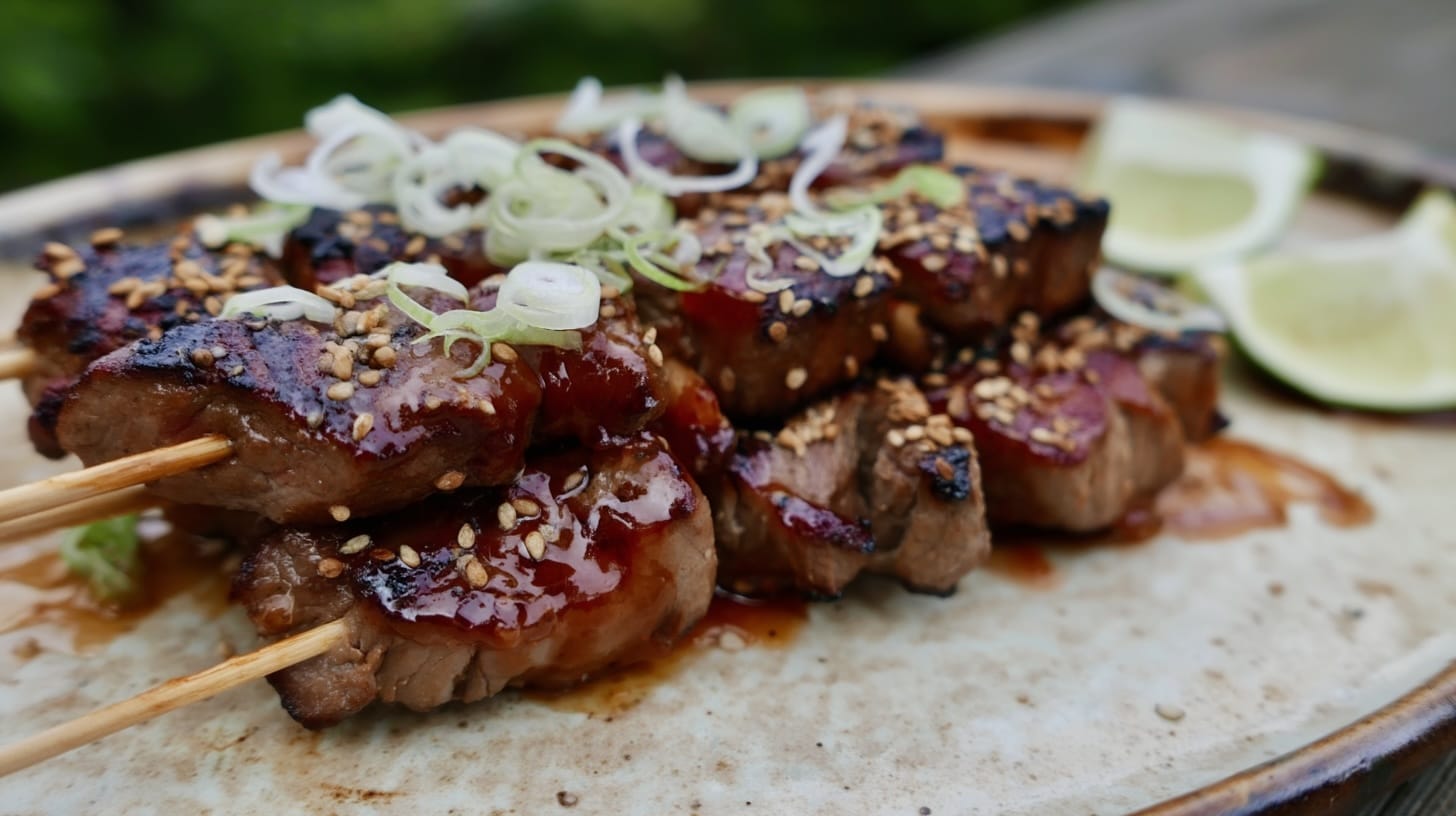
A gentler style of sweet heat
Korean pear brings a clean, juicy sweetness that feels lighter than honey or brown sugar, and that changes the whole mood of the recipe. The beef still gets that lovely browned edge from the barbecue, though the finish is fresher and a touch more delicate. That’s why I keep this one in my beef skewer round-up page, because it offers a different kind of pleasure from the darker, stickier glazes.
Why pear suits beef so well
Pear has a subtle sweetness that doesn’t shove the savoury side of beef out of the way. It softens, sweetens and helps the marinade cling, while still leaving room for soy, garlic and chilli to do their work. I like that restraint. The flavour feels balanced from the start, which makes these skewers very easy to eat. If I’m after a richer, saltier finish, miso sesame beef skewers scratch that itch. If I want the same general flavour family with more punch and paste-like depth, gochujang honey lime skewers are the louder sibling.
Garlic and sesame do the grounding
Without the garlic and sesame, pear can drift a little too pretty for a BBQ beef skewer. The garlic gives it savoury weight, and the sesame rounds everything out with a toasted nuttiness that feels right at home on the grill. I find that combination especially useful when the beef is a little richer, because it keeps the whole skewer feeling anchored. For a brighter sweet-spicy angle, pear and chilli beef skewers are great in a more tart direction. If you want something simpler and more garlicky, garlic parsley beef skewer recipe is another solid choice.

When I tend to cook these
I usually make these when I want skewers that taste polished but not heavy. They’re especially good with rice, sharp salads and colder drinks, because the flavour profile is clean and savoury with just enough sweetness to make the beef shine. They also work beautifully when I’m cooking for people who enjoy chilli, but not a full-on blast of it. The heat is there, though it arrives in a measured way.
Ingredients for 4 people
- 700g beef sirloin, rump or bavette, cut into 3cm cubes
- 1 tbsp neutral oil
- 8 metal skewers, or 4 large skewers
For the Korean pear chilli marinade
- 1 Korean pear, peeled, cored and finely grated
- 2 tbsp soy sauce
- 1 tbsp toasted sesame oil
- 1 tbsp rice vinegar
- 2 garlic cloves, finely grated
- 1 tsp fresh ginger, finely grated
- 1 tbsp gochugaru or mild Korean chilli flakes
- 1 tsp runny honey
- 1 tsp freshly ground black pepper
- 1 tsp flaky sea salt
- 1 spring onion, finely sliced
To finish
- 1 tbsp toasted sesame seeds
- 2 spring onions, finely sliced
- 1 tsp chilli crisp or extra gochugaru, optional
- 1 lime, cut into wedges
- small handful coriander or parsley, roughly chopped, optional
Ingredient notes
Korean pear is ideal because it’s juicy, crisp and not too floral. It has a clean sweetness that suits savoury marinades particularly well. If you can’t get one, a nashi pear is the nearest swap. I’d avoid very soft dessert pears if possible, because they tend to be more perfumed and don’t give quite the same fresh, watery lift. Grating the pear rather than chopping it is helpful too, since it melts into the marinade and coats the beef more evenly.
For the chilli, gochugaru is my preference because it gives a mellow, fruity warmth instead of a blunt heat. It’s one of those ingredients that adds colour and flavour without turning everything aggressive. Beef-wise, sirloin is the easiest cut to work with here, though bavette gives excellent flavour if you don’t mind a bit more attention to slicing and doneness. Sesame oil should be used with a reasonably light hand. Too much and it can crowd the pear.
Equipment needed
You’ll need a barbecue with a hot direct zone and a gentler section for finishing if needed. These skewers are less sugar-heavy than some of the others, though they still benefit from being moved around the grill rather than left in one fierce spot. A covered kettle barbecue is lovely for this recipe, but a gas barbecue does the job beautifully as well.
A mixing bowl, a box grater or fine grater for the pear, tongs and a resting tray are the essentials. Metal skewers are useful because they make turning easier and hold the beef firmly once the marinade begins to set on the outside. I also keep a small bowl ready for the sesame and sliced spring onions, so the garnish goes on quickly while the skewers are still warm enough to hold onto it.
Instructions
Step 1, grate the pear and mix the marinade
In a medium bowl, combine the grated Korean pear, soy sauce, toasted sesame oil, rice vinegar, garlic, ginger, gochugaru, honey, black pepper, salt and sliced spring onion. Stir until thoroughly mixed.
Step 2, marinate the beef
Add the beef cubes and turn well so every piece is coated in the marinade. Cover and chill for 1 to 2 hours. Remove from the fridge about 20 minutes before grilling.
Step 3, prepare the barbecue
Set up the BBQ with one hot direct area and one gentler area. Clean the grates and brush them lightly with oil.
Step 4, thread the skewers
Thread the marinated beef onto skewers, leaving small gaps between the cubes so the heat can circulate and the edges can brown.
Step 5, grill the beef
Place the skewers over direct heat and cook for about 2 to 3 minutes per side, turning regularly. The outside should darken in spots and begin to caramelise while the inside stays juicy.
Step 6, finish carefully
Move the skewers to the gentler zone if they need a little more time or if the edges are colouring faster than the centres are cooking. Cook until the beef reaches your preferred doneness.
Step 7, rest and garnish
Rest the skewers for 5 minutes. Sprinkle over the sesame seeds and spring onions, then finish with optional chilli crisp, a squeeze of lime and herbs if using.
Cooking technique notes for Korean pear chilli beef skewers
This recipe is a good reminder that not all barbecue marinades need to be thick and sticky to work well. The grated pear makes the surface of the beef glossy and lightly caramelised, though it doesn’t create the same heavy lacquer you get from honey or jam. That’s part of its charm. The result is a skewer with more shine than crust, and I think that suits the flavour perfectly. I grill these with a fairly hot fire, but I don’t force too much colour onto them. A little browning and a few charred spots are enough.
The pear also affects the texture of the beef in a pleasing way. It helps the meat stay tender, especially if you’re using rump or bavette, though I still keep the marinating time sensible. Too long and the surface can become a little too soft. A couple of hours is a comfortable upper limit for me. The finish matters as well. Sesame and spring onion add texture and savoury lift, while lime is there purely to sharpen the last bite and stop the sweetness from fading quietly into the background.
What to serve with this recipe
I like these with steamed rice, crisp lettuce leaves or a simple cucumber salad dressed with rice vinegar. The skewers already have a rounded savoury sweetness, so they sit best next to things that are cool, plain or lightly sharp. Lettuce cups are especially nice because they make the whole meal feel fresh and a little more hands-on without adding much work.
If I’m serving a larger spread, I’ll add kimchi, quick pickled radishes, grilled mushrooms or a bowl of dressed noodles with sesame and spring onion. A potato salad with a light mustard dressing can work too if you want something heartier. What I try not to do is pile on too many sweet sides, because the pear has already handled that part of the plate nicely.
Wine and beer pairings
For wine, I’d reach for a chilled Pinot Noir or a juicy Gamay. Both have enough freshness to suit the pear and enough gentle fruit to sit comfortably with sesame and beef. Pinot feels slightly more refined and earthy, while Gamay keeps things lively and easy. Either one works well if you want the wine to support the food rather than push itself into the middle of it.
For beer, a crisp lager is hard to beat. It clears the palate, handles the garlic and lets the sweetness of the pear come through cleanly. A wheat beer also works nicely, especially if you like a softer, slightly fuller pairing. The rounded texture matches the sesame well and keeps the chilli feeling friendly rather than sharp.
FAQ
What is the best substitute for Korean pear in beef skewers?
Nashi pear is the best alternative. It has a similar crisp texture and clean sweetness. A firm regular pear can work, though it won’t taste quite as fresh or balanced.
Does pear tenderise beef for skewers?
Yes, it can help. Pear contains enzymes and plenty of moisture, which can gently soften the surface of the beef while adding sweetness to the marinade.
Are Korean pear chilli beef skewers spicy?
They’re usually mild to medium, depending on how much gochugaru you use. The heat is more mellow and fruity than fierce.
Can I marinate the beef overnight?
I wouldn’t for this recipe. A long marinating time can make the outside too soft because of the pear. One to two hours is usually enough.
What cut of beef works best with pear marinade?
Sirloin, rump and bavette all work well. Sirloin is tender, rump gives a beefier flavour and bavette offers lovely texture when handled carefully.
Why add sesame and spring onion at the end?
They bring texture, savoury depth and freshness. That helps the finished skewers taste balanced rather than overly sweet or too soft.
Tips for success with Korean pear chilli beef skewers
The best Korean pear chilli beef skewers come from allowing the pear to do its job without overcomplicating the marinade. It’s tempting to throw in lots of extra sweetness or too much sesame oil, though this recipe is nicest when it stays relatively clean and restrained. The pear should lift the beef, not smother it. I always taste the marinade before adding the meat. It should be lightly sweet, savoury and just warm enough from the chilli to make itself known.
I also think these skewers improve when the grill marks are a little irregular rather than perfectly uniform. This is not a recipe that needs a hard crust all over. A mix of browned edges, juicy centres and glossy patches gives the nicest result. Once they’re off the barbecue, don’t skip the short rest. It lets the surface settle and makes the garnish cling properly instead of bouncing off onto the plate.
Recipe variation suggestions
For a deeper version, add a teaspoon of white miso or a splash of fish sauce to the marinade. That gives the skewers more savoury weight and turns the pear sweetness slightly darker. I’ve also made these with a little grated apple mixed into the pear, which brightens the fruit note and works well when the beef is especially rich.
If you’d like more heat, add extra gochugaru or finish with chilli crisp. For a greener edge, thread pieces of spring onion between the beef cubes or scatter with coriander instead of sesame. If you need the recipe gluten-free, use tamari in place of soy sauce and check your chilli crisp if using. The core flavour still holds together beautifully.
Storage and reheating for Korean pear chilli beef skewers
Leftover Korean pear chilli beef skewers can be kept in the fridge for up to 3 days in a sealed container. I usually remove the beef from the skewers before storing, then keep the fresh garnish separate so it still has some life when serving again. The flavour stays very good the next day, especially with rice or in lettuce wraps.
To reheat, warm the beef gently in a frying pan with a spoonful of water or in a moderate oven until just heated through. I’d avoid strong direct barbecue heat for reheating, as the surface can toughen before the middle warms. Add the sesame, spring onion and lime only after reheating so the final bite still tastes bright.
Health benefits and dietary options
These skewers provide plenty of protein and iron from the beef, while pear adds a lighter sort of sweetness that helps the dish feel balanced rather than rich. Garlic, ginger and spring onion bring lots of flavour without needing a thick sauce on the side, and the sesame adds a little nuttiness and texture that makes the meal feel satisfying.
For a lighter version, use sirloin and trim any obvious fat. To reduce sodium, use a lower-salt soy sauce or tamari and keep the finishing salt minimal. If you need the recipe gluten-free, tamari is the easiest swap. If sesame is not suitable, leave out the sesame oil and seeds, then add a little neutral oil and extra lime at the finish to keep the skewers fresh and lively.

Korean Pear Chilli Beef Skewers with Garlic and Sesame

Ingredients
- 700 g beef sirloin rump or bavette, cut into 3cm cubes
- 1 tbsp neutral oil
- 8 metal skewers or 4 large skewers
For the Korean pear chilli marinade
- 1 Korean pear peeled, cored and finely grated
- 2 tbsp soy sauce
- 1 tbsp toasted sesame oil
- 1 tbsp rice vinegar
- 2 garlic cloves finely grated
- 1 tsp fresh ginger finely grated
- 1 tbsp gochugaru or mild Korean chilli flakes
- 1 tsp runny honey
- 1 tsp freshly ground black pepper
- 1 tsp flaky sea salt
- 1 spring onion finely sliced
To finish
- 1 tbsp toasted sesame seeds
- 2 spring onions finely sliced
- 1 tsp chilli crisp or extra gochugaru optional
- 1 lime cut into wedges
- small handful coriander or parsley roughly chopped, optional
Instructions
Grate the pear and mix the marinade
- In a medium bowl, combine the grated Korean pear, soy sauce, toasted sesame oil, rice vinegar, garlic, ginger, gochugaru, honey, black pepper, salt and sliced spring onion. Stir until thoroughly mixed.
Marinate the beef
- Add the beef cubes and turn well so every piece is coated in the marinade. Cover and chill for 1 to 2 hours. Remove from the fridge about 20 minutes before grilling.
Prepare the barbecue
- Set up the BBQ with one hot direct area and one gentler area. Clean the grates and brush them lightly with oil.
Thread the skewers
- Thread the marinated beef onto skewers, leaving small gaps between the cubes so the heat can circulate and the edges can brown.
Grill the beef
- Place the skewers over direct heat and cook for about 2 to 3 minutes per side, turning regularly. The outside should darken in spots and begin to caramelise while the inside stays juicy.
Fnish carefully
- Move the skewers to the gentler zone if they need a little more time or if the edges are colouring faster than the centres are cooking. Cook until the beef reaches your preferred doneness.
Rest and garnish
- Rest the skewers for 5 minutes. Sprinkle over the sesame seeds and spring onions, then finish with optional chilli crisp, a squeeze of lime and herbs if using.