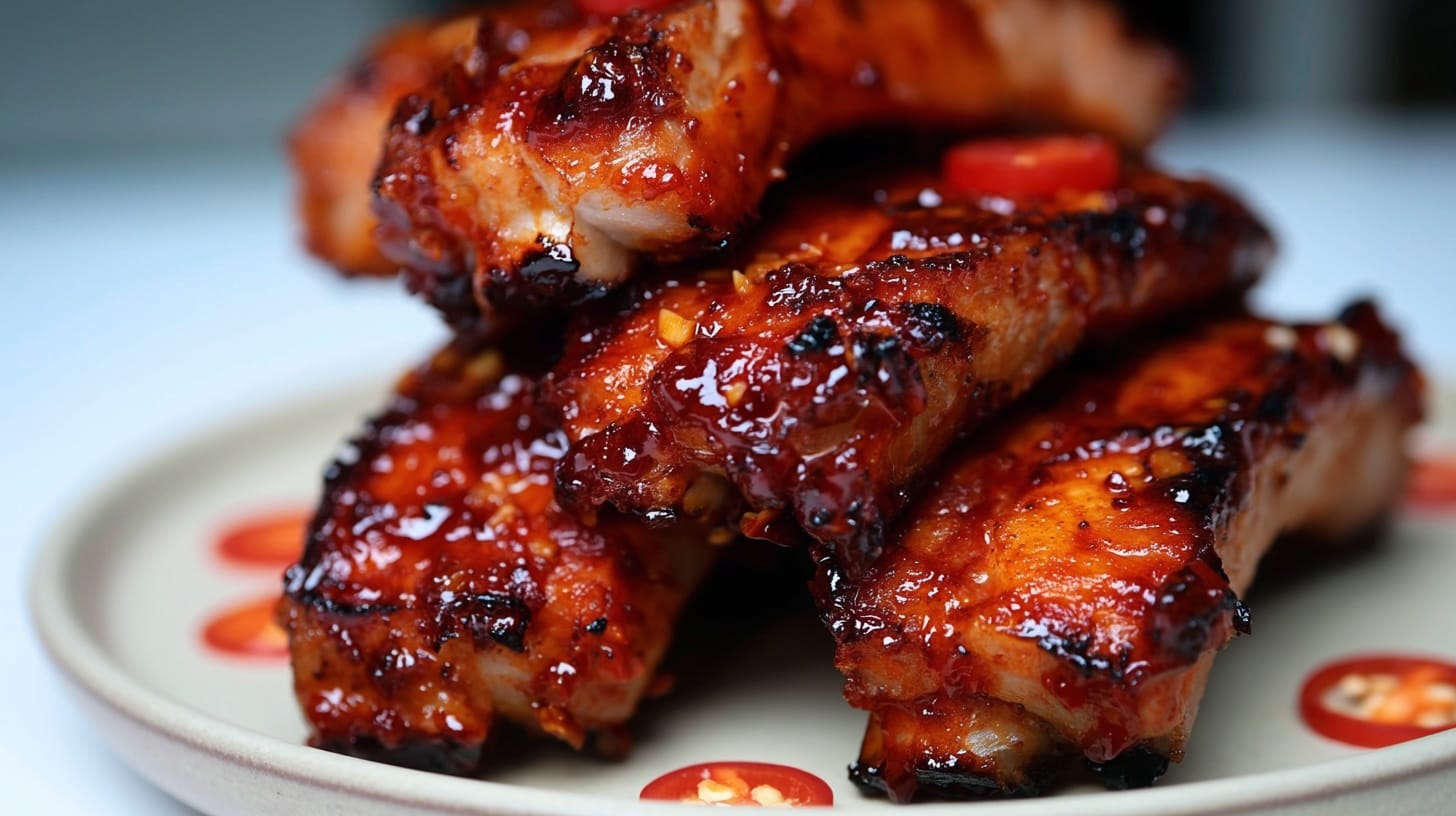
The ribs I make when I want sweet, sharp and savoury all at once
These tamarind chilli pork ribs sit in that very satisfying middle ground between sticky sweet ribs and sharper savoury ones. Tamarind gives the glaze a punchy sour note, palm sugar rounds it out and garlic keeps the whole thing rooted in proper rib territory. I make these when I want spicy BBQ pork ribs with real tang, the sort that makes you reach for another rib before you’ve quite finished the first.
Why tamarind works so well with pork ribs
Pork can handle strong flavours, and tamarind is one of the best for cutting through its richness. It brings a fruity sourness that wakes up the meat without making it taste sharp in a harsh way. Palm sugar adds a more mellow sweetness than standard white sugar, which helps the glaze feel deep and glossy rather than flat. When I want that sweeter fermented heat instead, I go straight to garlic gochujang ribs with glossy chilli finish. For the wider line-up, these sit neatly inside my sticky rib recipe guide for every mood.
The flavour profile that keeps these ribs lively
I like these ribs because the heat doesn’t travel alone. The chilli warms things up, but the tamarind keeps the glaze lively and the garlic makes it taste savoury and grounded. That balance matters. It stops the ribs feeling too sugary or too acidic. If I want a darker smoky finish, chipotle coffee ribs with smoky bitter sweetness are often what I make. If I’m after something fresher and creamier, harissa lemon ribs with cool yoghurt tang are a completely different but equally good route.
Where these ribs sit in my usual rotation
These are my tangy sticky ribs, the ones I make when I want the glaze to have a bit of swagger and a proper sweet sour edge. They’re brilliant when the plate needs waking up. The finish is glossy, the garlic comes through well and the tamarind leaves a clean sharp note right at the end. For another rib that leans savoury and aromatic, fennel tomato ribs with calabrian chilli warmth are well worth your time too.
Ingredients for 4 people
- 2 kg pork ribs, membrane removed
- 2 tsp fine sea salt
- 1 tsp cracked black pepper
- 2 tsp smoked paprika
- 1 tsp garlic powder
- 1 tsp onion powder
For the tamarind chilli garlic glaze
- 80 g tamarind paste
- 70 g palm sugar, finely chopped or grated
- 4 garlic cloves, finely grated
- 2 red chillies, finely chopped
- 15 g fresh ginger, finely grated
- 2 tbsp soy sauce
- 1 tbsp fish sauce
- 2 tbsp apple cider vinegar
- 2 tbsp tomato purée
- 80 ml apple juice
- 1 tbsp honey
- 1 tbsp neutral oil
- 2 tbsp water
Ingredient notes
Tamarind paste can vary quite a bit in strength and thickness. Some jars are quite loose and fruity, while others are dense and assertive enough to make your cheeks tighten a bit just from the spoonful. I always taste it first. If it’s especially sharp, I’ll add a little extra palm sugar or honey. If it’s on the sweeter side, I let the chilli and vinegar do a bit more of the lifting.
Palm sugar gives a softer, rounder sweetness than dark brown sugar, which is exactly what I want here. It smooths the tamarind without taking over. Fish sauce might not sound obvious in a rib glaze, though it adds savoury depth in a very useful way. You don’t taste it as fish. You just notice the ribs taste fuller and more settled.
Equipment needed
You’ll need a BBQ set up for indirect cooking, a small saucepan for the glaze, a basting brush and a sturdy pair of tongs. I also like to use a foil tray for the early stage of the cook, mainly because it helps manage rendered fat and keeps the ribs from becoming too messy before the glaze goes on.
A fine grater is handy for the garlic and ginger, and a thermometer helps keep the BBQ steady in that comfortable 150°C to 160°C range. This isn’t a recipe that needs piles of kit, though a bit of order helps once the glaze turns sticky and every surface suddenly wants your attention.
Instructions
Step 1: Season the ribs
Pat the ribs dry with kitchen paper and remove the membrane from the back if needed. Mix the salt, pepper, smoked paprika, garlic powder and onion powder, then rub the seasoning all over both sides of the ribs.
Step 2: Set up the BBQ
Prepare your BBQ for indirect heat at 150°C to 160°C. Keep one cooler area for the main cook and a slightly hotter area ready for the final glaze setting stage.
Step 3: Cook the ribs gently first
Place the ribs bone side down on the indirect side of the grill or in a foil tray. Close the lid and cook for 1 hour 30 minutes, keeping the heat steady.
Step 4: Make the tamarind chilli glaze
Heat the oil in a saucepan over low heat. Add the garlic, chilli and ginger, then cook for 1 minute until fragrant. Stir in the tamarind paste, palm sugar, soy sauce, fish sauce, cider vinegar, tomato purée, apple juice, honey and water. Simmer gently for 6 to 8 minutes, stirring until smooth, glossy and slightly thickened.
Step 5: Glaze the ribs
Brush a thin layer of glaze over the ribs and return them to the indirect side of the BBQ. Cook for 15 minutes, then brush with another layer. Repeat once more if needed so the glaze builds gradually and evenly.
Step 6: Finish the ribs
Move the ribs a little closer to the hotter side for 5 to 7 minutes so the glaze turns tacky and catches in places. Keep an eye on them, because tamarind glazes can darken quickly once the sugar starts caramelising.
Step 7: Rest and slice
Rest the ribs for 10 minutes, then slice between the bones and serve with any extra glaze on the side.
How I cook tamarind chilli pork ribs on the BBQ
The technique here is all about balance. Tamarind gives you that lovely sweet sour edge, though it can turn aggressive if the glaze isn’t rounded out properly or if it cooks down too harshly. That’s why I keep the heat moderate and bring the glaze in after the ribs have already had time to soften. I want the tamarind to sit on the pork, not fight it.
I also think thin layers matter even more with this glaze than with some of the sweeter ones. A thick coat can make the surface taste jammy and a little muddled. Brushed on in stages, the sauce sets neatly, catches on the bark and gives you a glossy finish with proper tang in every bite. The garlic helps here as well. It grounds the tamarind and keeps the whole recipe tasting like ribs first, sauce second.
What to serve with this recipe
These ribs do very well with cool, crunchy sides. I often serve them with a cabbage slaw dressed with lime and a little rice vinegar, because it echoes the tang without overdoing it. Cucumber salad with spring onion is another smart choice, especially if the chilli has come in a touch fiercer than expected.
For something more substantial, jasmine rice is excellent with tamarind chilli pork ribs. It catches every bit of glaze and gives the plate a calm base. I also like grilled corn, roast sweet potatoes or a green bean salad with herbs and shallots. All of those bring freshness and texture without getting in the way of the ribs.
Wine and beer pairings
For wine, I’d pick an off dry Riesling first because it handles the sweet sour chilli profile beautifully. The acidity works with the tamarind, while the slight sweetness smooths the heat. A chilled rosé can also work very well if it’s crisp and dry enough to keep the meal feeling fresh. I’d look for one with bright red fruit and decent acidity rather than anything too soft.
For beer, a pilsner is a very good choice because the clean bitterness and carbonation clear the richness of the pork without stepping on the glaze. A wheat beer works nicely too, especially if it has a bit of citrus character. That kind of beer softens the chilli and sits comfortably with the tamarind’s tangy finish.
FAQ
What does tamarind taste like in pork ribs?
Tamarind gives pork ribs a fruity sour note that cuts through the richness of the meat. It makes the glaze taste bright, tangy and more savoury.
Are tamarind chilli pork ribs very spicy?
They have a moderate heat, though the tamarind and palm sugar balance it well. You can reduce the chilli if you want a gentler finish.
Can I use brown sugar instead of palm sugar?
Yes, you can. Dark brown sugar works best, though palm sugar gives a softer and slightly more rounded sweetness.
Why add fish sauce to rib glaze?
Fish sauce adds savoury depth. You don’t taste it as fish, but it makes the glaze fuller and more balanced.
Can I make tamarind ribs ahead of time?
Yes. Cook the ribs through the first indirect stage, cool them, then reheat and glaze them on the BBQ just before serving.
How do I stop tamarind glaze from burning?
Apply it later in the cook, use thin layers and keep the final hotter stage brief while watching the ribs closely.
Can I use tamarind concentrate instead of tamarind paste?
You can, but use a bit less to start with because concentrates are often stronger. Taste the glaze and adjust with sugar or water if needed.
Tips for Success with tamarind chilli pork ribs
The best tamarind chilli pork ribs come from tasting the glaze while it’s still in the pan. Tamarind, palm sugar and fish sauce all vary from brand to brand, so it’s worth adjusting before the sauce hits the meat. If the glaze tastes too sharp, add a touch more palm sugar or honey. If it feels too sweet, a small splash of vinegar or a little extra tamarind paste usually brings it back into line.
It also helps not to chase the darkest finish on the grill. This glaze should be glossy and sticky, with a few darker bits around the edges, not a fully blackened crust. Tamarind can become a little harsh if pushed too far. I’d rather pull the ribs a minute earlier and keep that lovely sweet sour balance intact than brag about char while serving something a bit bitter.
Recipe variation suggestions
You can nudge these ribs in a slightly more aromatic direction by adding 1 teaspoon of ground coriander and a small pinch of cinnamon to the glaze. That gives the tamarind a warmer backdrop and works especially well with the garlic and palm sugar. I’ve also added a bit of lime zest before, which makes the finish feel even sharper and brighter.
For a deeper savoury angle, add an extra teaspoon of fish sauce or a spoonful of miso. Both make the glaze feel fuller without taking away the tang. If you want more heat, use a hotter fresh chilli or stir in a little chilli paste, though I’d do that carefully because the tamarind is already lively enough to keep things interesting.
Storage and reheating for tamarind chilli pork ribs
Store leftover tamarind chilli pork ribs in an airtight container in the fridge for up to 3 days. Keep any extra glaze in a separate container if you can, then warm it and brush it on during reheating for the best finish.
To reheat, place the ribs in a covered tray on the BBQ over indirect heat at 160°C for 15 to 20 minutes. Brush with a little glaze for the final few minutes, then uncover briefly so the surface turns sticky again. They reheat perfectly well in the oven too, though the BBQ gives the glaze a neater finish.
Health benefits and easy swaps
These ribs bring protein, iron and B vitamins from the pork, while garlic, ginger and chilli add flavour and useful plant compounds. Tamarind contributes a little fibre and gives the glaze a bright tang without needing loads of extra sugar. It’s still a rich recipe, so I usually pair it with rice, crunchy salads or grilled vegetables to keep the meal feeling balanced.
For dietary swaps, use tamari instead of soy sauce for a gluten free version, and choose a gluten free fish sauce if needed. If you avoid fish, use a little extra soy sauce or a spoonful of miso instead. For a lower sugar version, reduce the palm sugar slightly, though keep enough for the glaze to still set properly. If you want a milder result, cut back the chilli and let the tamarind stay centre stage.

Tamarind Chilli Pork Ribs with Garlic and Palm Sugar

Ingredients
- 2 kg pork ribs membrane removed
- 2 tsp fine sea salt
- 1 tsp cracked black pepper
- 2 tsp smoked paprika
- 1 tsp garlic powder
- 1 tsp onion powder
For the tamarind chilli garlic glaze
- 80 g tamarind paste
- 70 g palm sugar finely chopped or grated
- 4 garlic cloves finely grated
- 2 red chillies finely chopped
- 15 g fresh ginger finely grated
- 2 tbsp soy sauce
- 1 tbsp fish sauce
- 2 tbsp apple cider vinegar
- 2 tbsp tomato purée
- 80 ml apple juice
- 1 tbsp honey
- 1 tbsp neutral oil
- 2 tbsp water
Instructions
Season the ribs
- Pat the ribs dry with kitchen paper and remove the membrane from the back if needed. Mix the salt, pepper, smoked paprika, garlic powder and onion powder, then rub the seasoning all over both sides of the ribs.
Set up the BBQ
- Prepare your BBQ for indirect heat at 150°C to 160°C. Keep one cooler area for the main cook and a slightly hotter area ready for the final glaze setting stage.
Cook the ribs gently first
- Place the ribs bone side down on the indirect side of the grill or in a foil tray. Close the lid and cook for 1 hour 30 minutes, keeping the heat steady.
Make the tamarind chilli glaze
- Heat the oil in a saucepan over low heat. Add the garlic, chilli and ginger, then cook for 1 minute until fragrant. Stir in the tamarind paste, palm sugar, soy sauce, fish sauce, cider vinegar, tomato purée, apple juice, honey and water. Simmer gently for 6 to 8 minutes, stirring until smooth, glossy and slightly thickened.
Glaze the ribs
- Brush a thin layer of glaze over the ribs and return them to the indirect side of the BBQ. Cook for 15 minutes, then brush with another layer. Repeat once more if needed so the glaze builds gradually and evenly.
Finish the ribs
- Move the ribs a little closer to the hotter side for 5 to 7 minutes so the glaze turns tacky and catches in places. Keep an eye on them, because tamarind glazes can darken quickly once the sugar starts caramelising.
Rest and slice
- Rest the ribs for 10 minutes, then slice between the bones and serve with any extra glaze on the side.