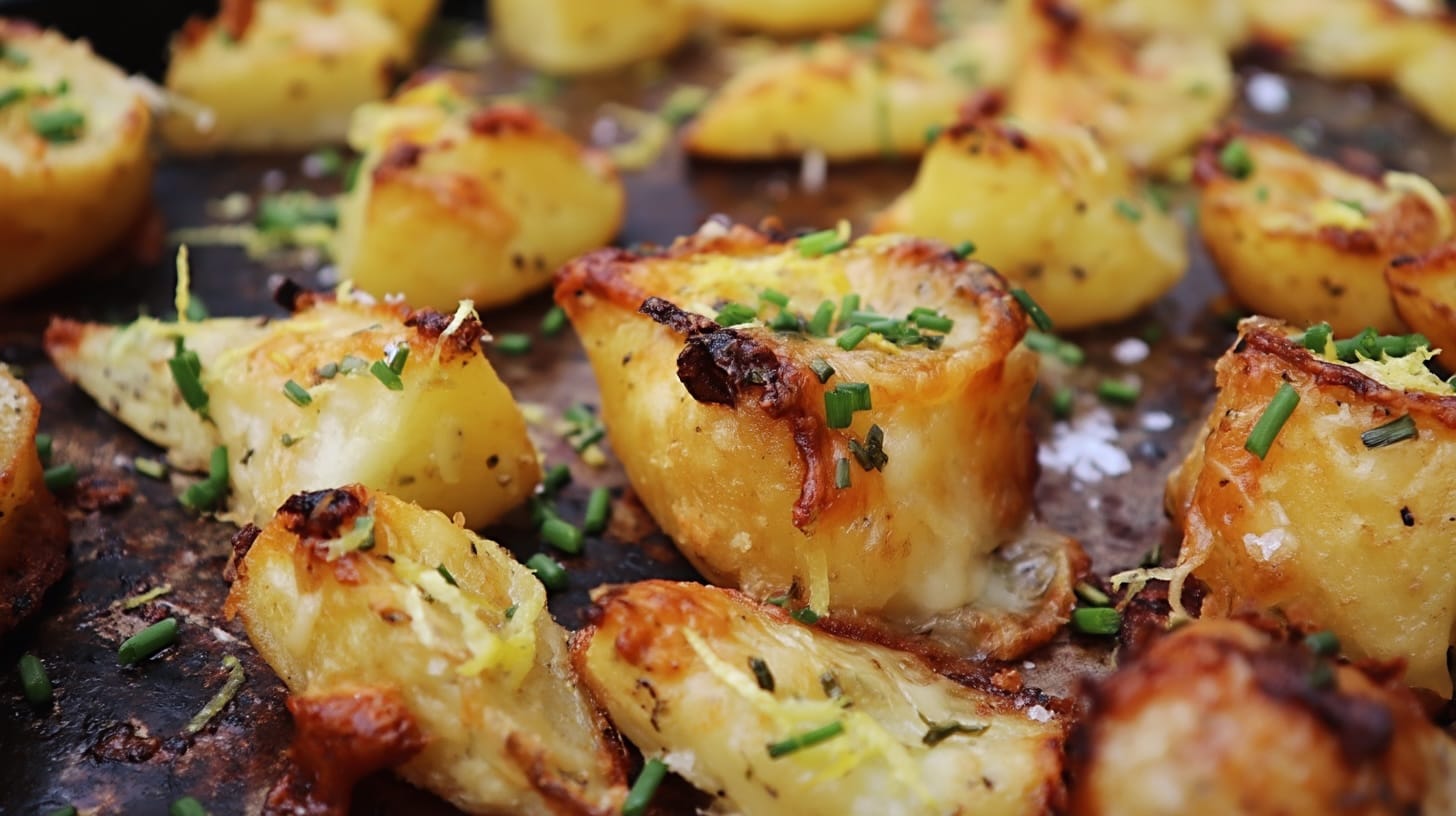
When I’m loading a table with ribs, skewers and smoky chicken, I nearly always want one potato side that does two jobs at once. It needs to bring crunch, and it needs to hold its own against barbecue flavours without turning the plate heavy and sleepy. These crispy garlic parmesan potatoes do exactly that. They’ve got rough, craggy edges, a savoury cheese crust and just enough lemon and chive at the end to stop the whole thing feeling flat.
The Texture That Makes Them Worth Repeating
Potatoes can disappear into the background if they’re underseasoned or too soft. I’m after the opposite here. I want fluffy middles, bronzed edges and little salty shards of parmesan that catch on the corners. That contrast is why I keep coming back to this recipe whenever I’m serving sticky pork or glazed beef. If you’re building out a full barbecue menu, my guide to best potato side dishes for BBQs and skewers lays out where this one sits among the rest.

What I Pair Them With at a BBQ
These potatoes lean savoury and citrusy, so they’re brilliant with richer mains. I especially like them alongside mustard potato salad with bacon and spring onion when I’m feeding a bigger crowd and want both a cold potato side and a hot one on the table. For meat, I’d happily put them next to chipotle maple beef skewers because the sweet heat loves the salty parmesan crust.
A Potato Side That Still Feels Fresh
One of the reasons this recipe works so well for me is that the finish matters as much as the roast. A quick hit of lemon zest and fresh chives wakes the tray up right at the end. That same contrast is what I enjoy in a creamy leek and gruyere potato bake on colder evenings, or in harissa yoghurt potato wedges with lime coriander when I want more spice. If I’m in the mood for something punchier and pub-style, I also often make blue cheese potatoes finished with celery salt chives.
Ingredients for 4 People
- 1.2 kg Maris Piper potatoes, or King Edward potatoes
- 2 tbsp fine sea salt, for the boiling water
- 4 tbsp olive oil
- 40 g unsalted butter
- 5 garlic cloves, finely grated
- 60 g finely grated parmesan
- 1 tsp cracked black pepper
- 1 tsp flaky sea salt, plus extra to finish
- 1 lemon, zest only
- 15 g fresh chives, finely sliced
- 1 tbsp chopped flat-leaf parsley, optional
Ingredient Notes
The potato variety matters more than people sometimes think. I use floury potatoes here because they break up slightly after draining, and that rough surface is what gives you the brittle, crunchy exterior later on. Waxy potatoes stay neat, which is useful in salads, but they won’t give you the same shaggy edges.
Freshly grated parmesan works better than the dusty pre-grated stuff in a shaker. It melts more cleanly and gives you those salty golden patches instead of a sandy coating. I also grate the garlic rather than chopping it because I want it to melt into the oil and butter, not sit in little harsh bits that can catch too dark in the oven.
Equipment Needed
You do not need anything fancy for this recipe, but a few bits make life easier. I use a large saucepan for parboiling, a colander for draining and a heavy metal roasting tray. The tray is important because it holds heat well, which helps the potatoes start crisping as soon as they hit the surface.
A microplane is handy for both the garlic and the lemon zest, and I like a fish slice or thin metal spatula for lifting the potatoes cleanly once they’ve crisped underneath. If you’ve got parchment, keep it in the drawer for this one. Direct contact with the tray gives the best crust and colour.
Instructions
Step 1: Heat the Tray Properly
Heat your oven to 220°C fan, or 240°C conventional. Put the empty roasting tray in the oven while it heats for at least 10 minutes. A hot tray gives the potatoes a proper head start.
Step 2: Parboil the Potatoes
Peel the potatoes and cut them into uneven chunks, roughly 5 cm across. Put them in a large pan of cold water with the fine sea salt. Bring to the boil and cook for 10 to 12 minutes, until the outsides are tender but the centres still hold their shape.
Step 3: Rough Up the Surface
Drain the potatoes well, then leave them in the colander for 2 minutes so excess steam can escape. Tip them back into the warm pan, clamp on the lid and give the pan a few firm shakes. You want the edges to look fluffy and roughed up, not smashed to pieces.
Step 4: Season the Fat
In a small bowl, mix the olive oil, butter, grated garlic, black pepper and flaky sea salt. Hold back the parmesan, lemon zest and chives for later. Pull the hot tray from the oven and carefully pour in the garlic butter mixture.
Step 5: Roast Until Deeply Crisp
Tip the potatoes onto the tray and turn them gently so they’re coated. Spread them out in one layer with space around them. Roast for 25 minutes, then turn each piece. Roast for another 20 to 25 minutes until the edges are deeply golden and crisp.
Step 6: Add the Parmesan
Scatter over the parmesan and return the tray to the oven for 5 to 7 minutes. The cheese should melt, darken at the edges and cling to the potatoes rather than disappear.
Step 7: Finish with Lemon and Chives
Lift the tray out and leave it for 2 minutes. Scatter over the lemon zest, chives and parsley if using. Add an extra pinch of flaky sea salt, then serve straight away while the crust is still at its best.
Cooking Technique Notes for Garlic Parmesan Potatoes
The key trick here is not just parboiling, it’s controlled roughing up. I’m not trying to break the potatoes into crumbs. I want the outer layer to fray and fluff because those little ridges catch hot fat and brown far better than smooth surfaces do. It’s the same reason roasties from a too-crowded tray often disappoint. When the pieces are pressed together, they steam. When they have breathing room, they crisp.
Timing the parmesan near the end also makes a difference. Add it too early and it can darken before the potatoes are ready. Add it at the finish and you get a more distinct cheese crust, with a nutty salty flavour rather than bitterness. The lemon zest goes on last for the same reason. I want that citrus freshness on the nose the moment the tray lands on the table.
What to Serve with These Potatoes
This is one of those sides that earns its keep next to sticky, glossy barbecue meats. I love it with pork ribs, especially something with sweetness or spice in the glaze. The crunchy edges mop up sauce brilliantly, and the lemony finish stops fatty bites from building up on the palate. These are also excellent with grilled chicken thighs, sausages or beef skewers where you want a side that feels substantial but not stodgy.
For a fuller spread, I’d pair them with something cool and sharp on the side. A crisp slaw, a yoghurt dip or a mustardy salad all make sense. I’m especially fond of putting them next to jalapeno lime coriander deli coleslaw or a punchy dip like smoked tomato harissa yoghurt dip. If the main is rich, the fresh crunch around the plate really helps.
Wine and Beer Pairings
For wine, I’d reach first for a dry Riesling. The sharp acidity cuts through the parmesan and butter without stripping the food of flavour, and the citrus line in the wine plays nicely with the lemon zest on the potatoes. A Sauvignon Blanc also works well, especially one with grassy, stony notes rather than anything too tropical. That style keeps the plate feeling lively, particularly if you’re serving chicken or herby skewers.
For beer, I like a crisp pilsner with these potatoes because it clears the mouth between bites and handles the salty cheese really well. If the barbecue spread is smokier or heavier, a session pale ale is another good fit. The gentle hop bitterness keeps things tidy, while the light body won’t fight the garlic or flatten the chive and lemon finish.
FAQ
Can I make garlic parmesan potatoes ahead of time?
Yes, partly. You can peel and parboil the potatoes a few hours ahead, then rough them up and leave them uncovered on a tray. Roast them just before serving for the best crunch. I would not fully roast and hold them for too long because the crust softens.
Which potatoes are best for crispy garlic parmesan potatoes?
Floury potatoes are best, especially Maris Piper or King Edward. They fluff up after boiling and give you the rough edges that turn golden in the oven.
Do I need to peel the potatoes?
I usually peel them for the most classic texture. You can leave the skins on if you like a more rustic finish, but scrub them well and expect a slightly firmer bite.
Why are my parmesan potatoes not going crispy?
This usually comes down to one of four things. The tray was not hot enough, the potatoes were too wet, the pan was overcrowded or the oven temperature was too low. Any of those will push the potatoes towards steaming instead of crisping.
Can I use pecorino instead of parmesan?
Yes, though it’s saltier and sharper. Use a little less and taste before adding extra finishing salt.
Are garlic parmesan potatoes good with barbecue food?
They’re excellent with barbecue food because they bring crunch, salt and savoury depth. That makes them a very useful side for sticky ribs, glazed chicken and sweet-spiced skewers.
Tips for Success with Garlic Parmesan Potatoes
The biggest win with garlic parmesan potatoes is patience at the start. Let the potatoes steam dry after draining, and do not skip the shaking stage. Those two quiet little moments do more for texture than any gadget ever will. I also like to preheat the tray properly instead of rushing it. When the potatoes hit hot metal, you hear that faint sizzle and you already know dinner is heading in the right direction.
Season in layers rather than dumping everything on at the end. Salt the water, season the fat, then finish with a light touch of flaky salt once roasted. That builds flavour all the way through the potato instead of leaving you with a salty crust and a bland centre. Lemon zest should stay bright and fresh, so don’t put it in the oven. It belongs on the finished tray, right before serving.
Recipe Variations for Garlic Parmesan Potatoes
You can take this in a few different directions without losing the character of the dish. Swap the chives for rosemary if you want a deeper, woodsy note, or add a teaspoon of smoked paprika to the oil for a warmer barbecue edge. A small spoonful of Dijon whisked into the butter and oil is good too, especially if the potatoes are heading to the table with sausages or pork.
For a sharper finish, crumble in a little feta alongside the parmesan and use extra lemon. If I’m making these for a spicier menu, I sometimes add finely sliced pickled chillies after roasting. That sounds slightly chaotic, but it works. The tang and heat cut through the butter and cheese in a really useful way.
Storage and Reheating for Garlic Parmesan Potatoes
Leftover garlic parmesan potatoes will keep in an airtight container in the fridge for up to 3 days. Once cold, the crust softens, so I would not expect them to taste quite the same straight from the fridge.
To reheat, spread them on a metal tray and bake at 200°C fan for 10 to 15 minutes until hot and crisp again. An air fryer also does a good job. I would avoid the microwave unless texture is not a concern, because it tends to make the potatoes soft and a bit leathery around the edges.
Health Benefits
Potatoes often get treated unfairly, but they’re a useful ingredient when you cook them well and serve them as part of a balanced plate. They provide potassium, some fibre and a satisfying carbohydrate base, which is handy when you’re eating stronger barbecue flavours. Garlic brings its own savoury depth, while herbs and lemon help lift the dish without needing extra richness.
This recipe is not a light salad, and it isn’t pretending to be. Still, compared with many heavily loaded sides, it keeps the ingredient list straightforward and gives you plenty of flavour from technique, seasoning and texture rather than sauces piled on top.
Alternatives for Dietary Needs
For a vegetarian version, this recipe is already suitable if you use traditional vegetarian-friendly hard cheese. For gluten-free eaters, it works as written, just double-check the cheese and seasonings. For an egg-free and nut-free side, it’s also straightforward as long as your cheese is safe for your kitchen.
For a dairy-free version, swap the butter for olive oil and use a dairy-free hard cheese alternative, or leave out the cheese altogether and lean harder into garlic, lemon zest and herbs. For a slightly lighter version, reduce the oil by 1 tablespoon and use less parmesan, though I’ll be honest, this is one of those recipes where texture and flavour come from enough fat hitting the tray.

Crispy Garlic Parmesan Potatoes with Lemon Chives

Ingredients
- 1.2 kg Maris Piper potatoes or King Edward potatoes
- 2 tbsp fine sea salt for the boiling water
- 4 tbsp olive oil
- 40 g unsalted butter
- 5 garlic cloves finely grated
- 60 g finely grated parmesan
- 1 tsp cracked black pepper
- 1 tsp flaky sea salt plus extra to finish
- 1 lemon zest only
- 15 g fresh chives finely sliced
- 1 tbsp flat-leaf parsley chopped, optional
Instructions
Heat the Tray Properly
- Heat your oven to 220°C fan, or 240°C conventional. Put the empty roasting tray in the oven while it heats for at least 10 minutes. A hot tray gives the potatoes a proper head start.
Parboil the Potatoes
- Peel the potatoes and cut them into uneven chunks, roughly 5 cm across. Put them in a large pan of cold water with the fine sea salt. Bring to the boil and cook for 10 to 12 minutes, until the outsides are tender but the centres still hold their shape.
Rough Up the Surface
- Drain the potatoes well, then leave them in the colander for 2 minutes so excess steam can escape. Tip them back into the warm pan, clamp on the lid and give the pan a few firm shakes. You want the edges to look fluffy and roughed up, not smashed to pieces.
Season the Fat
- In a small bowl, mix the olive oil, butter, grated garlic, black pepper and flaky sea salt. Hold back the parmesan, lemon zest and chives for later. Pull the hot tray from the oven and carefully pour in the garlic butter mixture.
Roast Until Deeply Crisp
- Tip the potatoes onto the tray and turn them gently so they’re coated. Spread them out in one layer with space around them. Roast for 25 minutes, then turn each piece. Roast for another 20 to 25 minutes until the edges are deeply golden and crisp.
Add the Parmesan
- Scatter over the parmesan and return the tray to the oven for 5 to 7 minutes. The cheese should melt, darken at the edges and cling to the potatoes rather than disappear.
Finish with Lemon and Chives
- Lift the tray out and leave it for 2 minutes. Scatter over the lemon zest, chives and parsley if using. Add an extra pinch of flaky sea salt, then serve straight away while the crust is still at its best.