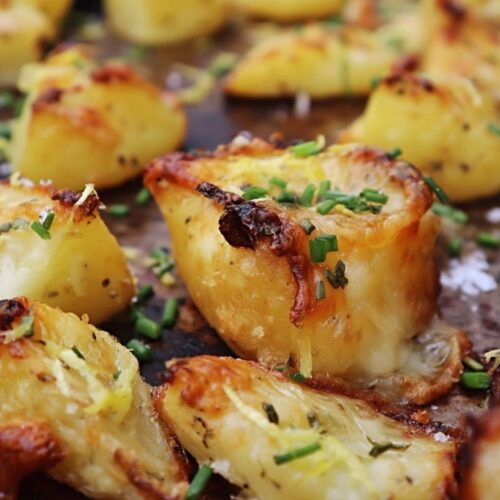
Crispy Garlic Parmesan Potatoes with Lemon Chives

Floury potatoes are parboiled, roughed up and roasted until crisp, then finished with parmesan, garlic, lemon zest and chives. Ideal when a barbecue plate needs a crunchy, savoury potato side with a fresh lift at the end.
Ingredients
- 1.2 kg Maris Piper potatoes or King Edward potatoes
- 2 tbsp fine sea salt for the boiling water
- 4 tbsp olive oil
- 40 g unsalted butter
- 5 garlic cloves finely grated
- 60 g finely grated parmesan
- 1 tsp cracked black pepper
- 1 tsp flaky sea salt plus extra to finish
- 1 lemon zest only
- 15 g fresh chives finely sliced
- 1 tbsp flat-leaf parsley chopped, optional
Instructions
Heat the Tray Properly
- Heat your oven to 220°C fan, or 240°C conventional. Put the empty roasting tray in the oven while it heats for at least 10 minutes. A hot tray gives the potatoes a proper head start.
Parboil the Potatoes
- Peel the potatoes and cut them into uneven chunks, roughly 5 cm across. Put them in a large pan of cold water with the fine sea salt. Bring to the boil and cook for 10 to 12 minutes, until the outsides are tender but the centres still hold their shape.
Rough Up the Surface
- Drain the potatoes well, then leave them in the colander for 2 minutes so excess steam can escape. Tip them back into the warm pan, clamp on the lid and give the pan a few firm shakes. You want the edges to look fluffy and roughed up, not smashed to pieces.
Season the Fat
- In a small bowl, mix the olive oil, butter, grated garlic, black pepper and flaky sea salt. Hold back the parmesan, lemon zest and chives for later. Pull the hot tray from the oven and carefully pour in the garlic butter mixture.
Roast Until Deeply Crisp
- Tip the potatoes onto the tray and turn them gently so they’re coated. Spread them out in one layer with space around them. Roast for 25 minutes, then turn each piece. Roast for another 20 to 25 minutes until the edges are deeply golden and crisp.
Add the Parmesan
- Scatter over the parmesan and return the tray to the oven for 5 to 7 minutes. The cheese should melt, darken at the edges and cling to the potatoes rather than disappear.
Finish with Lemon and Chives
- Lift the tray out and leave it for 2 minutes. Scatter over the lemon zest, chives and parsley if using. Add an extra pinch of flaky sea salt, then serve straight away while the crust is still at its best.
Notes
The potato variety matters more than people sometimes think. I use floury potatoes here because they break up slightly after draining, and that rough surface is what gives you the brittle, crunchy exterior later on. Waxy potatoes stay neat, which is useful in salads, but they won’t give you the same shaggy edges.
Freshly grated parmesan works better than the dusty pre-grated stuff in a shaker. It melts more cleanly and gives you those salty golden patches instead of a sandy coating. I also grate the garlic rather than chopping it because I want it to melt into the oil and butter, not sit in little harsh bits that can catch too dark in the oven.
Nutrition
Calories: 392kcalCarbohydrates: 42gProtein: 8gFat: 21gSaturated Fat: 7gPolyunsaturated Fat: 2gMonounsaturated Fat: 10gCholesterol: 19mgSodium: 612mgPotassium: 988mgFiber: 4gSugar: 2gVitamin A: 305IUCalcium: 156mgIron: 2.1mg
Tried this recipe?Let us know how it was!
