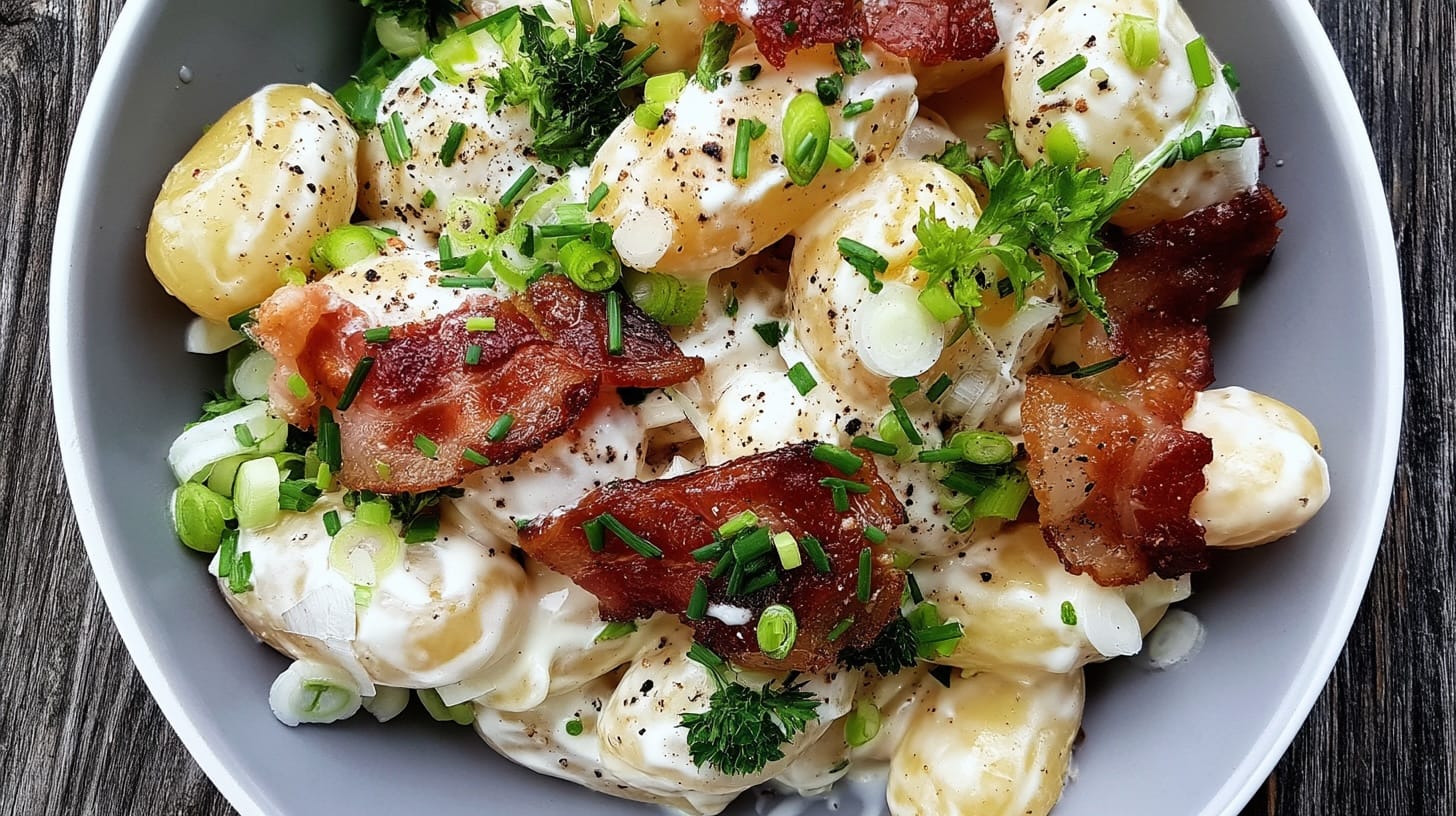
Why I Keep This Potato Salad in My BBQ Rotation
Some potato sides are all about crunch and heat from the oven. This one goes in a completely different direction. I make it when the grill is already busy and I want something cold, creamy and sharp enough to cut through sticky ribs or glazed chicken. The bacon brings savoury depth, the spring onion keeps it lively and the mustard dressing gives the whole bowl a proper backbone rather than that flat, over-mayoed finish potato salad can slip into.
A Potato Salad That Knows Its Job
What I like here is balance. The potatoes stay tender but not mushy, the dressing clings without turning soupy and every forkful has a little contrast built in. You get warmth from mustard, soft richness from mayo and sour cream, then those salty bacon bits popping through. If you’re mapping out a full barbecue spread, I slot this into my roundup of potato side dishes for ribs and skewers because it does a different job from the hot potato trays.

Where It Fits on a Mixed BBQ Table
This salad works especially well when the rest of the meal is smoky, spicy or sticky. It cools things down without becoming bland. I often serve it beside crispy parmesan potatoes with fresh lemon chives if I’m putting out both hot and cold sides for a crowd. It also sits nicely with sweet potatoes with feta chilli lime coriander when I want a table that feels varied instead of a row of beige bowls.
The Sort of Side That Gets Finished First
It’s also useful because it can be made ahead, which matters when the barbecue is doing your head in and guests start circling the garden asking when food’s ready. I’ve made versions of this for years, and the biggest lesson has been not to overcomplicate it. Good potatoes, punchy mustard, properly crisp bacon and enough spring onion to bring freshness. That’s the heart of it. If you like richer potato dishes too, have a look at rich potato gratin with leeks and thyme. For a meat pairing, I’d put this straight next to sticky gochujang chilli garlic ribs.
Ingredients for 4 People
- 1 kg baby potatoes, halved if large
- 180 g streaky bacon
- 4 spring onions, finely sliced
- 120 g mayonnaise
- 80 g sour cream
- 2 tbsp Dijon mustard
- 1 tbsp wholegrain mustard
- 1 tbsp white wine vinegar
- 1 tsp honey
- 1 tbsp extra virgin olive oil
- 1 tsp fine sea salt, plus extra for the cooking water
- 1 tsp cracked black pepper
- 1 tbsp chopped fresh chives
- 1 tbsp chopped flat-leaf parsley
- 1 small celery stick, very finely diced, optional for crunch
Ingredient Notes
Baby potatoes are perfect here because they hold their shape and give the salad a nice bite. If they’re all different sizes, cut the big ones in half so they cook evenly. I don’t want mashed edges in this recipe. I want the potatoes to stay distinct and glossy, with the dressing coating them rather than swallowing them whole.
Using both Dijon and wholegrain mustard matters. Dijon gives you the smooth, direct mustard heat, while wholegrain brings little pops of texture and a gentler tang. Sour cream softens the dressing and keeps it from tasting too sweet or too thick. The bacon needs to be crisp, not chewy, because it acts almost like seasoning here.
Equipment Needed
A medium saucepan, frying pan and large mixing bowl are the main things you’ll need. I also like having a small bowl or jug for mixing the dressing first, because it lets me taste and adjust the mustard, vinegar and seasoning before it hits the potatoes.
A slotted spoon is useful for lifting the bacon from the pan and leaving most of the fat behind. If you want the celery cut very fine, a small sharp knife is better than trying to rush it. This is not a gadgety recipe. It’s more about tidy prep and getting the texture right at each stage.
Instructions
Step 1: Boil the Potatoes
Put the potatoes into a saucepan and cover with cold water. Add a generous pinch of salt. Bring to the boil, then simmer for 12 to 15 minutes, until just tender when pierced with a knife. Drain well and leave them to steam dry for 10 minutes.
Step 2: Cook the Bacon
While the potatoes cook, place the bacon in a cold frying pan. Set over medium heat and cook slowly until the fat renders and the bacon turns deeply crisp, about 8 to 10 minutes. Transfer to a plate lined with kitchen paper, then chop into small pieces once cool enough to handle.
Step 3: Mix the Mustard Dressing
In a bowl, whisk together the mayonnaise, sour cream, Dijon mustard, wholegrain mustard, white wine vinegar, honey, olive oil, fine sea salt and black pepper. Stir until smooth. Taste it. It should feel punchy, savoury and slightly tangy because the potatoes will soften the flavour later.
Step 4: Dress the Potatoes Warm
Tip the warm potatoes into a large bowl. Spoon over the dressing and fold gently until everything is coated. Warm potatoes absorb flavour better than cold ones, so this step makes a big difference.
Step 5: Add Freshness and Crunch
Fold through the spring onions, chives, parsley and celery if using. Hold back a small amount of herbs and spring onion for finishing if you want the bowl to look a bit sharper.
Step 6: Finish with Bacon
Scatter the chopped bacon over the salad and fold about half of it through. Leave the rest on top so it stays crisp. Taste and adjust with extra pepper or a little more vinegar if it needs brightening.
Step 7: Chill or Serve
You can serve this slightly warm, cool or fully chilled. I usually give it 20 to 30 minutes in the fridge so the dressing settles and the flavours knit together without losing the bacon’s contrast.
Cooking Technique Notes for Mustard Potato Salad
The most important thing with mustard potato salad is when you dress it. If you wait until the potatoes are cold, the flavour sits on the outside. If you dress them while still warm, they take on the mustard, vinegar and seasoning far more deeply. That doesn’t mean hot enough to split the mayo, just warm enough to be receptive. It’s a small timing detail, but it completely changes the finished bowl.
Bacon needs careful treatment too. I always start it in a cold pan because the fat renders more evenly and the bacon gets crisp rather than catching in patches. That texture matters. Crisp bacon gives you structure and contrast. Soft bacon just blends into the dressing and gets lost, which is a shame because it’s one of the main reasons this salad stands up so well to barbecue food.
What to Serve with This Recipe
This is one of my favourite sides for anything glazed, sticky or spicy. It works brilliantly with ribs, grilled chicken thighs and beef skewers because the creamy mustard dressing cools the palate while the bacon keeps the salad from feeling too polite. I’d be very happy serving it with cajun chicken garlic butter peppers or chipotle coffee brown sugar ribs, both of which benefit from something cool and tangy alongside.
On a larger spread, I like to pair it with a crunchy vegetable side or a lighter slaw so the plate doesn’t get too rich. Something like spring onion celery dill coleslaw works a treat. If you’re doubling up on potatoes, I’d add a tray of buttered baby potatoes with dill and peas for a softer, greener contrast.
Wine and Beer Pairings
For wine, a dry rosé is very easy to like with this salad. It has enough acidity to handle the mustard and enough fruit to soften the bacon’s saltiness without turning the pairing sugary. I also like an unoaked Chardonnay, particularly one with a clean, fresh style. That gives the creamy dressing somewhere to land, while the lack of heavy oak keeps the whole thing from feeling clumsy.
For beer, a helles lager is lovely here. It’s smooth, bready and crisp enough to keep the palate refreshed between bites. A pale ale with gentle citrus and moderate bitterness also works well, especially if you’re serving the salad with spicier barbecue mains. The hops cut through the mayo and bacon neatly without overwhelming the mustard.
FAQ
Can I make mustard potato salad the day before?
Yes, you can. In fact, it tastes very good after a few hours in the fridge. I’d keep a little bacon and a few herbs back to scatter on top just before serving so the texture stays lively.
What potatoes are best for creamy mustard potato salad?
Baby potatoes, Charlotte potatoes or other waxy varieties work best because they hold their shape and don’t fall apart when mixed with the dressing.
Is it better to dress potatoes warm or cold?
Warm is better. Warm potatoes absorb the mustard dressing more effectively, which gives you better flavour all the way through the salad.
How do I stop potato salad becoming watery?
Drain the potatoes thoroughly and let them steam dry before dressing. Also avoid overcooking them, because broken potatoes release too much starch and moisture into the bowl.
Can I make this without bacon?
Yes. Leave it out for a meat-free version and add chopped cornichons, crispy fried onions or extra celery for contrast.
What makes mustard potato salad good with barbecue?
The creamy dressing cools spicy food, the mustard cuts through rich meat and the bacon adds enough savoury depth to keep the salad from fading into the background.
Can I use English mustard instead of Dijon?
You can, but use less because it’s stronger and sharper. A small amount mixed with Dijon usually gives the best flavour.
Tips for Success with Mustard Potato Salad
The best creamy mustard potato salad starts with properly seasoned potatoes. Salt your cooking water well, because that’s your chance to season the potatoes from within. Once they’re cooked, don’t rush them straight into the dressing while they’re dripping wet. Let the steam escape and the surface dry slightly. That keeps the dressing thick and silky rather than loose.
Taste as you go, especially with the dressing. Different mustards vary in strength, and bacon changes the salt level of the finished salad. I always taste the dressing before adding it, then again after mixing in the bacon. That second check matters. You might want more pepper, a touch more vinegar or an extra spoonful of sour cream depending on what the salad is sitting beside.
Recipe Variation Suggestions
A little chopped cornichon or caper works very well if you want a sharper edge. It gives the salad a deli-style feel that’s especially good with sausages or burgers. I’ve also made this with finely diced apple in the spring and early summer, which sounds odd until you taste it. The apple brings a crisp sweetness that plays nicely with the mustard and bacon.
For a greener version, stir through blanched peas, chopped dill and extra chives. That makes it feel lighter and fresher, and it’s very good with grilled chicken. If you want more richness, crumble in a little mature cheddar or toss in some soft-boiled eggs. I wouldn’t do both at once though. At that point, the bowl starts getting a bit noisy.
Storage and Reheating for Mustard Potato Salad
This mustard potato salad keeps well in the fridge for up to 3 days in a sealed container. Give it a gentle stir before serving because the dressing can tighten slightly as it chills.
I do not usually reheat it. It’s best served cold or cool. If you prefer it less chilled, take it out of the fridge 20 minutes before eating. If the dressing seems too thick after storage, loosen it with a spoonful of sour cream or a tiny splash of water.
Health Benefits
Potatoes provide potassium, useful carbohydrates and a decent bit of fibre, especially if you leave some skin on. Spring onions and fresh herbs add freshness and small amounts of vitamins without making the dish fussy. Mustard brings flavour quickly, which means you can build a strong dressing without relying purely on extra salt or sugar.
This is still a creamy side, so I treat it as part of a balanced barbecue plate rather than pretending it’s health food in disguise. Paired with grilled meat, salad and vegetables, it earns its place very happily. It’s filling, satisfying and more useful on a barbecue table than many heavier mayo salads.
Alternatives for Dietary Needs
For a gluten-free version, check your mustard and bacon labels, but the recipe is usually easy to adapt. For an egg-free version, use an egg-free mayonnaise. For a dairy-free version, swap the sour cream for a dairy-free alternative or use a little extra mayo plus a squeeze of lemon for balance.
For a vegetarian version, leave out the bacon and add crispy shallots, smoked almonds if suitable for your guests, or chopped pickles for texture. For a lighter take, use half Greek yoghurt and half mayo instead of the full amount of mayo and sour cream, though the dressing will taste slightly tangier and less rich.

Creamy Mustard Potato Salad with Bacon Spring Onion

Ingredients
- 1 kg baby potatoes halved if large
- 180 g streaky bacon
- 4 spring onions finely sliced
- 120 g mayonnaise
- 80 g sour cream
- 2 tbsp Dijon mustard
- 1 tbsp wholegrain mustard
- 1 tbsp white wine vinegar
- 1 tsp honey
- 1 tbsp extra virgin olive oil
- 1 tsp fine sea salt plus extra for the cooking water
- 1 tsp cracked black pepper
- 1 tbsp chopped fresh chives
- 1 tbsp chopped flat-leaf parsley
- 1 small celery stick very finely diced, optional for crunch
Instructions
Boil the Potatoes
- Put the potatoes into a saucepan and cover with cold water. Add a generous pinch of salt. Bring to the boil, then simmer for 12 to 15 minutes, until just tender when pierced with a knife. Drain well and leave them to steam dry for 10 minutes.
Cook the Bacon
- While the potatoes cook, place the bacon in a cold frying pan. Set over medium heat and cook slowly until the fat renders and the bacon turns deeply crisp, about 8 to 10 minutes. Transfer to a plate lined with kitchen paper, then chop into small pieces once cool enough to handle.
Mix the Mustard Dressing
- In a bowl, whisk together the mayonnaise, sour cream, Dijon mustard, wholegrain mustard, white wine vinegar, honey, olive oil, fine sea salt and black pepper. Stir until smooth. Taste it. It should feel punchy, savoury and slightly tangy because the potatoes will soften the flavour later.
Dress the Potatoes Warm
- Tip the warm potatoes into a large bowl. Spoon over the dressing and fold gently until everything is coated. Warm potatoes absorb flavour better than cold ones, so this step makes a big difference.
Add Freshness and Crunch
- Fold through the spring onions, chives, parsley and celery if using. Hold back a small amount of herbs and spring onion for finishing if you want the bowl to look a bit sharper.
Finish with Bacon
- Scatter the chopped bacon over the salad and fold about half of it through. Leave the rest on top so it stays crisp. Taste and adjust with extra pepper or a little more vinegar if it needs brightening.
Chill or Serve
- You can serve this slightly warm, cool or fully chilled. I usually give it 20 to 30 minutes in the fridge so the dressing settles and the flavours knit together without losing the bacon’s contrast.