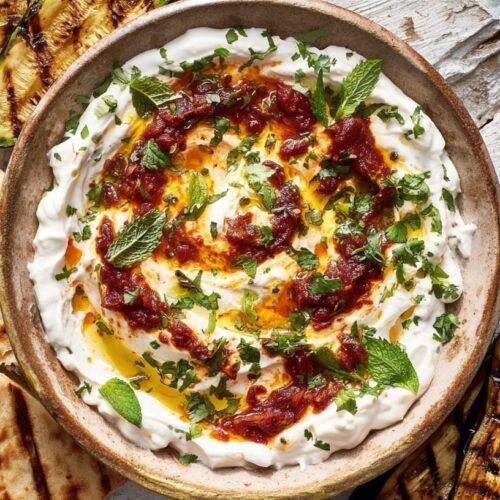
Smoked Tomato Harissa Greek Yoghurt BBQ Dip

This lighter BBQ dip combines blistered tomatoes, harissa and thick Greek yoghurt for a smoky, tangy finish. It’s especially good with lamb koftas, chicken skewers, grilled vegetables and warm flatbreads when you want freshness as well as heat.
Ingredients
- 350 g ripe vine tomatoes
- 250 g full-fat Greek yoghurt
- 1 1/2 tbsp rose harissa
- 1 small garlic clove grated
- 1 tbsp extra virgin olive oil
- 1 tbsp lemon juice
- 1 tsp lemon zest
- 1/2 tsp ground cumin
- 1/4 tsp smoked paprika
- 1/2 tsp fine sea salt
- 1/4 tsp black pepper
- 10 g fresh mint finely chopped
- 10 g fresh coriander chopped
For finishing
- 1 tsp harissa loosened with a few drops of oil
- 1 tsp olive oil
- a small pinch of toasted cumin seeds optional
For serving (Optional)
- 1 large flatbread or 4 pittas grilled
- 1 courgette sliced lengthways and grilled
- 1 aubergine sliced and grilled
- 8 lamb koftas or chicken skewers optional
Instructions
Heat the BBQ and prep the tomatoes
- Set your BBQ to medium-high with a direct zone and a slightly cooler area. Toss the tomatoes lightly in a touch of oil if you like, though it’s not essential.
Blister the tomatoes
- Place the tomatoes over direct heat and cook for 6 to 10 minutes, turning as needed, until the skins split and blacken in patches. They should feel softened and slightly slumped.
Cool and crush
- Move the tomatoes to a bowl and let them cool just enough to handle. Crush them gently with a fork, keeping some chunkiness. If they’ve released a lot of liquid, tip off a spoonful or two so the dip doesn’t become thin.
Season the yoghurt
- In a separate bowl, stir together the Greek yoghurt, harissa, garlic, olive oil, lemon juice, lemon zest, cumin, smoked paprika, salt and pepper.
Fold everything together
- Spoon the crushed smoked tomatoes into the yoghurt mixture and fold gently. Add most of the mint and coriander, saving a little for the top. Taste and adjust with extra lemon, salt or harissa if needed.
Rest the dip briefly
- Let the dip sit for 10 minutes while you grill the bread and vegetables. That short rest helps the smoke and spice settle into the yoghurt.
Grill the serving bits
- Toast the flatbread or pittas on the BBQ until warm with light char marks. Grill the courgette and aubergine slices until tender and marked on both sides.
Finish and serve
- Spoon the dip into a shallow bowl. Drizzle over the loosened harissa and olive oil, then scatter with the remaining herbs and toasted cumin seeds if using. Serve with grilled bread, vegetables and any koftas or skewers.
Notes
Greek yoghurt is doing quite a bit of work here, so I use full-fat and strain off any excess liquid if it seems loose. You want it thick enough to hold the smoked tomato mixture rather than turn into a pink puddle. The tomatoes need to be ripe, not sad and watery. Good vine tomatoes or plum tomatoes both work well because they have enough sweetness to stand up to the harissa.
Harissa is one of those ingredients that changes shape depending on the jar. Some are deep red and quite smoky, some are floral and brighter, some are properly hot. Rose harissa is a nice place to start because it usually has warmth and complexity without being aggressive. Taste before adding the full amount. You can always stir in more later if you want the finish a bit fiercer.
Nutrition
Calories: 118kcalCarbohydrates: 7gProtein: 7gFat: 7gSaturated Fat: 2gPolyunsaturated Fat: 0.5gMonounsaturated Fat: 3gCholesterol: 10mgSodium: 356mgPotassium: 289mgFiber: 1.5gSugar: 5gVitamin A: 980IUCalcium: 118mgIron: 0.8mg
Tried this recipe?Let us know how it was!
