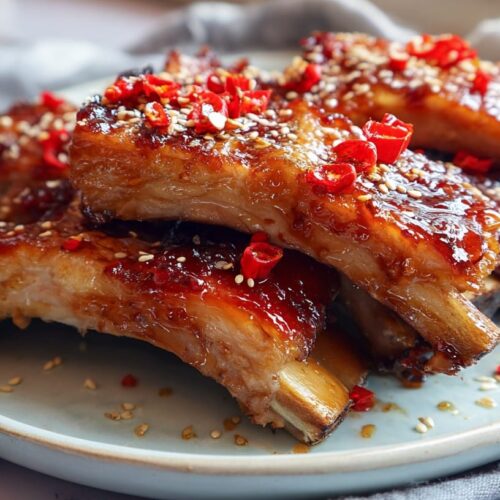
Sticky Gochujang Pork Ribs with Chilli Garlic

These sticky gochujang pork ribs are cooked on the barbecue until tender, then layered with a savoury glaze of gochujang, garlic, chilli and lime. They deliver deep flavour, balanced heat and a glossy finish that clings beautifully to every rib.
Ingredients
- 2 kg pork ribs membrane removed
- 2 tsp fine sea salt
- 1 tsp black pepper cracked
- 2 tsp smoked paprika
- 1 tsp garlic powder
- 1 tsp onion powder
For the gochujang chilli garlic glaze
- 90 g gochujang
- 60 g honey
- 40 g dark brown sugar
- 30 ml soy sauce
- 20 ml rice vinegar
- 15 ml sesame oil
- 20 ml lime juice
- 6 garlic cloves finely grated
- 2 red chillies finely chopped
- 15 g fresh ginger finely grated
- 60 ml apple juice
- 2 tbsp water
Instructions
Prep the ribs
- Pat the ribs dry with kitchen paper. Remove the membrane from the bone side if it’s still attached. Mix the salt, pepper, smoked paprika, garlic powder and onion powder, then season both sides of the ribs evenly.
Fire the BBQ
- Set your BBQ for indirect heat at 150°C to 160°C. On a kettle, bank the coals to one side. On a gas barbecue, leave one side off or keep the centre cool zone free. Add a small chunk of fruit wood if you like a light smoke note, though I keep it subtle here so the glaze stays in charge.
Start the first cook
- Place the ribs bone side down in a foil tray or on the indirect side of the grill. Close the lid and cook for 1 hour 30 minutes. You’re looking for steady heat, gentle rendering and a little colour around the edges.
Make the glaze
- While the ribs cook, combine the gochujang, honey, dark brown sugar, soy sauce, rice vinegar, sesame oil, lime juice, garlic, chillies, ginger, apple juice and water in a saucepan. Warm over low heat for 5 to 7 minutes, stirring until smooth and slightly thickened. It should coat the back of a spoon, but still brush easily.
Glaze and continue cooking
- Brush a generous layer of glaze over the ribs. Return them to the BBQ, still over indirect heat, and cook for 30 minutes with the lid down. Brush again after 15 minutes.
Set the glaze
- Move the ribs closer to the hotter side for 5 to 8 minutes, turning once if needed. Don’t wander off here. The sugars can catch quickly. You want the glaze tacky and shiny, with a few dark spots, not a black crust that tastes like old toast.
Rest and slice
- Take the ribs off the heat and rest for 10 minutes. Slice between the bones and serve while the glaze is still glossy and the meat is hot enough to pull cleanly from the bite.
Notes
Gochujang varies more than people think. Some tubs are sweet and mellow, others are salty and punchy. I usually taste a tiny bit before mixing the glaze, then tweak the honey or lime so the balance lands where I want it. If your paste is fierce, add an extra spoonful of honey. If it’s sweet already, pull back the sugar a touch.
Pork ribs also matter more than the sauce. Look for racks with a good layer of meat over the bones and enough marbling to stay juicy over a long cook. Very lean racks can still work, though they need a bit more attention near the end so the glaze doesn’t dry them out before the meat is ready.
Nutrition
Calories: 760kcalCarbohydrates: 24gProtein: 42gFat: 54gSaturated Fat: 18gPolyunsaturated Fat: 6gMonounsaturated Fat: 23gTrans Fat: 0.2gCholesterol: 165mgSodium: 980mgPotassium: 720mgFiber: 1.4gSugar: 19gVitamin A: 890IUCalcium: 92mgIron: 2.9mg
Tried this recipe?Let us know how it was!
