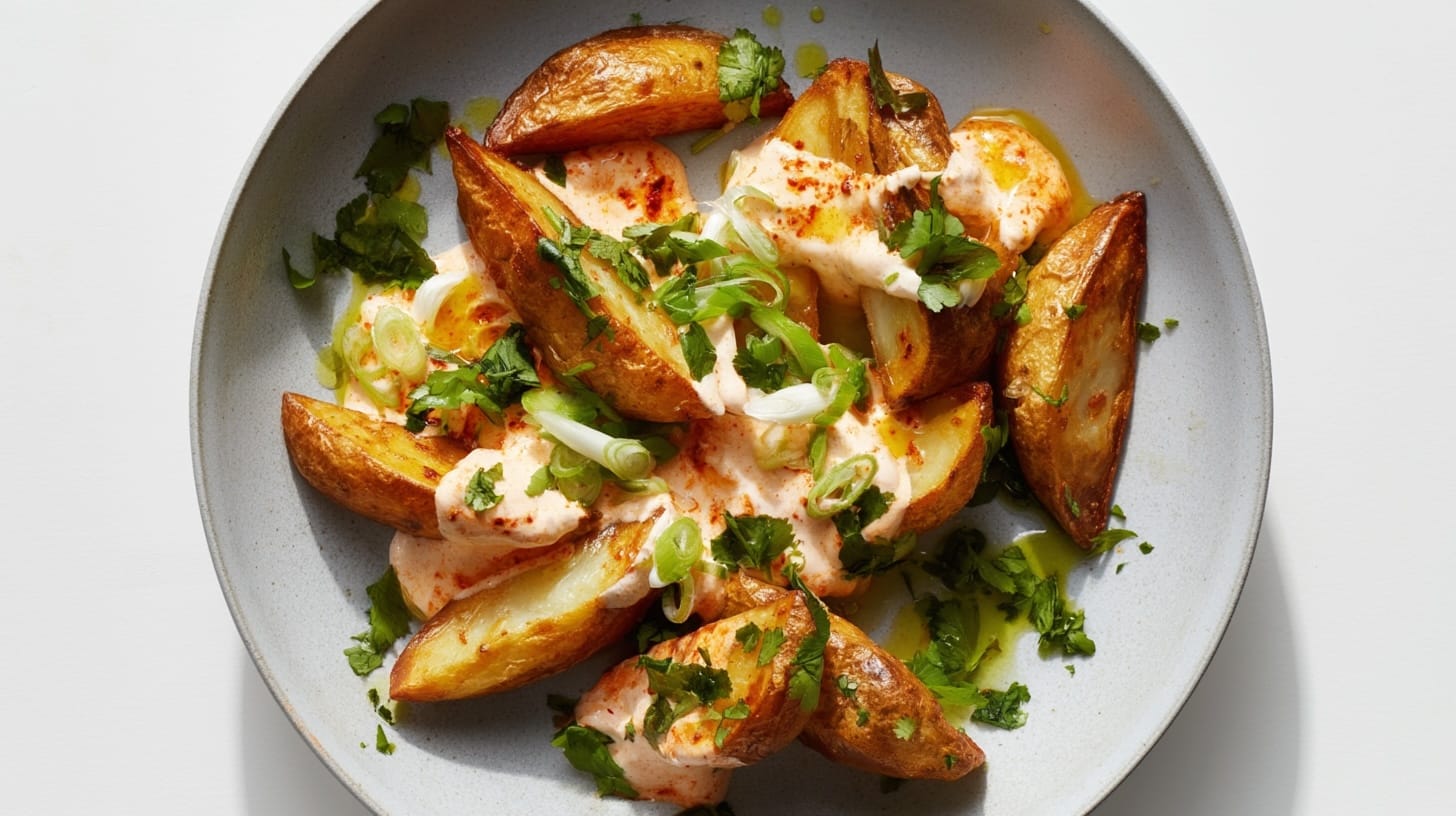
Some potato sides are all about butter, cheese or cream. These wedges go another way. They bring spice, tang and a sharp little burst of freshness that makes a barbecue plate feel brighter. I make them when the mains are rich and sticky, and I want the potatoes to do more than just sit there absorbing sauce. The harissa gives warmth and depth, the yoghurt cools everything back down and the lime with coriander keeps the whole thing moving.
A Potato Side That Doesn’t Feel Heavy
What I like about this recipe is the contrast. The wedges are crisp on the outside and fluffy in the middle, which is exactly what I want from a proper potato side, but the finish keeps them from feeling dense. A spoonful of harissa yoghurt over hot wedges creates that lovely mix of warm spice and cool creaminess. In my roundup of potato sides that work with ribs chicken and skewers, this is the one I point to when I want a side that feels lively rather than rich.
The Kind of Side Dish That Wakes Up the Plate
I find these especially useful when the barbecue menu leans sweet or fatty. The spice helps cut through glazed meat, while lime and coriander add a fresher top note. They’re excellent beside sweet potatoes with feta and chilli lime if I’m serving a bigger spread with two very different potato options. They also work well against blue cheese potato side with celery salt because one is tangy and cooling, the other is rich and savoury.
Where I Like to Put These on a BBQ Table
These wedges turn up most often for me next to chicken, lamb and anything with chilli in the glaze. They also sit happily beside buttered baby potatoes with spring onion freshness when I want a soft herby option and a spicier crisp one on the same table. If I’m going for another hot potato contrast, crispy lemon garlic potatoes with parmesan make sense too. For a main from the wider site, I’d be very pleased eating these with harissa chicken greek yoghurt lemon.
Ingredients for 4 People
- 1.2 kg large potatoes, cut into wedges
- 3 tbsp olive oil
- 1 tbsp cornflour
- 2 tsp smoked paprika
- 1 tsp ground cumin
- 1 tsp garlic granules
- 1 tsp fine sea salt
- 1 tsp cracked black pepper
For the harissa yoghurt
- 180 g Greek yoghurt
- 2 tbsp harissa paste
- 1 tbsp extra virgin olive oil
- 1 lime, zest and juice
- 1 small garlic clove, finely grated
- 1 tbsp chopped coriander, plus extra to finish
- 1 pinch fine sea salt
To finish
- 1 spring onion, finely sliced
- extra lime wedges
- a small drizzle of olive oil, optional
Ingredient Notes
A floury potato works best here because it gives you the fluffy centre that makes wedges worth bothering with. Maris Piper is my usual pick. Waxy potatoes can still taste good, but they stay firmer and you miss that soft inside that contrasts so well with the crisp edges.
Harissa paste varies wildly from jar to jar. Some are deeply smoky, some lean sharp and garlicky, some are much hotter than expected. I always taste it before stirring it into the yoghurt. Greek yoghurt is ideal because it’s thick enough to sit on the wedges rather than sliding straight to the bottom of the plate.
Equipment Needed
You’ll need a large saucepan, colander and a heavy roasting tray. I like a big metal tray because it gives the wedges room to crisp instead of crowding together and steaming. If you have two trays, use them rather than squeezing everything onto one.
A mixing bowl is useful for tossing the wedges with oil and seasoning, and a smaller bowl for the yoghurt. A microplane helps with the lime zest and garlic, though a fine grater is perfectly good. Nothing fancy is required, but a hot oven and enough tray space make a huge difference.
Instructions
Step 1: Heat the Oven
Heat the oven to 220°C fan, or 240°C conventional. Put a large roasting tray in the oven while it heats.
Step 2: Parboil the Wedges
Cut the potatoes into thick wedges. Add them to a large saucepan of cold salted water. Bring to the boil and simmer for 7 to 8 minutes. You want the edges just starting to soften, not fully cooked.
Step 3: Steam Dry and Season
Drain the wedges and leave them in the colander for 3 to 4 minutes so the steam escapes. Tip them into a large bowl. Add the olive oil, cornflour, smoked paprika, cumin, garlic granules, fine sea salt and black pepper. Toss gently until evenly coated.
Step 4: Roast Until Crisp
Carefully remove the hot tray from the oven. Spread the wedges out in a single layer. Roast for 20 minutes, then turn them and roast for another 20 to 25 minutes until crisp, golden and deeply coloured at the edges.
Step 5: Make the Harissa Yoghurt
While the wedges roast, mix the Greek yoghurt, harissa paste, olive oil, lime zest, lime juice, grated garlic, chopped coriander and salt in a bowl. Taste and adjust. It should be creamy, spicy and bright.
Step 6: Finish the Wedges
Pile the hot wedges onto a serving plate or platter. Spoon over some of the harissa yoghurt, then scatter with extra coriander and sliced spring onion. Serve the rest of the yoghurt on the side with lime wedges for squeezing over.
Cooking Technique Notes for Potato Wedges
The big trick with potato wedges is getting the outside crisp without drying out the middle. That’s why I parboil them first. It gives the interior a head start and softens the edges just enough to catch the seasoning and oil properly. The short steam-dry after draining matters as well, because surface moisture gets in the way of browning. A dusting of cornflour helps build that crisp exterior without turning the wedges chalky.
I keep the yoghurt off the wedges until the very end for obvious reasons. Spoon it on too early and the crisp edges lose their edge straight away. I like adding just enough on top to make the platter look generous, then serving the rest in a bowl. That way everyone can decide whether they want a little cool heat or a proper swathe of it.
What to Serve with This Recipe
These wedges are excellent with grilled chicken, lamb skewers and sticky pork because the harissa and lime can handle stronger barbecue flavours without getting lost. They’re especially handy when the meat is sweet or glossy, since the spice and acidity stop the meal feeling too rich. I’d happily serve them with gochujang chicken sesame spring onion or pineapple habanero beef skewers, both of which benefit from a side that brings coolness and punch at once.
For the rest of the table, I’d add something crunchy and fresh so the spread keeps its balance. Jalapeno lime coriander deli coleslaw works beautifully here, and cucumber salad rice vinegar sesame does the same job in a cleaner, cooler way. If you want another dip nearby, mango habanero creamy lime dip makes a very fun table.
Wine and Beer Pairings
For wine, I’d pick a dry rosé first. It has enough freshness to deal with the yoghurt and lime, and enough fruit to handle the harissa without the pairing feeling thin. A Riesling, especially a dry or just off-dry one, is another very good shout. The acidity keeps the dish tidy, and a hint of residual sugar can be very useful if the harissa has real heat.
For beer, a wheat beer works nicely because it softens the spice and plays well with the yoghurt’s tang. A session IPA is also a good fit if you want more bitterness and citrus in the pairing. I’d keep it on the lighter side rather than going for a heavy, resinous IPA, which can make the chilli feel harsher than it needs to.
FAQ
How do I make potato wedges crispy in the oven?
Parboil them first, let them steam dry, coat them lightly with oil and cornflour, then roast them on a hot tray with enough space around each wedge. Those steps matter far more than any secret ingredient.
Can I make harissa yoghurt ahead of time?
Yes. You can make it a day ahead and keep it chilled. In fact, the flavour settles quite nicely after a few hours.
Which potatoes are best for potato wedges?
Floury potatoes such as Maris Piper are best because they give you fluffy centres and crisp edges.
Are harissa wedges very spicy?
That depends on the harissa paste you use. The yoghurt softens the heat quite a lot, so the finished dish is usually warm and punchy rather than painfully hot.
Can I air fry these wedges?
Yes. Cook them in batches so they do not crowd the basket. The texture can be excellent in an air fryer.
What can I use instead of coriander?
Flat-leaf parsley or mint both work well if coriander is not your thing. The flavour changes, but the dish still makes sense.
Do these wedges go with barbecue food?
Very much so. The crisp potatoes, spicy yoghurt and lime freshness work especially well with ribs, chicken skewers and grilled meats with sweet glazes.
Tips for Success with Potato Wedges
For the best potato wedges with harissa yoghurt, don’t skip the hot tray. A preheated tray helps the wedges start crisping as soon as they land, which gives you better colour and less sticking. I also try not to cut the wedges too thin. Skinny wedges can dry out before they colour properly, while thick ones keep that soft, fluffy middle that makes the recipe satisfying.
Be careful with the balance in the yoghurt. Harissa, lime and garlic all have strong personalities, so taste as you go. I want the final spoonful to feel cool first, spicy second and sharp enough to lift the potatoes. If the yoghurt is too fierce, it stops acting like a contrast and starts becoming another aggressive layer on the plate.
Recipe Variation Suggestions
There are a few directions you can take this. For a smokier version, add a pinch more smoked paprika and finish the wedges with charred spring onions. For something brighter, fold chopped mint into the yoghurt along with the coriander. Mint changes the dish quite a bit, but it works especially well if the main is lamb or anything with cumin in the marinade.
You can also swap the harissa yoghurt for a whipped feta and yoghurt topping if you want a saltier, thicker finish. That version is lovely with grilled chicken. If you’d like more heat, add finely chopped red chilli or a little chilli oil on top, though I’d keep the lime generous so the plate still feels fresh rather than merely hot.
Storage and Reheating for Potato Wedges
The wedges will keep in the fridge for up to 3 days in a sealed container. Store the harissa yoghurt separately if possible, because that keeps the potato edges in better shape.
To reheat the wedges, spread them on a tray and bake at 200°C fan for 10 to 15 minutes until hot and crisp again. An air fryer also works very well. I would not reheat the yoghurt. Just serve it cold from the fridge and give it a quick stir before using.
Health Benefits
Potatoes bring useful carbohydrates, potassium and fibre, while the yoghurt adds protein and calcium. Coriander and lime do more than make things taste fresh, they also help the dish feel lighter and brighter even though it’s still a very satisfying side. Because a lot of the flavour comes from spice, herbs and acidity, you can build character without leaning on loads of cheese or cream.
This is still a potato side, and it should feel like one. The benefit is mostly in the balance. Crisp wedges satisfy that need for something hearty next to the grill, while the harissa yoghurt stops the plate from becoming too greasy or flat.
Alternatives for Dietary Needs
For a gluten-free version, the recipe is usually suitable as written, though it’s worth checking the harissa paste. For a vegetarian version, it already fits neatly. For an egg-free and nut-free side, it’s also generally straightforward depending on your packaged ingredients.
For a dairy-free version, use a thick dairy-free yoghurt alternative. Coconut yoghurt can work, though the flavour changes slightly, while oat or almond-based versions are often more neutral. If you want a lighter version, use low-fat Greek yoghurt, though the sauce will be a little less rich and less spoonable.

Potato Wedges with Harissa Yoghurt Lime Coriander

Ingredients
- 1.2 kg large potatoes cut into wedges
- 3 tbsp olive oil
- 1 tbsp cornflour
- 2 tsp smoked paprika
- 1 tsp ground cumin
- 1 tsp garlic granules
- 1 tsp fine sea salt
- 1 tsp cracked black pepper
For the harissa yoghurt
- 180 g Greek yoghurt
- 2 tbsp harissa paste
- 1 tbsp extra virgin olive oil
- 1 lime zest and juice
- 1 small garlic clove finely grated
- 1 tbsp chopped coriander plus extra to finish
- 1 pinch fine sea salt
To finish
- 1 spring onion finely sliced
- extra lime wedges
- a small drizzle of olive oil optional
Instructions
Heat the Oven
- Heat the oven to 220°C fan, or 240°C conventional. Put a large roasting tray in the oven while it heats.
Parboil the Wedges
- Cut the potatoes into thick wedges. Add them to a large saucepan of cold salted water. Bring to the boil and simmer for 7 to 8 minutes. You want the edges just starting to soften, not fully cooked.
Steam Dry and Season
- Drain the wedges and leave them in the colander for 3 to 4 minutes so the steam escapes. Tip them into a large bowl. Add the olive oil, cornflour, smoked paprika, cumin, garlic granules, fine sea salt and black pepper. Toss gently until evenly coated.
Roast Until Crisp
- Carefully remove the hot tray from the oven. Spread the wedges out in a single layer. Roast for 20 minutes, then turn them and roast for another 20 to 25 minutes until crisp, golden and deeply coloured at the edges.
Make the Harissa Yoghurt
- While the wedges roast, mix the Greek yoghurt, harissa paste, olive oil, lime zest, lime juice, grated garlic, chopped coriander and salt in a bowl. Taste and adjust. It should be creamy, spicy and bright.
Finish the Wedges
- Pile the hot wedges onto a serving plate or platter. Spoon over some of the harissa yoghurt, then scatter with extra coriander and sliced spring onion. Serve the rest of the yoghurt on the side with lime wedges for squeezing over.