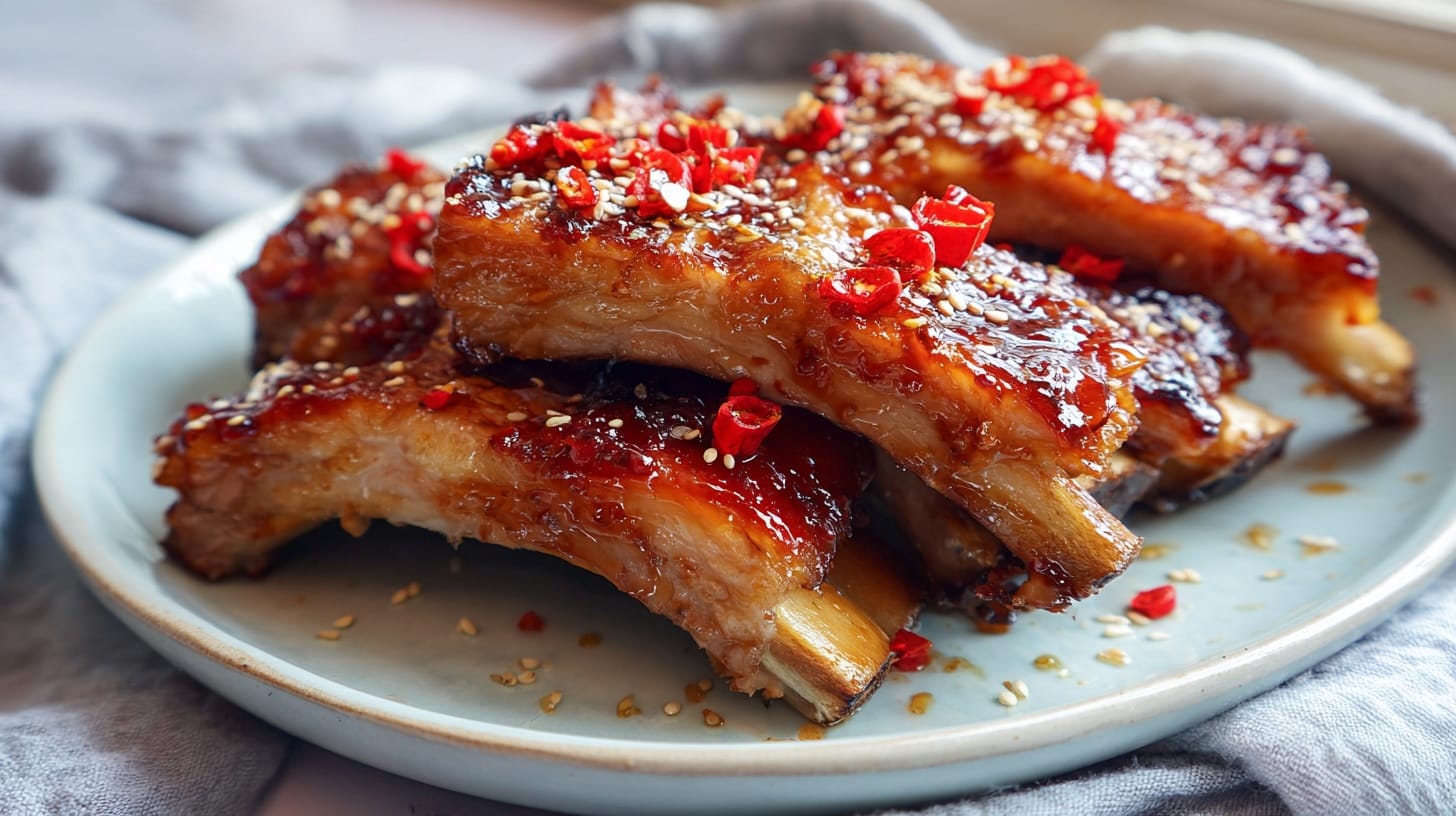
The first time I made gochujang pork ribs on the BBQ, I thought I’d be in for a messy afternoon and a decent dinner. What I got instead was a tray of ribs with a deep red glaze, proper savoury heat and that sticky finish that clings to your fingers in the best possible way. Since then, these have become one of my regulars, right alongside my full spicy pork ribs collection.
The sweet heat balance that makes them work
What I like here is the way gochujang brings more than heat. It has that fermented depth that makes pork taste fuller, almost rounder, while honey and brown sugar soften the sharp edges. Garlic and fresh chilli sharpen the whole thing back up. If you enjoy ribs with a softer sweetness, have a look at maple smoked paprika ribs with red chilli heat, which lean warmer and a bit gentler.
Why the glaze feels rich, not cloying
These ribs don’t taste like sticky sugar for the sake of it. Rice vinegar and lime keep the glaze lively, and a little sesame oil gives it a nutty edge that works brilliantly over charred fat. On days when I want fruit in the mix, I go for mango habanero ribs with lime zing. When I’m after darker, moodier flavours, chipotle coffee ribs with brown sugar depth are hard to ignore.
Where these ribs sit in my regular rotation
This recipe suits anyone who wants proper BBQ pork ribs with spicy glaze, but doesn’t want the sauce to bulldoze everything else. The meat stays juicy, the bark picks up a little chew and the finish has enough garlic to keep you going back for another rib, then another. If you like sweet sour notes with your heat, tamarind pork ribs with sweet sour chilli bite would be a smart next stop.
Ingredients for 4 people
- 2 kg pork ribs, membrane removed
- 2 tsp fine sea salt
- 1 tsp cracked black pepper
- 2 tsp smoked paprika
- 1 tsp garlic powder
- 1 tsp onion powder
For the gochujang chilli garlic glaze
- 90 g gochujang
- 60 g honey
- 40 g dark brown sugar
- 30 ml soy sauce
- 20 ml rice vinegar
- 15 ml sesame oil
- 20 ml lime juice
- 6 garlic cloves, finely grated
- 2 red chillies, finely chopped
- 15 g fresh ginger, finely grated
- 60 ml apple juice
- 2 tbsp water
Ingredient notes
Gochujang varies more than people think. Some tubs are sweet and mellow, others are salty and punchy. I usually taste a tiny bit before mixing the glaze, then tweak the honey or lime so the balance lands where I want it. If your paste is fierce, add an extra spoonful of honey. If it’s sweet already, pull back the sugar a touch.
Pork ribs also matter more than the sauce. Look for racks with a good layer of meat over the bones and enough marbling to stay juicy over a long cook. Very lean racks can still work, though they need a bit more attention near the end so the glaze doesn’t dry them out before the meat is ready.
Equipment needed
You’ll need a BBQ set up for indirect cooking, whether that’s a kettle, kamado or gas barbecue with the centre burner off. I also use a small saucepan for the glaze, a brush for basting and a probe thermometer if I want to keep an eye on grill temperature without lifting the lid every five minutes like a worrier.
A sturdy knife, chopping board and foil tray help as well. I like using a tray during the early stage because it catches juices and keeps the ribs neat while they soften. Later, I move them straight onto the grate so the glaze can tighten and turn glossy rather than watery.
Instructions
Step 1: Prep the ribs
Pat the ribs dry with kitchen paper. Remove the membrane from the bone side if it’s still attached. Mix the salt, pepper, smoked paprika, garlic powder and onion powder, then season both sides of the ribs evenly.
Step 2: Fire the BBQ
Set your BBQ for indirect heat at 150°C to 160°C. On a kettle, bank the coals to one side. On a gas barbecue, leave one side off or keep the centre cool zone free. Add a small chunk of fruit wood if you like a light smoke note, though I keep it subtle here so the glaze stays in charge.
Step 3: Start the first cook
Place the ribs bone side down in a foil tray or on the indirect side of the grill. Close the lid and cook for 1 hour 30 minutes. You’re looking for steady heat, gentle rendering and a little colour around the edges.
Step 4: Make the glaze
While the ribs cook, combine the gochujang, honey, dark brown sugar, soy sauce, rice vinegar, sesame oil, lime juice, garlic, chillies, ginger, apple juice and water in a saucepan. Warm over low heat for 5 to 7 minutes, stirring until smooth and slightly thickened. It should coat the back of a spoon, but still brush easily.
Step 5: Glaze and continue cooking
Brush a generous layer of glaze over the ribs. Return them to the BBQ, still over indirect heat, and cook for 30 minutes with the lid down. Brush again after 15 minutes.
Step 6: Set the glaze
Move the ribs closer to the hotter side for 5 to 8 minutes, turning once if needed. Don’t wander off here. The sugars can catch quickly. You want the glaze tacky and shiny, with a few dark spots, not a black crust that tastes like old toast.
Step 7: Rest and slice
Take the ribs off the heat and rest for 10 minutes. Slice between the bones and serve while the glaze is still glossy and the meat is hot enough to pull cleanly from the bite.
How I cook these sticky gochujang pork ribs on the BBQ
The key technique is controlled indirect heat first, then a short finishing blast. That first stage gives the connective tissue time to soften and lets the fat render without scorching the sugars in the glaze. I don’t wrap these ribs all the way through because I want the surface to keep some chew. That little bit of resistance makes the sticky finish feel more like proper BBQ ribs and less like braised pork with sauce painted on top.
The other trick is how you glaze. I don’t slap it on from the start. Gochujang, honey and sugar all darken fast, so the ribs need a head start before the sauce goes anywhere near them. Two or three thin layers beat one thick one every time. You get better shine, better control and a finish that tastes toasted rather than burnt.
What to serve with these ribs
I like these with sharp, crunchy sides. A cabbage slaw with spring onion, lime and a little yoghurt works brilliantly because it cools the chilli and brings texture. Grilled corn with a light brush of butter and a pinch of sea salt also makes sense, especially if you char it enough to pick up a little smokiness without turning it dry.
For something more filling, steamed rice is surprisingly good with sticky BBQ pork ribs like these. It catches every bit of glaze and softens the heat. A cucumber salad with rice vinegar and sesame seeds is another useful side, especially if you want the meal to feel bright rather than heavy. Pickled onions are great too, and very easy to make while the ribs cook. For a side that cuts through the richness of these ribs, serve them with our Kimchi Sesame Potato Salad, which adds the perfect amount of fermented heat and crunch.
Wine and beer pairings
For wine, I’d pour an off dry Riesling first. The touch of sweetness smooths out the chilli, while the acidity keeps the pork from feeling too rich. It’s one of those pairings that feels effortless, because the wine cools the palate without flattening the garlic, ginger or fermented depth in the glaze. A chilled rosé with decent acidity also works well, especially one with red berry notes and a dry finish. That fruitiness picks up the honey and chilli without making the whole thing taste sugary.
For beer, I like a crisp pilsner when I want the glaze to stay centre stage. The carbonation lifts the fat and refreshes your mouth between bites, which matters once your fingers are sticky and you’re fully committed. A wheat beer is another solid choice, especially if it has citrus notes. It softens the spice, pairs well with lime and ginger and keeps the meal feeling lively rather than heavy.
Frequently asked questions
Can I make sticky gochujang pork ribs less spicy?
Yes. Reduce the fresh chillies to one, and use 70 g gochujang instead of 90 g. You can also add an extra 15 g honey to mellow the heat.
Should I remove the membrane from pork ribs?
Yes, I do. The membrane can turn chewy and can stop seasoning and smoke from getting into the underside of the rack properly.
Can I use baby back ribs instead of spare ribs?
You can. Baby back ribs cook a bit faster and tend to be leaner, so start checking them around 1 hour 15 minutes before glazing.
How do I stop sticky rib glaze from burning?
Apply the glaze later in the cook and keep the final direct heat short. Thin layers are safer than one thick coat.
Is gochujang good on pork ribs?
It’s excellent on pork ribs. The fermented chilli paste adds savoury depth, gentle sweetness and a bit of tang, which suits fatty cuts very well.
Can I make these ribs ahead for a barbecue party?
Yes. Cook them through the indirect stage, cool them, then finish with glaze just before serving. That keeps the texture much better than glazing too early.
Tips for Success with sticky gochujang pork ribs
The best sticky gochujang pork ribs come from patience more than gadgets. Keep the lid closed as much as you can and let the heat do its job. Every time the lid comes up, the temperature swings and the cooking slows down. That’s not dramatic, but it does turn a neat cook into a fussy one. I also keep a small bowl of water nearby in case the hotter side flares during the finishing stage.
It helps to think about the glaze in layers. The first coat should be modest, just enough to start building colour. The second is where the shine turns up, and the final pass is for the bits that look dry after resting. You’re not painting a fence here. You’re building a lacquer, and that small shift in mindset changes the result.
Recipe variation suggestions
You can push these ribs in a nuttier direction by adding 1 tablespoon of smooth peanut butter to the glaze. It gives the sauce a satiny texture and makes it feel a touch richer. I also like adding finely sliced spring onions and toasted sesame seeds right before serving if I want more crunch and freshness over the top.
For a sharper finish, swap half the lime juice for yuzu juice if you can get it, or add a spoonful of orange marmalade for a citrus bitter note. A spoonful of miso can deepen the savoury side too. If you want more heat without extra sweetness, use bird’s eye chillies instead of standard red chillies and leave the sugar where it is.
Storage and reheating for sticky gochujang pork ribs
Store leftover ribs in an airtight container in the fridge for up to 3 days. I like to keep any extra glaze in a separate jar so I can brush a little on during reheating. That helps bring back the shine and stops the meat looking tired.
To reheat, place the ribs in a covered tray on the BBQ over indirect heat at 160°C for 15 to 20 minutes, until hot through. Uncover for the last few minutes and brush with a little glaze if needed. You can use an oven, though the BBQ gives you a better finish and keeps the edges from going soft.
Health benefits and easy swaps
Pork ribs are rich in protein, iron and vitamin B group nutrients, which help with energy production and muscle maintenance. Garlic and ginger bring useful plant compounds, and chillies can add a small metabolic lift while also making rich meat feel brighter on the palate. This is still an indulgent recipe, though, so I like to serve it with crunchy vegetables and lighter sides to balance the plate.
For dietary tweaks, use tamari instead of soy sauce for a gluten free version, making sure your gochujang is gluten free too because not all brands are. You can reduce the sugar slightly if you prefer a less sweet glaze, though keep enough in the mix for that sticky finish. For a lower heat version, ease back on the chillies and use a milder chilli paste. For dairy free serving ideas, skip yoghurt slaws and go with vinegar dressed cabbage or cucumber salad.

Sticky Gochujang Pork Ribs with Chilli Garlic

Ingredients
- 2 kg pork ribs membrane removed
- 2 tsp fine sea salt
- 1 tsp black pepper cracked
- 2 tsp smoked paprika
- 1 tsp garlic powder
- 1 tsp onion powder
For the gochujang chilli garlic glaze
- 90 g gochujang
- 60 g honey
- 40 g dark brown sugar
- 30 ml soy sauce
- 20 ml rice vinegar
- 15 ml sesame oil
- 20 ml lime juice
- 6 garlic cloves finely grated
- 2 red chillies finely chopped
- 15 g fresh ginger finely grated
- 60 ml apple juice
- 2 tbsp water
Instructions
Prep the ribs
- Pat the ribs dry with kitchen paper. Remove the membrane from the bone side if it’s still attached. Mix the salt, pepper, smoked paprika, garlic powder and onion powder, then season both sides of the ribs evenly.
Fire the BBQ
- Set your BBQ for indirect heat at 150°C to 160°C. On a kettle, bank the coals to one side. On a gas barbecue, leave one side off or keep the centre cool zone free. Add a small chunk of fruit wood if you like a light smoke note, though I keep it subtle here so the glaze stays in charge.
Start the first cook
- Place the ribs bone side down in a foil tray or on the indirect side of the grill. Close the lid and cook for 1 hour 30 minutes. You’re looking for steady heat, gentle rendering and a little colour around the edges.
Make the glaze
- While the ribs cook, combine the gochujang, honey, dark brown sugar, soy sauce, rice vinegar, sesame oil, lime juice, garlic, chillies, ginger, apple juice and water in a saucepan. Warm over low heat for 5 to 7 minutes, stirring until smooth and slightly thickened. It should coat the back of a spoon, but still brush easily.
Glaze and continue cooking
- Brush a generous layer of glaze over the ribs. Return them to the BBQ, still over indirect heat, and cook for 30 minutes with the lid down. Brush again after 15 minutes.
Set the glaze
- Move the ribs closer to the hotter side for 5 to 8 minutes, turning once if needed. Don’t wander off here. The sugars can catch quickly. You want the glaze tacky and shiny, with a few dark spots, not a black crust that tastes like old toast.
Rest and slice
- Take the ribs off the heat and rest for 10 minutes. Slice between the bones and serve while the glaze is still glossy and the meat is hot enough to pull cleanly from the bite.