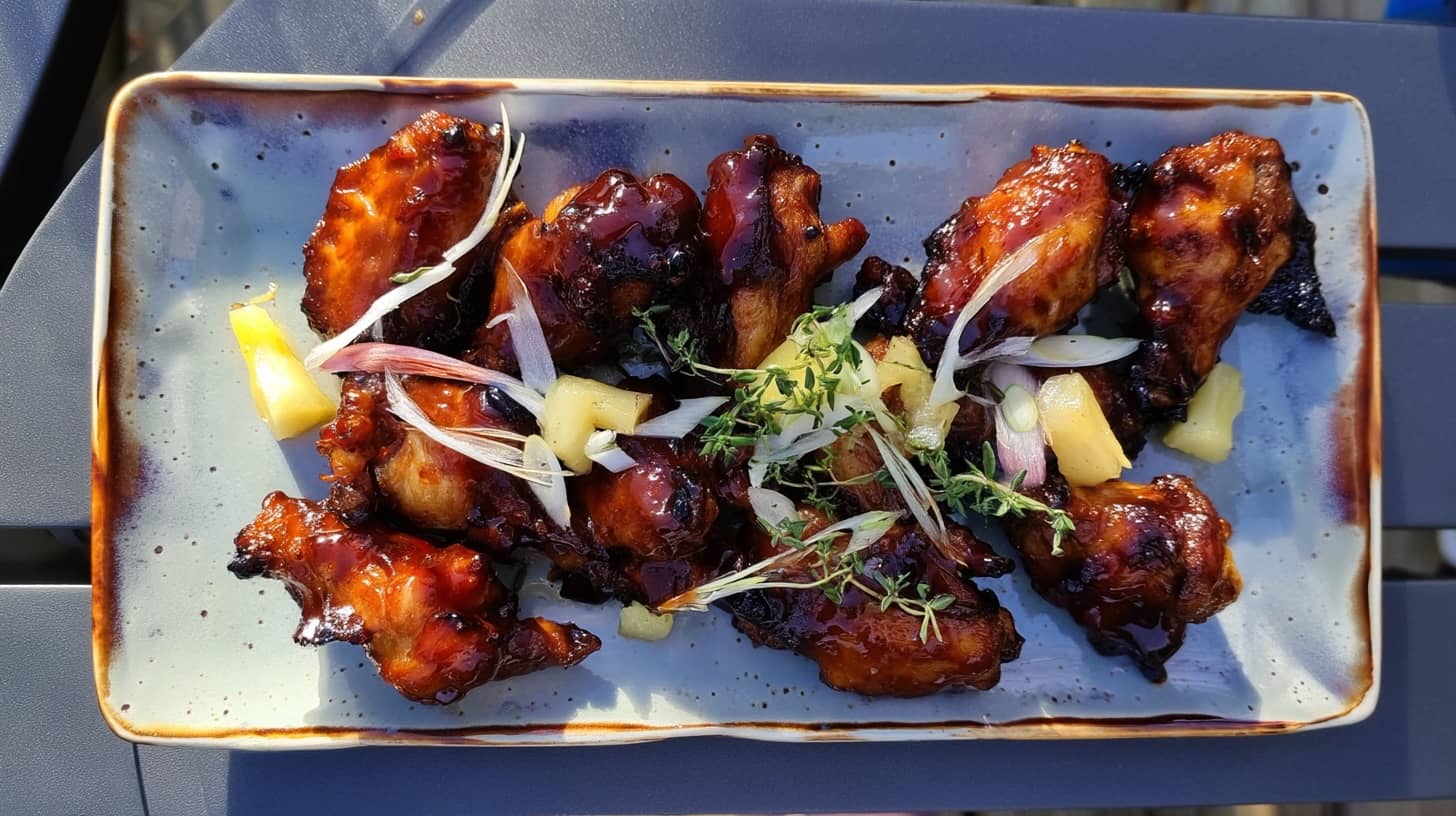
Pineapple Scotch Bonnet Wings with Dark Sticky Heat
These pineapple Scotch bonnet molasses wings are fruitier, darker and more brooding than my mango habanero wings. Pineapple brings acidity as well as sweetness, Scotch bonnet gives a fragrant heat and molasses adds a deep, almost liquorice-like stickiness that behaves brilliantly over BBQ heat. Lemon thyme finishes the wings with a green, citrusy note that keeps the glaze from becoming too heavy.
This recipe belongs in my sweet sticky chicken wings cooked over fire collection because it gives pineapple its own job. It’s not here as a swap for mango. It’s sharper, juicier and more caramel-prone, which means the glaze needs different handling. These wings are brighter than tamarind chilli mint chicken wings, less creamy-sweet than mango habanero wings with fresh coriander and more fragrant than hot honey garlic wings with charred citrus.
Why Pineapple and Molasses Need Each Other
Pineapple juice can taste a bit thin if it’s used on its own as a wing glaze. It has sharpness and sugar, but not enough body. Molasses fixes that. It gives the glaze a dark backbone and helps it cling to the chicken skin without needing loads of honey or syrup.
Scotch bonnet brings more than heat. It has a fruity, almost floral aroma that fits pineapple beautifully. I use lemon thyme because regular thyme can feel too woody here. Lemon thyme gives that little garden-fresh citrus scent, especially when it hits the hot wings at the end.
Ingredients for 4 People
Chicken Wings
- 1.2kg chicken wings, split into flats and drumettes
- 1 tbsp rapeseed oil
- 1½ tsp fine sea salt
- 1 tsp baking powder
- 1 tsp ground allspice
- ½ tsp garlic granules
- ½ tsp cracked black pepper
Pineapple Scotch Bonnet Molasses Glaze
- 180ml pineapple juice
- 90g fresh pineapple, finely diced
- 1 Scotch bonnet chilli, deseeded for medium heat or left whole for hotter wings
- 35g molasses
- 30g light brown sugar
- 1 tbsp apple cider vinegar
- 1 tbsp lime juice
- 2 garlic cloves, grated
- 10g fresh ginger, grated
- ½ tsp fine sea salt
- 1 tsp chopped lemon thyme leaves
- 1 spring onion, finely sliced
- Extra lemon thyme leaves, to finish
Ingredient Notes
Fresh pineapple gives the glaze a better texture than juice alone. I dice a small amount finely, then simmer it until it softens into the sauce. Tinned pineapple can work if it’s packed in juice rather than syrup. Drain it well and chop it small. Syrup-packed pineapple pushes the glaze too sweet, and molasses already has plenty of weight.
Scotch bonnet heat can vary wildly. Some chillies are polite at first, then suddenly start throwing chairs around. If you’re unsure, use half a chilli and remove the seeds. You can always add a pinch of chilli flakes later. Molasses is strong too, so don’t be tempted to double it unless you want the pineapple buried under dark sugar.
Equipment Needed
A BBQ with a reliable two-zone set-up is the easiest way to cook these wings. Pineapple and molasses both brown quickly, so the wings need to cook through before the glaze goes near direct heat. I aim for a medium indirect zone and a hotter finishing area.
You’ll need a small saucepan, tongs, a basting brush, a chopping board for the pineapple and an instant-read thermometer. A fine grater is useful for the garlic and ginger, as big bits can catch in the glaze. Keep a clean serving tray ready too, because this sauce clings to everything it meets.
Instructions
Step 1: Season the Wings
Pat the chicken wings dry. Toss them with rapeseed oil, salt, baking powder, allspice, garlic granules and black pepper.
Spread the wings on a rack and chill uncovered for 45 minutes. The allspice sits quietly in the background, giving warmth without turning the wings into a spice mix parade.
Step 2: Cook Down the Pineapple Glaze
Put the pineapple juice, diced pineapple, Scotch bonnet, molasses, brown sugar, cider vinegar, lime juice, garlic, ginger and salt into a small pan.
Simmer gently for 8 to 10 minutes, stirring often. The pineapple should soften and the glaze should thicken enough to coat a spoon. Stir in the chopped lemon thyme at the end.
Step 3: Set Up the BBQ
Prepare the BBQ for indirect cooking at 180°C to 200°C. Keep a hotter direct zone ready for finishing.
Oil the grate lightly. The molasses glaze is sticky, and it will cling hard if the metal is dry or dirty.
Step 4: Cook the Wings Without Glaze
Place the wings on the cooler side of the BBQ. Close the lid and cook for 25 to 30 minutes, turning once or twice.
Check that the thickest pieces reach at least 74°C. I prefer 80°C for wings, because the meat stays juicy while the skin gets a better bite.
Step 5: Brush and Caramelise
Brush the wings with a thin coat of pineapple Scotch bonnet glaze. Move them closer to the hot side, but keep them away from big flare-ups.
Turn every 45 to 60 seconds and brush again. Cook for 4 to 6 minutes until the glaze looks dark, sticky and lightly charred at the edges.
Step 6: Finish with Lemon Thyme
Move the wings to a clean warm tray. Brush with one final light coat of glaze.
Scatter with sliced spring onion and extra lemon thyme leaves. Rest for 5 minutes before serving so the glaze tightens properly.
BBQ Technique Notes for Pineapple Scotch Bonnet Wings
Pineapple glazes can be lively on the grill because the sugars brown quickly and the fruit fibres thicken as they cook. I reduce the glaze in a pan first, then use it in thin layers at the end. That gives better control than trying to cook raw pineapple juice directly onto the chicken. You’re looking for dark amber edges, not black sugar spots.
Molasses makes the glaze look darker than it tastes, so don’t judge by colour alone. Watch the surface. When it’s glossy and tacky, it’s ready. If it turns dull or rough, pull the wings back from the heat. I also avoid heavy wood smoke with this one. Pineapple and Scotch bonnet already bring plenty of personality, and too much smoke makes the fruit taste muddy.
What to Serve with Pineapple Scotch Bonnet Molasses Wings
These wings want cooling, crunchy sides. I like fennel cabbage slaw, coconut rice with lime, grilled corn, cucumber salad or charred sweet potatoes with lime salt. The glaze is sweet, sharp and hot, so a fresh side keeps the plate balanced. If you’re serving a dip, charred pineapple Scotch bonnet dip makes sense when you want the pineapple heat to run right through the meal.
For a wing spread, pair these with mango habanero wings with fresh coriander only if you want to compare two fruit-led glazes. They’re different, but both are lively. I’d also serve them beside tamarind chilli mint chicken wings for sour contrast or gochujang sesame ginger wing glaze for savoury depth.
Wine and Beer Pairings
For wine, a lightly off-dry Riesling handles Scotch bonnet heat very well. It has enough acidity for pineapple and enough softness for chilli. Chenin Blanc is another good pick, especially if it has apple, quince or honeyed notes. For rosé, choose something fruity but dry, as very sweet rosé can make the molasses feel heavier.
For beer, a cold lager is excellent because it clears the palate between sticky bites. A wheat beer works if you want something softer and rounder. A low-bitterness pale ale with tropical hop notes can be lovely too, but avoid very bitter IPAs, as they can make Scotch bonnet heat feel sharper.
FAQ
Are pineapple Scotch bonnet chicken wings very hot?
They can be hot, especially if the Scotch bonnet is left whole with seeds. For medium heat, deseed the chilli or use half. The pineapple and molasses soften the burn, but Scotch bonnet still has a proper kick.
Can I use tinned pineapple for the glaze?
Yes. Use pineapple packed in juice, not syrup. Drain it well, chop it finely and simmer it with the glaze until soft.
What can I use instead of molasses?
Use dark brown sugar with 1 tsp treacle if you have it. You can also use honey, but the glaze will be lighter and less darkly sticky.
How do I stop pineapple glaze from burning?
Cook the wings first without glaze, then brush the glaze on for the final few minutes. Keep turning and move the wings away from direct flames if the edges darken too quickly.
Can I make these wings less sweet?
Yes. Reduce the brown sugar to 15g and add another tablespoon of lime juice. Keep the molasses, as it gives body as well as sweetness.
Does lemon thyme matter?
It does help. Lemon thyme gives a fresh citrus-herb finish that suits pineapple. If you can’t find it, use regular thyme with a little extra lime zest.
Tips for Success with Pineapple Scotch Bonnet Chicken Wings
Reduce the glaze until it coats a spoon, but don’t let it become jam. A jammy glaze feels heavy on wings and can burn before it sets. I like it just thick enough to brush in a smooth layer. The diced pineapple should be soft, but still visible in tiny pieces, giving the glaze a bit of texture.
Be careful with the chilli during tasting. The heat grows as the glaze reduces, and it can feel stronger once it’s on hot chicken. I taste with a clean spoon, wait a few seconds, then decide if it needs more heat. That tiny pause saves you from turning a fruity glaze into a dare.
Pineapple Scotch Bonnet Wing Variations
For a more savoury finish, add 1 tsp light soy sauce to the glaze and reduce the salt slightly. It gives the pineapple more depth without dragging it towards the black garlic soy wings. A pinch of ground allspice in the glaze also works if you want warmer spice from top to bottom.
For extra freshness, finish with lime zest and finely chopped mint as well as lemon thyme. For crunch, scatter over toasted coconut flakes just before serving. Keep the additions light, though. The main identity should stay pineapple, Scotch bonnet and molasses, not a crowded fruit bowl.
Storage and Reheating Pineapple Scotch Bonnet Chicken Wings
Store leftover pineapple Scotch bonnet chicken wings in an airtight container in the fridge for up to 3 days. The molasses glaze thickens as it chills and may look darker the next day.
Reheat on a rack in a 180°C oven for 12 to 15 minutes, or in an air fryer at 175°C for 6 to 8 minutes. Brush with a small spoonful of warmed glaze or a squeeze of lime after reheating. I wouldn’t microwave these unless you’re desperate, as pineapple glaze softens the skin quickly.
Health Notes and Dietary Alternatives
These wings bring protein from the chicken, plus fruit acidity from pineapple and lime. Scotch bonnet, garlic and ginger add strong flavour without needing a heavy creamy sauce. Molasses also contributes minerals such as iron and potassium, though it is still a sugar-rich ingredient and should be treated as part of the glaze rather than a health tonic.
For gluten-free cooking, this recipe is naturally suitable if your molasses and baking powder are certified gluten-free. For dairy-free cooking, no swaps are needed. For a lower-sugar version, reduce the brown sugar to 10g and use a lighter hand with the final glaze. For a milder version, use half a deseeded Scotch bonnet or swap it for a red chilli with a gentler heat.

Pineapple Scotch Bonnet Molasses Wings with Lemon Thyme

Ingredients
Chicken Wings
- 1.2 kg chicken wings split into flats and drumettes
- 1 tbsp rapeseed oil
- 1½ tsp fine sea salt
- 1 tsp baking powder
- 1 tsp ground allspice
- ½ tsp garlic granules
- ½ tsp cracked black pepper
Pineapple Scotch Bonnet Molasses Glaze
- 180 ml pineapple juice
- 90 g fresh pineapple finely diced
- 1 Scotch bonnet chilli deseeded for medium heat or left whole for hotter wings
- 35 g molasses
- 30 g light brown sugar
- 1 tbsp apple cider vinegar
- 1 tbsp lime juice
- 2 garlic cloves grated
- 10 g fresh ginger grated
- ½ tsp fine sea salt
- 1 tsp chopped lemon thyme leaves
- 1 spring onion finely sliced
- Extra lemon thyme leaves to finish
Instructions
Season the Wings
- Pat the chicken wings dry. Toss them with rapeseed oil, salt, baking powder, allspice, garlic granules and black pepper.
- Spread the wings on a rack and chill uncovered for 45 minutes. The allspice sits quietly in the background, giving warmth without turning the wings into a spice mix parade.
Cook Down the Pineapple Glaze
- Put the pineapple juice, diced pineapple, Scotch bonnet, molasses, brown sugar, cider vinegar, lime juice, garlic, ginger and salt into a small pan.
- Simmer gently for 8 to 10 minutes, stirring often. The pineapple should soften and the glaze should thicken enough to coat a spoon. Stir in the chopped lemon thyme at the end.
Set Up the BBQ
- Prepare the BBQ for indirect cooking at 180°C to 200°C. Keep a hotter direct zone ready for finishing.
- Oil the grate lightly. The molasses glaze is sticky, and it will cling hard if the metal is dry or dirty.
Cook the Wings Without Glaze
- Place the wings on the cooler side of the BBQ. Close the lid and cook for 25 to 30 minutes, turning once or twice.
- Check that the thickest pieces reach at least 74°C. I prefer 80°C for wings, because the meat stays juicy while the skin gets a better bite.
Brush and Caramelise
- Brush the wings with a thin coat of pineapple Scotch bonnet glaze. Move them closer to the hot side, but keep them away from big flare-ups.
- Turn every 45 to 60 seconds and brush again. Cook for 4 to 6 minutes until the glaze looks dark, sticky and lightly charred at the edges.
Finish with Lemon Thyme
- Move the wings to a clean warm tray. Brush with one final light coat of glaze.
- Scatter with sliced spring onion and extra lemon thyme leaves. Rest for 5 minutes before serving so the glaze tightens properly.